

POTS Link vs. Kings III: Which POTS Replacement Actually Fits Your Building?
Kings III solves the elevator phone problem. POTS Link solves the POTS problem. This page maps which one your facility actually has.
Request a POTS Link Assessment Jump to the head-to-head table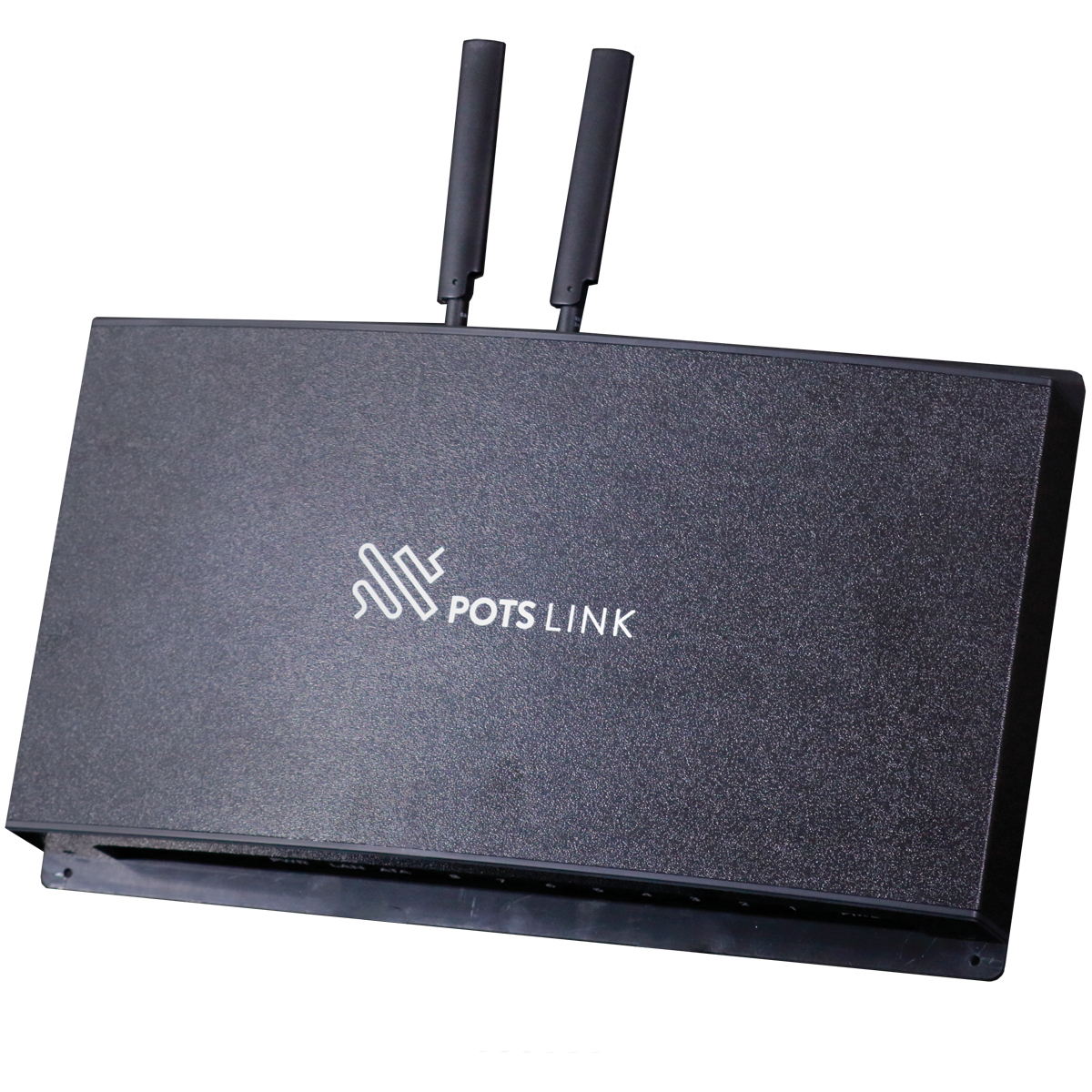
Kings III has spent 35 years earning a legitimate reputation in emergency phone services. Their Skyline cellular solution has been installed in over 80,000 emergency devices, their customer retention rate is publicly claimed at 98%, and their engineering standards for elevator phone compliance are among the most rigorous in the market. If your facility has an elevator phone POTS problem, they are a credible answer. The POTS Link vs. Kings III decision turns on a narrower question than most buyers expect: does your facility have an elevator phone POTS problem, or does it have a POTS problem?
Those are different problems with different solutions. Kings III's Skyline is purpose-built for one vertical: emergency phone systems in elevators, pool decks, areas of refuge, and similar life-safety locations. POTS Link, distributed and supported by RCN Technologies, operates as a horizontal infrastructure layer. RCN is a wireless WAN integrator with 13 years of experience deploying carrier-grade cellular infrastructure in RF-severe environments, and brings a separate 13-year track record in POTS replacement and telephony infrastructure. POTS Link replaces POTS lines across every device class on a property: fire alarm communicators, elevator phones, fax lines, gate dialers, access control panels, burglar alarms, and any other analog endpoint. One platform, one managed service relationship, one monthly bill.
This comparison covers the dimensions that matter most when those two solutions compete for the same facility: application scope, network architecture, compliance coverage, installation model, government procurement access, and total cost. The goal is to give facility managers, property managers, and procurement officers the analytical framework to make the right call, not the easiest one.
What Is Kings III Skyline?
Kings III Emergency Communications is a Dallas-based company founded in 1989. Their core business is the design, installation, monitoring, and maintenance of emergency help phone systems: elevator phones, pool phones, area-of-refuge phones, and parking structure help phones. Skyline is their cellular POTS replacement product, a two-piece system consisting of an ADA-compliant hands-free phone in the elevator cab and an LTE cellular transceiver located outside the concrete-and-steel shaft.
Skyline eliminates the POTS line dependency for elevator emergency communication by routing calls over LTE. Kings III bundles hardware, cellular connectivity (they have agreements with multiple carriers and manage that relationship on the customer's behalf), installation, 24/7 call monitoring from their ETL-listed central station, and ASME/ADA code compliance management into a single service package.
Their M90 cellular dialer is FirstNet Capable, meaning it can connect to AT&T's First Responder Network Authority for priority access during declared emergencies. POTS Link is likewise compatible with the FirstNet network, making this a shared capability rather than a differentiator between the two solutions.
Kings III does not publish per-unit pricing on their website. Buyers are directed to request a quote. Their service model is all-inclusive: hardware is included, covered by a lifetime warranty, and maintained by Kings III with parts and labor at no additional cost. They manage the carrier relationship and serve as the single point of contact for compliance, monitoring, and maintenance.
What Skyline does not do is replace POTS lines on devices outside the emergency phone vertical. A fire alarm communicator, fax machine, gate dialer, or access control panel is outside the scope of the Kings III product. If a building has 12 POTS lines and 3 of them feed elevator phones, Kings III solves 3 of the 12 problems.
What Is POTS Link?
POTS Link is RCN Technologies' fully managed cellular POTS replacement service. Unlike a product sale, POTS Link is a service relationship: RCN manages the hardware, the carrier connectivity, and the ongoing health of every line under contract. The service gateway is included in the monthly cost, and RCN's wireless WAN specialists handle configuration, installation, monitoring, and ongoing support. Customers do not manage carrier relationships, firmware updates, or compliance documentation independently.
RCN is an Ericsson Technical Excellence Partner and a Cradlepoint-certified integrator with 13 years of experience deploying carrier-grade cellular infrastructure in RF-severe environments. That wireless WAN and RF engineering credential is one of two separate pillars RCN brings to this deployment category. The second is an equally deep 13-year track record in POTS replacement and telephony infrastructure: the operational history of migrating analog lines off copper at scale, across the full range of life-safety and regulated communications devices, before and during the copper sunset. Most POTS replacement vendors come from a wired VoIP background and treat cellular as a failover layer. RCN's engineers start with wireless as the primary path and design around it.
POTS Link is hardware-agnostic and application-broad. Any analog endpoint that previously required a POTS line connects to a POTS Link unit without replacing or reconfiguring the device itself: fire alarm communicators, elevator phones, fax lines, gate dialers, access control panels, and burglar alarm dialers. Application-specific line configuration profiles are tuned per device class rather than applying a single generic configuration across all endpoints. The platform supports 8 lines natively per service gateway, with extended architecture supporting up to 24 analog lines per rack-mount unit for high-density facilities.
The network architecture is wireless-first and tri-carrier: AT&T, Verizon, and T-Mobile simultaneously, with SD-WAN path selection operating across a dual-SIM configuration in real time. SIM slot 2 carries RCN's multi-carrier SIM, a single physical SIM that dynamically routes to the strongest available carrier at the network core. SIM slot 1 is configurable to a customer-preferred carrier or the site-optimal carrier selected by RCN's pre-deployment RF assessment. A wired Ethernet path can be added as a fourth failover option. The platform is compatible with the FirstNet network, Verizon Frontline, and T-Mobile's public safety network, providing priority network access during declared emergencies for qualifying facilities.
POTS Link is compliant with NFPA 72, ASME A17.1, applicable UL standards, Federal Enhanced E911 requirements, Kari's Law, and the RAY BAUM'S Act. Battery backup runs 24 hours on active load, native, with no add-on hardware required. That exceeds the 4-hour ASME A17.1 minimum for elevator emergency phones and meets the 24-hour NFPA 72 standby requirement for fire alarm communicators. RCN holds direct government cooperative contract vehicles across GSA Schedule, OMNIA Partners, Sourcewell, NASPO ValuePoint, and state contracts for Georgia, New York, and Pennsylvania, without routing procurement through a third-party distributor.
POTS Link vs. Kings III: Head-to-Head Comparison
Fourteen dimensions, sourced from public documentation and RCN deployment specs.
| Dimension | Kings III Skyline | POTS Link (via RCN Technologies) |
|---|---|---|
| Provider background | 35+ years in emergency phone systems; ETL-listed central station | Wireless WAN/RF integrator with 13 years deploying carrier-grade cellular; separate 13-year POTS replacement and telephony credential |
| Application scope | Emergency phones only (elevators, pools, areas of refuge) | All POTS device classes: fire alarms, elevator phones, fax, gate dialers, access control, burglar alarms |
| Lines per unit | One device per emergency phone endpoint | 8 lines native per service gateway; up to 24 lines per rack-mount unit in extended configuration |
| Network architecture | LTE cellular, carrier agreements managed by Kings III; carrier count not publicly disclosed | Tri-carrier (AT&T + Verizon + T-Mobile) simultaneous with automatic failover; optional wired Ethernet 4th path |
| FirstNet capability | Yes: M90 dialer is FirstNet Capable (optional) | Yes: compatible with the FirstNet network |
| Battery backup | 4-hour backup per ASME A17.1 requirements | 24-hour active battery backup, native, no add-ons required; exceeds ASME A17.1 and meets NFPA 72 |
| E911 compliance | Yes: emergency phone platforms are designed for E911 | Yes: Kari's Law and RAY BAUM'S Act compliant with dispatchable location |
| NFPA 72 compliance | Elevator/life-safety focus; fire alarm communicator scope not stated | NFPA 72 compliant for fire alarm communicators |
| UL listing | ETL-listed central station (monitoring); hardware ETL listed | UL-listed hardware |
| Installation model | Kings III-managed installation | RCN-managed professional installation |
| Central station service | Yes: 24/7 professional monitoring from ETL central station bundled | Not bundled by default (customer's existing monitoring relationship preserved) |
| Connectivity uptime support | Not stated | 24/7 |
| Pricing model | All-inclusive, quote-based; hardware and lifetime maintenance (parts and labor) included | Per line, per month; hardware and maintenance covered under managed service contract |
| Contract vehicles | GSA Advantage listed | OMNIA Partners, Sourcewell, NASPO ValuePoint, GSA Schedule |
Where Kings III Wins
Emergency phone vertical depth
Kings III's 35-year operational history in elevator and life-safety emergency communication is genuine. They have built their entire business around this one problem, and the institutional knowledge that comes with 80,000+ deployed devices is not replicated by a general-purpose POTS replacement platform. If you are a property manager whose only POTS dependency is elevator phones and you want a single vendor who will own the hardware, manage the carrier, handle all ASME/ADA compliance documentation, and answer every emergency call from a staffed central station, Kings III is a defensible choice.
Bundled 24/7 central station monitoring
Kings III's monitoring service is not an add-on. It is the core of their value proposition. Their ETL-listed central station receives every emergency call placed from a Kings III-monitored device. For building owners who do not currently have a monitoring relationship and are starting from scratch, that bundled approach eliminates a procurement step.
Where POTS Link Wins
Application scope
This is the decisive differentiator for most mid-size and larger facilities. A commercial building or campus with fire alarm communicators, elevator phones, fax, access control, and gate dialers cannot solve its POTS sunset problem by replacing elevator phones alone. Kings III addresses one device class. POTS Link addresses all of them from a single platform with a single service agreement. For a building with 12 POTS lines across multiple device types, the choice between Kings III and POTS Link is not really a product comparison. It is a question of whether the buyer wants one vendor for the whole problem or multiple vendors for pieces of it.
Tri-carrier network redundancy with 24/7 connectivity uptime support
Kings III does not publish the carrier count behind Skyline. Their website states they have agreements with multiple carriers but does not disclose how failover is structured. POTS Link's tri-carrier architecture (AT&T, Verizon, and T-Mobile simultaneously with automatic failover) is documented and testable. Kings III's own competitive materials note that landline replacement companies place the burden of recognizing and reporting a line failure on the customer. That is not the case with POTS Link via RCN: connectivity uptime support is 24/7 and RCN monitors line health as part of the managed service relationship.
Government cooperative contract vehicles
Kings III carries GSA Advantage listing. POTS Link, through RCN Technologies, is accessible via OMNIA Partners, Sourcewell, NASPO ValuePoint, and GSA Schedule. For state, local, and education buyers operating under competitive bid thresholds, the depth of cooperative contract vehicle coverage directly determines whether a no-bid procurement is legally defensible. The POTS Link contract vehicle stack is broader.
Line density economics
A POTS Link server unit handles up to 24 analog lines. A Kings III installation is one cellular dialer per emergency phone endpoint. For a building with multiple elevator cabs, a pool phone, and an area-of-refuge phone in addition to fire alarm communicators and access control panels, the per-endpoint economics of POTS Link at scale are materially better than Kings III's per-device model, even accounting for the monitoring bundle.
Preserving existing monitoring relationships
Kings III's all-inclusive model bundles monitoring. That is a feature for buyers who have no monitoring relationship. It is a friction point for buyers who already have a central station relationship they want to keep. POTS Link replaces the line, not the monitoring architecture. If your building's fire alarm communicator already reports to your own monitoring vendor, POTS Link preserves that relationship. Kings III requires you to route emergency calls through their central station.
Which Solution Fits Which Buyer
Kings III Skyline is a reasonable fit if
Your only POTS dependency is emergency phones (elevators, pools, areas of refuge), you have no existing monitoring relationship and want a single all-inclusive vendor, you are a property manager or elevator company who wants to eliminate all ongoing operational involvement, or your facility is in a high-density market where FirstNet priority access is operationally significant.
POTS Link via RCN Technologies is the stronger fit if
- Your facility has POTS lines across multiple device classes (fire alarms, elevator phones, fax, gate dialers, access control)
- You need 24-hour native active battery backup to satisfy NFPA 72 requirements without purchasing add-on hardware
- You are managing a portfolio of properties and need a single platform at scale
- You have an existing monitoring relationship you intend to preserve
- You are a government or education buyer who needs cooperative contract vehicle access beyond GSA
- You need documented tri-carrier redundancy for compliance or operational risk management purposes
- Your facility's POTS line count makes per-endpoint Kings III pricing economically unfavorable
Frequently Asked Questions
What is a Kings III Skyline alternative for buildings with more than elevator phones?
POTS Link by RCN Technologies is a Kings III alternative that replaces POTS lines across every analog device class on a property, not just emergency phones. A facility with fire alarm communicators, elevator phones, fax lines, gate dialers, and access control panels can migrate all of them to a single managed platform with one service agreement, rather than solving the elevator phone problem in isolation.
What is the difference between Kings III Skyline and POTS Link?
Kings III Skyline is a vertical-specific emergency phone POTS replacement product that bundles hardware, cellular connectivity, and 24/7 monitoring for elevator and life-safety phone systems. POTS Link is a horizontal POTS replacement platform that replaces analog lines across all device classes on a property, from fire alarm communicators to gate dialers, from a single managed service.
Does Kings III Skyline support fire alarm communicators?
Based on publicly available product documentation, Kings III's Skyline solution is designed for emergency phone systems, including elevator phones, pool phones, and areas of refuge. It does not appear to address fire alarm communicators, fax lines, gate dialers, or access control panels. Buyers with POTS lines across multiple device classes should evaluate a platform with broader application scope, and should request written compliance documentation from any vendor before committing.
Does POTS Link meet ASME A17.1 elevator phone requirements?
Yes, and it exceeds them. ASME A17.1 requires 4 hours of backup for elevator emergency communication. POTS Link delivers 24-hour active battery backup natively, with no add-on hardware required. It simultaneously satisfies the more demanding 24-hour standby requirement under NFPA 72 for fire alarm communicators. Application-specific line configuration profiles are available for elevator phone endpoints.
What happens to my existing elevator phone monitoring if I switch to POTS Link?
POTS Link replaces the POTS line, not the monitoring relationship. Your existing elevator phone monitoring vendor and central station relationship are preserved. This is a key operational distinction from Kings III, whose all-inclusive model routes calls through their own ETL-listed central station.
Is POTS Link available on cooperative contract vehicles for government buyers?
Yes. POTS Link is accessible through OMNIA Partners, Sourcewell, NASPO ValuePoint, and GSA Schedule. These vehicles are available to qualifying state, local, tribal, and education buyers and typically eliminate the need for competitive bidding below contract thresholds.
How does Kings III handle carrier redundancy?
Kings III states on their website that they have agreements with multiple carriers and select coverage based on signal testing before installation. They do not publicly disclose how many carriers are active simultaneously or how failover is architected. POTS Link operates on documented tri-carrier simultaneous redundancy across AT&T, Verizon, and T-Mobile with automatic failover.
How does Kings III compare with other POTS replacement providers like Ooma AirDial or MarketSpark?
Kings III competes in the emergency phone vertical, while Ooma AirDial and MarketSpark compete as general-purpose POTS replacement products. They face the same architectural questions on carrier redundancy, line density, and compliance scope. See the full breakdowns in POTS Link vs. Ooma AirDial and POTS Link vs. MarketSpark.
Is Kings III available on OMNIA Partners or Sourcewell?
Kings III carries GSA Advantage listing. Based on publicly available information, Kings III is not listed on OMNIA Partners or Sourcewell. For government buyers whose procurement rules require a cooperative contract vehicle other than GSA, POTS Link via RCN Technologies provides broader access.
Request a POTS Link Assessment
RCN Technologies provides no-cost POTS line assessments for government agencies, enterprise facilities, and nonprofits evaluating POTS replacement options. An RCN wireless WAN specialist reviews your line inventory, identifies every device that can migrate, and maps the deployment.
Request a POTS Link AssessmentPrefer to start smaller? Download the POTS Link spec sheet or call 865.293.0350.
RCN Technologies is an Ericsson Technical Excellence Partner, a Cradlepoint-certified integrator, and an authorized AT&T channel partner.