

POTS Link vs. MarketSpark: Which POTS Replacement Is Right for You?
A direct comparison on carrier pedigree, battery backup, line density, public safety network access, compliance, and government procurement, so you can make the right call for your facility.
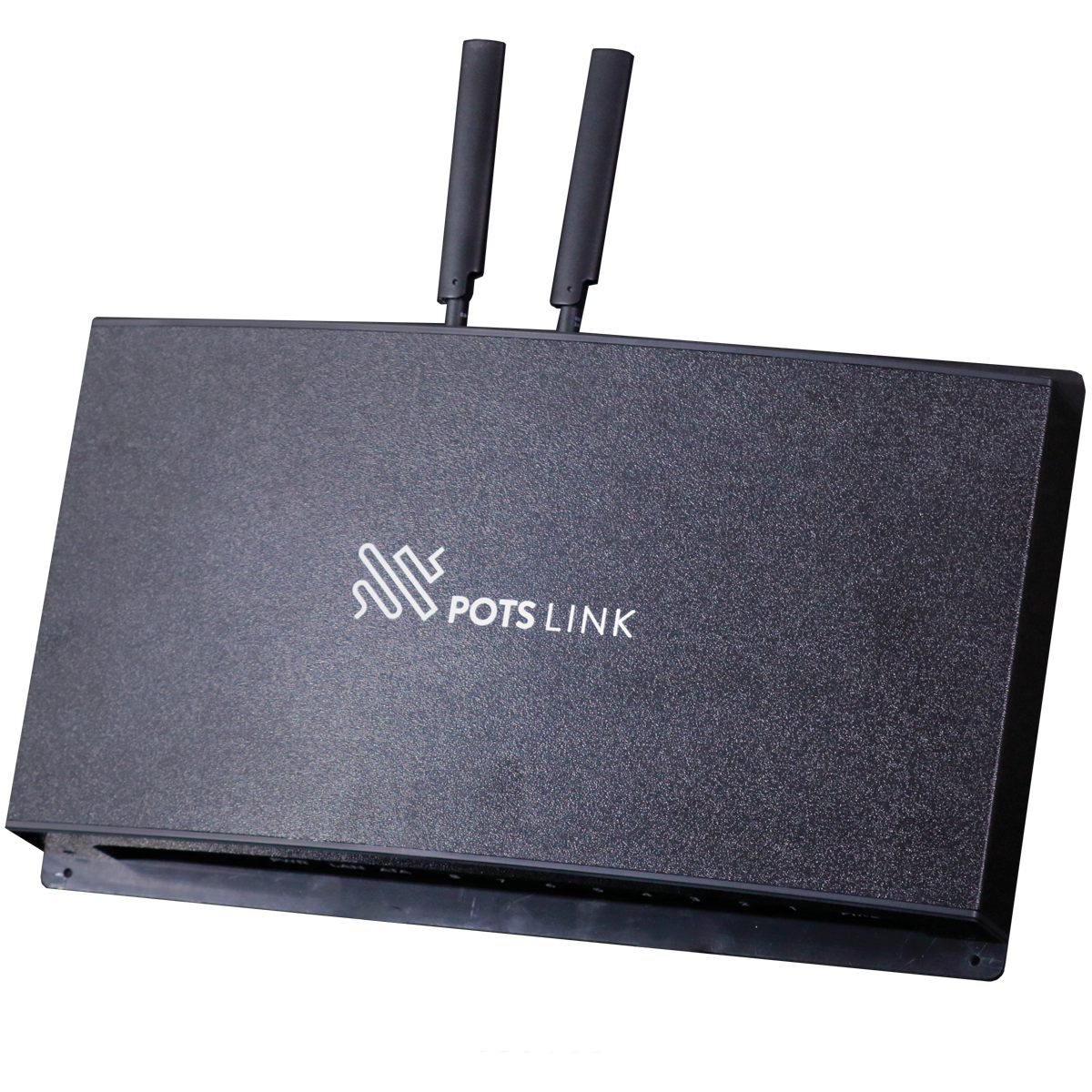
If you’re evaluating managed cellular POTS replacements, MarketSpark will likely appear in your research, and they deserve to be taken seriously. They’ve built a real business at scale, with publicly stated deployments across hospitals, grocery chains, manufacturers, and bank branch networks. This page isn’t written to dismiss them. It’s written to help you understand where the two solutions genuinely differ, so you can make the right call for your organization.
The most important distinction starts at the foundation. MarketSpark is a scaled POTS migration provider, a company built to manage large-volume enterprise line migrations across multiple carriers. POTS Link is built by RCN Technologies, an Ericsson Technical Excellence Partner and Cradlepoint-certified integrator with 13 years of hands-on POTS transformation experience. RCN was replacing legacy copper with wireless backhaul in enterprise, government, and public safety environments before most of today’s POTS replacement vendors existed. When your POTS replacement is serving fire alarm panels, elevator emergency phones, and campus blue-light systems, that difference in engineering pedigree is not a marketing distinction. It’s an operational one.
What is MarketSpark?
MarketSpark is a managed facilities-based voice network (MFVN) provider specializing in enterprise-scale POTS replacement. Their M-Series hardware platform supports 4G LTE, 5G, and wired Ethernet connectivity across 2, 4, 8, 12, and 16-port configurations. Their Command Center is a cloud-based portal for remote device management and monitoring. MarketSpark advertises service to more than 500 of America’s largest enterprises, with case studies covering grocery, hospital, manufacturing, distribution, banking, and energy verticals.
For organizations managing large, geographically distributed line migrations, measured in thousands of lines across hundreds of sites, MarketSpark is built for that workload. Their project management infrastructure and nationwide installation network are real operational capabilities.
What is POTS Link?
POTS Link is RCN Technologies’ fully managed cellular POTS replacement service. Unlike a product transaction, POTS Link is a service relationship. RCN manages the hardware, the carrier connectivity, and the ongoing health of every line in your facility. The service gateway is included in the monthly cost, and RCN’s team of wireless WAN specialists handles configuration, installation, monitoring, and support.
RCN is an Ericsson Technical Excellence Partner and Cradlepoint-certified integrator with over 13 years of POTS transformation experience, deploying wireless backhaul replacements for legacy copper infrastructure across enterprise, government, and public safety environments. That depth of cellular and RF engineering is the technical foundation POTS Link is built on. It’s not a credential added after the fact when the POTS replacement market emerged. RCN holds direct government contract vehicles across GSA, OMNIA Partners, Sourcewell, NASPO ValuePoint, and the State contracts for Georgia, New York, and Pennsylvania.
How POTS Link and MarketSpark Compare
Network Architecture and Carrier Engineering
Both solutions use dual-SIM architecture and claim multi-carrier support. The difference is what’s behind the SIM.
MarketSpark’s dual-SIM configuration selects the best available carrier for a given location. That’s a meaningful baseline. Redundancy at the SIM level reduces single-carrier exposure. Their stated carrier support covers all major U.S. networks: Verizon, AT&T, and T-Mobile.
POTS Link goes a layer deeper. SIM slot 2 is always occupied by RCN’s multi-carrier SIM, a single physical SIM with tri-carrier redundancy that dynamically routes to the strongest available carrier at the network core, not just at the device. SIM slot 1 gives the customer a choice: bring your own preferred single-carrier SIM, or let RCN deploy the site’s strongest available carrier based on the actual RF environment at that location. SD-WAN technology manages path selection across both SIM slots in real time, without manual intervention.
Critically, POTS Link is compatible with all three major public safety and priority networks: FirstNet-compatible via AT&T, Verizon Frontline-compatible, and compatible with T-Mobile’s public safety network. These networks provide priority access to spectrum and routing resources during declared emergencies. That’s precisely when analog life-safety infrastructure is under the most stress. MarketSpark does not reference public safety network access or priority spectrum compatibility in their published documentation.
This matters in a very specific scenario: a major weather event, a building fire, a mass-casualty incident. The surrounding commercial network is congested. First responders are on scene. Your fire alarm panel’s supervisory signal needs a clear path. Priority network compatibility is what separates a POTS replacement that works under normal conditions from one designed for when it’s most needed.
RCN has been executing POTS transformations with wireless backhaul for 13 years, through Ericsson and Cradlepoint partnerships in RF-severe environments including underground parking structures, dense concrete construction, and rural campus settings. That field experience predates the POTS replacement category as most buyers know it today. Most vendors in this space, including MarketSpark, entered the market as the copper shutdown created demand. RCN’s engineers were solving wireless backhaul for analog life-safety devices long before it became a product category. They start with the RF environment and design from the ground up.
Battery Backup: 8 Hours vs. 24 Hours
MarketSpark’s M-Series platform provides 8+ hours of battery backup. It’s listed as a feature on their M-Series solution page and positions as a life-safety capability.
POTS Link delivers 24-hour native battery backup. No add-ons, no upgraded hardware tier required.
This matters for a non-negotiable reason: NFPA 72, the National Fire Alarm and Signaling Code, requires that fire alarm communicators maintain 24 hours of standby power. If your POTS replacement is serving fire alarm panels (which it almost certainly is), the backup duration is not a preference. It’s a code requirement. An 8-hour baseline creates a compliance gap that requires either supplemental battery hardware, a policy exception, or a formal risk acceptance from your AHJ (authority having jurisdiction). POTS Link eliminates that gap by design.
Line Density
MarketSpark’s M-Series platform supports 2, 4, 8, 12, and 16-port configurations. The 16-port unit is their highest-density offering.
POTS Link supports 8 lines natively per service gateway, with extended architecture supporting 24 to 32 lines per rack-mount unit. For multi-device facilities (government campuses, healthcare buildings with elevator phones, fire panels, door entry, and gate systems on a single floor), this density difference has direct cost and logistics implications. More lines per unit means fewer units to manage, fewer cellular radios to maintain, and a simpler physical footprint.
The physical installation math compounds this. MarketSpark’s M1 and M2 enclosures measure 15.2″ x 11.8″ x 7.2″ and are primarily wall-mounted. When rack-mounted, each unit requires a dedicated shelf and 5U of clearance, one enclosure per shelf. A facility requiring 32 lines would need at least two M-Series units at maximum density (16-port), two rack shelves, and 10U of rack space minimum. POTS Link’s extended rack-mount configuration handles the same 32 lines in a single unit. At 14″ x 10″ x 6″, the POTS Link enclosure is meaningfully more compact than MarketSpark’s hardware at every comparable port count. For facilities managing multiple wiring closets or consolidated IDF/MDF deployments, that footprint difference is a real operational variable.
Compliance Certifications
MarketSpark references NFPA 72-compliant alarm support and ASME 17.1-compliant elevator line support on their POTS replacement product page. They serve as a managed facilities-based voice network (MFVN), with clearly stated obligations around end-to-end service quality and PSTN interconnection.
POTS Link is built and tested against NFPA 72, ASME A17.1, and applicable UL listing standards for life-safety signaling equipment.
Both solutions reference the applicable compliance frameworks. Buyers with formal compliance review requirements (government facilities managers, healthcare real estate teams, high-rise building operators) should request specific certification documentation from any POTS replacement vendor before committing to a multi-site deployment.
POTS Link is also compliant with Federal Enhanced E911 requirements, Kari’s Law, and the RAY BAUM’S Act. Kari’s Law mandates that multi-line telephone systems permit direct 911 dialing without a prefix. The RAY BAUM’S Act extends that requirement to include dispatchable location data, so emergency responders can identify not just the building, but the specific floor or room. MarketSpark’s public documentation does not address Kari’s Law or RAY BAUM’S Act compliance. Buyers deploying in any multi-line facility (which describes virtually every enterprise POTS replacement project) should request written compliance documentation on these requirements before signing a service agreement.
Compliance Certifications
POTS Link is built and tested against the applicable standards governing the devices it serves: NFPA 72 (fire alarm communications), ASME A17.1 (elevator emergency communications), and applicable UL listing standards for life-safety signaling equipment.
Granite EPIK is NFPA 72 compliant and MFVN-qualified, and Granite’s documentation confirms it is approved for Life Safety applications including elevators and alarm systems. However, Granite’s published documentation does not cite ASME A17.1 or specific UL Standards by name or number. Buyers with formal compliance review requirements, particularly those subject to AHJ or insurance audits that require specific standard citations, should request Granite’s full certification documentation directly before committing.
Additionally, POTS Link is compliant with Federal Enhanced E911 requirements, Kari’s Law, and the RAY BAUM’S Act. Kari’s Law requires that multi-line telephone systems permit direct 911 dialing without a prefix. The RAY BAUM’S Act requires that 911 calls include dispatchable location data, ensuring emergency responders can identify not just the building, but the floor or room a call originated from. For any facility operating a multi-line system, which describes virtually every POTS replacement deployment, these are federal legal requirements. Granite EPIK’s public documentation does not address Kari’s Law or RAY BAUM’S Act compliance. Buyers should request written confirmation from any vendor before committing to a multi-line facility deployment.
Service Model and Engineering Accountability
Both POTS Link and MarketSpark operate as fully managed services. No self-install portal, no customer-managed device configuration. That’s a meaningful baseline shared by both.
The difference is who’s doing the engineering. MarketSpark is built around scaled project delivery. Their stated strength is managing large, distributed rollouts efficiently with a nationwide installation partner network. That’s the right model when your primary constraint is velocity across hundreds of sites.
POTS Link is built around wireless WAN engineering accountability. RCN deploys through a direct and certified installer network, not a national project logistics firm. For installations where signal is marginal, device protocols are complex, or life-safety compliance documentation is required for inspection, having a wireless WAN integrator with certified installers versus a third-party partner network is a meaningful difference.
Government and Cooperative Contract Access
MarketSpark does not reference government procurement contract vehicles in their published documentation. There is no mention of GSA Schedule, OMNIA Partners, Sourcewell, NASPO ValuePoint, or state-specific contract vehicles on their website.
POTS Link carries a full set of direct government contract vehicles: GSA Schedule, OMNIA Partners, Sourcewell, NASPO ValuePoint, State of Georgia, State of New York, and State of Pennsylvania. RCN holds these contracts directly. Procurement is not routed through a third-party aggregator. For federal agencies, state government facilities, municipalities, and any public sector buyer with an existing cooperative contract relationship, POTS Link can be placed under a competitively bid vehicle without an additional procurement event.
Service Scope: What Each Solution Actually Covers
Both solutions support number porting. Existing POTS numbers can be retained without requiring equipment changes at the device level. That’s a baseline capability buyers should confirm with any vendor, and both clear that bar.
Where the scope diverges is beyond standard POTS lines. MarketSpark offers T1/PRI replacement and managed serial access, but markets them as distinct service lines, separate offerings from their core POTS replacement product. For an enterprise managing a mixed legacy environment, that means multiple service agreements, potentially multiple points of contact, and separate billing relationships.
POTS Link covers POTS replacement, T1/PRI replacement, and serial/SCADA/POS connectivity under a single service relationship with RCN. If your facility runs fire alarm panels on POTS lines, a legacy PBX on a T1, and gate controllers or point-of-sale terminals on serial connections, RCN manages the full transition in one engagement. For facilities managers and IT directors dealing with a complex copper-to-cellular migration across multiple device types, the difference between a single managed service provider and a portfolio of separate service lines is a meaningful operational consideration.
Comparison at a Glance
Side-by-side, on the eight decisions that actually shape deployment outcomes.
| MarketSpark | POTS Link | |
|---|---|---|
| Network architecture | Dual-SIM multi-carrier; 4G LTE, 5G, wired Ethernet | Wireless-first; dual-SIM (customer carrier or RCN-selected carrier in SIM 1, plus RCN multi-carrier SIM in SIM 2); SD-WAN path selection; wired Ethernet optional |
| Public safety networks | Not referenced in public documentation | FirstNet-compatible, Verizon Frontline-compatible, T-Mobile public safety network-compatible |
| Lines per device | Up to 16 (M-Series max) | 8 native; 24 to 32 extended rack-mount |
| Battery backup | 8+ hours | 24 hours native, NFPA 72 aligned |
| Installation | Nationwide installation partner network | Direct and certified installer network |
| Service model | Fully managed | RCN fully managed |
| NFPA 72 / ASME A17.1 | Referenced | Built and tested against |
| E911 / Kari's Law / RAY BAUM'S Act | Not addressed in public documentation | Compliant |
| Gov contract vehicles | None referenced in public documentation | GSA, OMNIA, Sourcewell, NASPO, State of GA, NY, PA (direct) |
| Number porting | Supported | Supported |
| T1/PRI replacement | Separate service line | Included in service scope |
| Serial / SCADA / POS | Supported (Managed Serial Access service) | Supported |
| Physical form factor | 15.2" x 11.8" x 7.2"; wall-mount primary; 5U per unit on rack shelf, one unit per shelf | 14" x 10" x 6" enclosure |
| Provider background | Scaled POTS migration provider / MFVN | Wireless WAN integrator; Ericsson Technical Excellence Partner; Cradlepoint-certified; 13 years POTS transformation experience |
Which Solution Fits Which Buyer?
MarketSpark is a reasonable fit if:
Your primary challenge is raw migration velocity, hundreds of sites, thousands of lines, minimal customization per location. Your facilities are commercial, not life-safety-critical, or your AHJ has accepted an 8-hour battery backup position. You don't have government procurement requirements that demand contract vehicle access.
POTS Link is the stronger fit if:
- Your POTS replacement is serving fire alarm panels or elevator emergency phones requiring documented NFPA 72 24-hour standby power compliance without add-on hardware
- You need priority access to FirstNet-compatible, Verizon Frontline-compatible, or T-Mobile public safety networks
- You require documented Kari's Law and RAY BAUM'S Act compliance
- You're managing 17 or more lines per location and need density above the 16-port ceiling
- You're a government agency, municipality, or public institution procuring through GSA, Sourcewell, OMNIA, NASPO, or a state contract in GA, NY, or PA
- You're running a mixed legacy environment (POTS, T1/PRI, and serial/SCADA/POS) and need a single provider to manage the full transition
- You need a wireless WAN integrator engineering the solution from the RF environment up, not a logistics platform
Frequently Asked Questions
Get answers to some of the most common questions about the Pop-Up Network Kit
What is a MarketSpark alternative for government agencies?
POTS Link by RCN Technologies is a fully managed cellular POTS replacement available directly on GSA Schedule, OMNIA Partners, Sourcewell, and NASPO ValuePoint, with state contract coverage in Georgia, New York, and Pennsylvania. It operates on a wireless-first, tri-carrier architecture compatible with FirstNet, Verizon Frontline, and T-Mobile public safety networks. MarketSpark does not reference government cooperative contract vehicles in their published documentation
Does MarketSpark meet NFPA 72 battery backup requirements?
MarketSpark’s M-Series platform provides 8+ hours of native battery backup. NFPA 72 requires 24 hours of standby power for fire alarm communicators. POTS Link provides 24-hour native backup without supplemental hardware or upgraded configuration. Buyers deploying POTS replacement on fire alarm panels should verify that their chosen solution meets the NFPA 72 standby power requirement in its standard configuration before deployment.
What is tri-carrier redundancy in a POTS replacement?
POTS Link uses a dual-SIM architecture where SIM slot 2 always carries RCN’s multi-carrier SIM, a single physical SIM that dynamically routes across all three major national carriers at the network core based on signal strength and availability. SIM slot 1 gives the customer a choice: use their own preferred carrier, or have RCN deploy the strongest available carrier for that specific site. SD-WAN technology manages path selection across both slots in real time. MarketSpark also ships with dual-SIM standard, with carrier selection handled at the device level.
Is POTS Link compliant with Kari's Law and the RAY BAUM'S Act?
What line density does MarketSpark support?
MarketSpark’s M-Series platform is available in 2, 4, 8, 12, and 16-port configurations, with 16 lines as the per-unit maximum. POTS Link supports 8 lines per gateway natively and up to 24 to 32 lines per rack-mount unit in extended configurations. For multi-device facilities where line counts exceed 16 per location, POTS Link reduces unit count, cellular radio count, and ongoing maintenance complexity.
Does MarketSpark have government contract vehicles?
MarketSpark does not reference GSA Schedule, OMNIA Partners, Sourcewell, NASPO ValuePoint, or any state contract vehicles in their public documentation. POTS Link is available directly on all of these vehicles without routing through a third-party distributor. Government buyers with existing cooperative contract relationships can place POTS Link under those vehicles without a new competitive procurement.
What is the difference between a scaled POTS migration provider and a wireless WAN integrator?
A scaled POTS migration provider is built for volume execution: selecting the best available carrier, managing multi-site rollouts efficiently, and handling billing consolidation across a distributed portfolio. A wireless WAN integrator is built around the RF environment: designing the cellular architecture at the site level, accounting for signal variability, building attenuation, and protocol-specific requirements for the analog devices being served. POTS Link is built by a wireless WAN integrator with 13 years of POTS transformation experience, replacing legacy copper with wireless backhaul in enterprise, government, and public safety environments. RCN was executing these deployments before the POTS replacement market formally existed as a product category. MarketSpark is built around scaled POTS migration. For most commercial line migrations, both approaches work. For life-safety environments with marginal signal, complex alarm protocols, or formal compliance documentation requirements, the engineering depth of a wireless WAN integrator is not a minor difference.
Why does public safety network access matter for POTS replacement?
POTS Link is compatible with FirstNet (via AT&T), Verizon Frontline, and T-Mobile’s public safety network. These networks provide priority access to spectrum and routing resources during declared emergencies, when commercial LTE capacity is congested and analog life-safety devices are most likely to be needed. A fire alarm supervisory signal that can’t reach its monitoring station during a major incident is not a hypothetical failure mode. For government facilities, healthcare campuses, and any site where life-safety systems must operate under emergency conditions, public safety network compatibility is a meaningful specification, not a marketing claim.
Does POTS Link cover T1/PRI replacement and serial or SCADA devices, or just analog POTS lines?
POTS Link covers the full scope of legacy copper migration: analog POTS lines, T1/PRI circuits, and serial/SCADA/POS devices, all under a single managed service relationship with RCN. MarketSpark offers T1/PRI replacement and managed serial access as separate service lines from their core POTS replacement product. For organizations managing a mixed legacy environment across multiple device types, consolidating that migration under one provider simplifies project management, eliminates multiple vendor contracts, and gives you a single point of accountability.
Get a no-cost POTS Link assessment for your facility.
RCN Technologies provides no-cost POTS line assessments for government agencies, enterprise facilities, and nonprofits evaluating POTS replacement options. A wireless WAN specialist will inventory your POTS, T1, and serial lines, identify NFPA 72 and Kari’s Law exposure, and price the migration on the contract vehicle that fits your procurement path.
Call RCN directly: 865-315-7373
Speak with a Connectivity Expert
Fill out the interest form to request that one of our 5G & LTE experts contact you to discuss how we can best support your organization’s connectivity needs.