

For hospital-at-home, RPM & mobile acute care operators
Hospital-at-Home Technology Logistics That Keep Kits Patient-Ready
RCN procures, prepares, recovers, refreshes, and redeploys the connected technology kits that power hospital-at-home and in-home acute care, with the wireless expertise built into every device.
Kit readiness command center
ReadyOne operational partner from inbound return to outbound deployment.
The market just got its runway
Hospital-at-home is past the pilot phase
In February 2026, Congress extended the Medicare Acute Hospital Care at Home waiver through September 30, 2030. Health systems finally have the funding certainty to scale, and every program that grows multiplies the number of technology kits in motion, along with the operational burden of keeping them complete, clean, connected, and ready for the next patient.
Sources: Consolidated Appropriations Act of 2026 (five-year waiver extension); CMS Acute Hospital Care at Home program data. Figures reflect approved programs as of the most recent CMS data release.
The operational problem
Your care model depends on technology showing up complete, clean, and working
For in-home care providers, a single kit failure becomes a clinical delay, a staff workaround, a frustrated patient, and a cost nobody budgeted for. RCN removes that operational burden.
Kit readiness is not simple fulfillment.
A box can arrive on time and still fail if the router, tablet, battery, cables, sensors, or SIM are missing, stale, locked, or untested. On-time is not the same as ready.
Exceptions consume your operators.
Active-site exchanges, defective parts, incomplete returns, and vendor RMAs pull clinical and operations teams into logistics work they were never meant to do.
Scale exposes weak lifecycle control.
As census grows, every handoff needs inventory accuracy, documented QA, replenishment discipline, and real technology knowledge. Manual workarounds break first.
Why RCN, not a 3PL
More than a depot. More than a 3PL. The connectivity is the point.
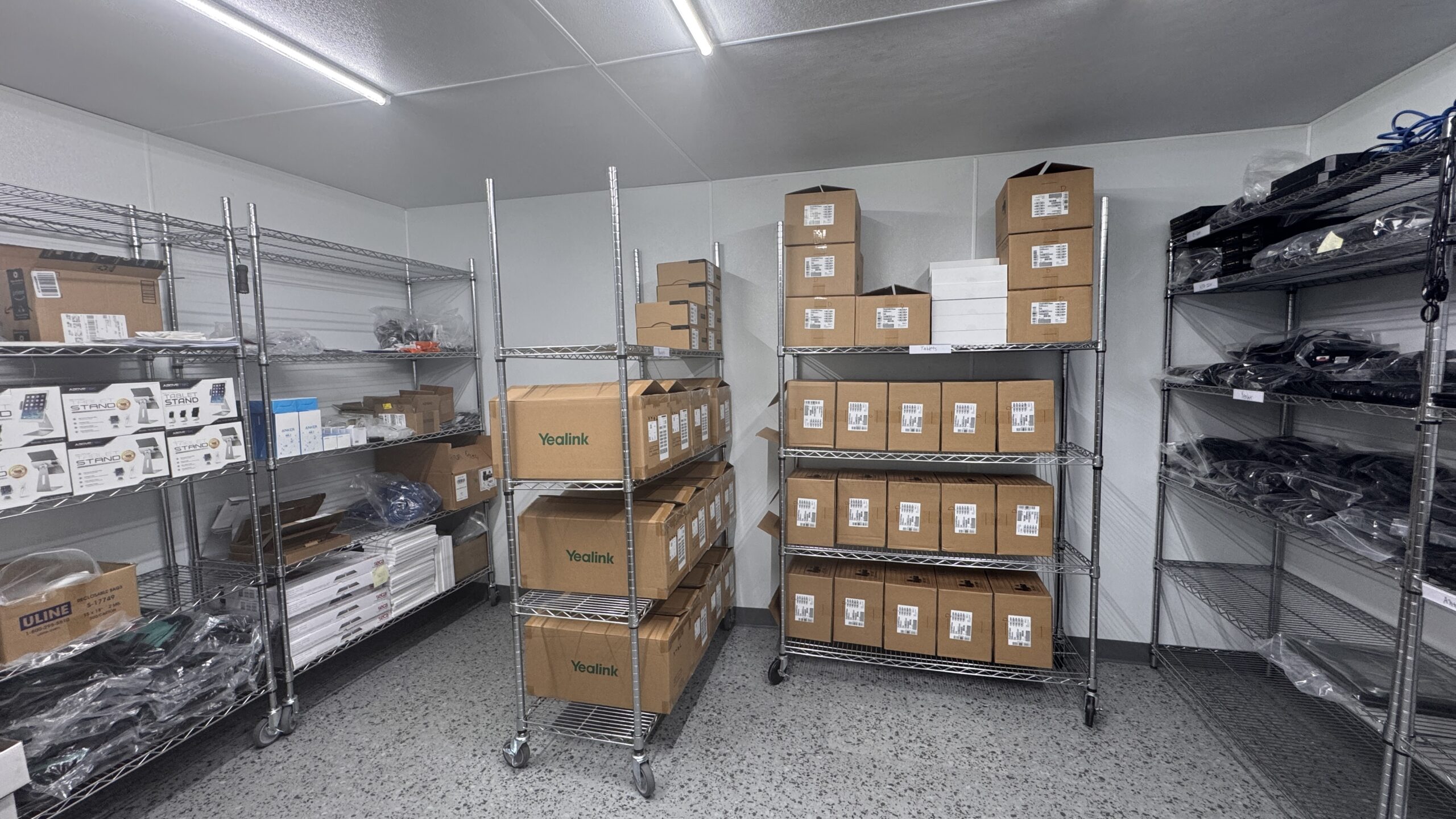
A hospital-at-home kit is not a carton. It is a small network that has to power up, connect, and work the moment a clinician opens it in a patient's living room. Most logistics providers move boxes. The part of an in-home kit that fails silently is the connectivity, and that is exactly where RCN lives. RCN is a full-stack wireless technology provider, so the company that handles your kits already understands the network inside them.
We understand the technology inside the kit.
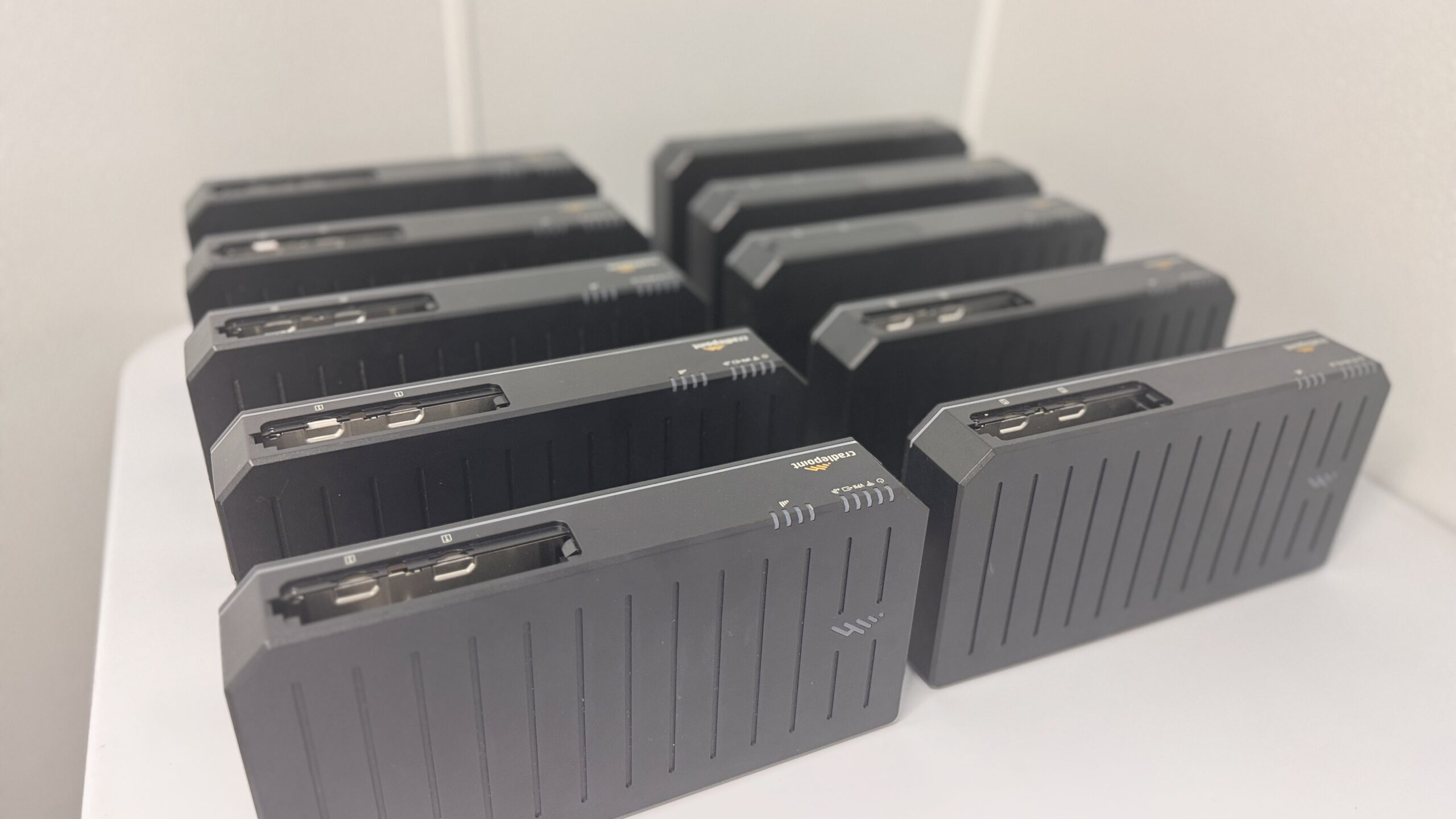
Routers, tablets, SIMs, power supplies, peripherals, firmware, reset workflows, cellular connectivity, and field-failure patterns. RCN provisions and troubleshoots wireless across AT&T, Verizon, and T-Mobile as a core competence, not an outsourced add-on.
We manage the whole lifecycle, not one slice.
Procurement, receiving, cleaning, reset, reconfiguration, inventory, rekit, QA, shipping, exchange, RMA, replenishment, and reporting can live with one accountable partner instead of four pointing at each other.
We are flexible where enterprise vendors are rigid.
In-home programs evolve fast. RCN adapts kit contents, replacement rules, urgent-exchange workflows, and customer-specific operating procedures without a six-month change cycle.
We protect clinical capacity.
Your team should not chase chargers, troubleshoot routers, reconcile missing components, or file manufacturer RMAs. RCN absorbs the operational noise so care teams can focus on patients, backed by a U.S.-based 24/7 NOC.
Remote patient monitoring
Remote patient monitoring (RPM) kit logistics, under the same roof
Hospital-at-home is one model. Remote patient monitoring, mobile acute care, and virtual care run on the same pattern: a reusable, connectivity-dependent kit that has to be provisioned, shipped, recovered, sanitized, and redeployed, patient after patient. RCN manages RPM kit fulfillment and reverse logistics the same way it manages hospital-at-home kits, because the hard part is identical, the connectivity and the lifecycle discipline.
Whether the kit is a cellular vitals hub, a 4G or 5G tablet, a blood-pressure or pulse-oximetry device, or a full deployable network kit, RCN provisions the SIM, validates signal, configures the router, and builds multi-carrier failover where coverage is thin. Then it recovers, wipes, replenishes, QA checks, and redeploys, so the next patient gets a kit that works on day one.
Choosing a partner
Why a general 3PL or device-only logistics vendor leaves a gap
Three kinds of vendors touch in-home care kits. Only one of them owns the connectivity and the full lifecycle in the same place.
| Capability | General 3PL / depot | Device-only RPM logistics | RCN full-stack lifecycle |
|---|---|---|---|
| Understands the cellular connectivity inside the kit | Limited | Partial | Core competence |
| Provisions and troubleshoots SIMs and carriers | No | Varies | Yes, multi-carrier |
| Manages the full lifecycle, procurement to redeployment | Partial | Partial | Yes |
| Recovers warranty value through manufacturer RMA | No | Limited | Yes |
| Adapts kit specs without a long change cycle | Rigid | Rigid | Yes |
| Sources non-standard gear (procurement) | Limited | No | Yes |
| 24/7 U.S.-based NOC behind deployments | No | No | Yes |
Comprehensive line card
Everything required to keep patient-care technology in motion
Use RCN as a complete lifecycle partner, or as the operational backbone behind a specific kit program.
Depot Operations
- Inbound kit receipt
- Return inspection
- Cleaning workflow
- Device reset / wipe
- Rekit and packaging
Technology Readiness
- Router and tablet checks
- SIM / connectivity validation
- Peripheral pairing
- Configuration standards
- Readiness QA
Procurement & Inventory
- Part sourcing
- Vendor coordination
- Min/max replenishment
- Serialized asset tracking
- Component availability
Field Exchanges
- Active-site replacements
- Urgent swap shipments
- Defective part intake
- Return label coordination
- Continuity support
RMA Management
- Manufacturer claim handling
- Warranty tracking
- Defect documentation
- Replacement follow-up
- Recovery reconciliation
Fulfillment
- Kit staging
- Carrier shipping
- Shipment documentation
- Deployment prioritization
- Special project support
Program Controls
- SOP development
- Exception tracking
- Cycle-time reporting
- Inventory reconciliation
- Operational reviews
Connectivity Services
- Carrier plan support
- Cellular device sourcing
- Router expertise
- Remote-site readiness
- Escalation support
How it works
A repeatable operating system for kit readiness
RCN gives healthcare operators a disciplined lifecycle model that keeps technology assets moving from patient to patient with fewer surprises.
Design the kit standard
Define parts, alternates, replacement thresholds, QA steps, and deployment rules.
Stand up the depot flow
Create receiving, inspection, cleaning, reset, rekit, and outbound procedures.
Control inventory
Track serialized devices, consumables, replenishment, defects, and kit completeness.
Handle exceptions
Manage exchanges, missing parts, urgent shipments, and manufacturer RMAs.
Report and improve
Review cycle times, failure trends, parts consumption, and bottlenecks.
Built for the decision maker
Clear value for operations, supply chain, and care-delivery leaders
For operations leaders
Turn kit readiness into a managed process instead of a constant escalation queue.
- Reduce clinical disruption caused by missing or failed technology.
- Give teams one partner for depot, exchanges, and issue resolution.
- Scale new markets without building internal depot infrastructure first.
For supply chain & finance leaders
Gain control over assets, parts, procurement, and recoverable value.
- Improve visibility into kit status, component usage, and defective returns.
- Reduce stranded inventory and unnecessary replacement purchases.
- Push warranty and RMA recovery instead of letting defects become dead cost.
For clinical & IT leaders
Keep the people closest to patients out of the logistics weeds.
- Connectivity validated before a kit ever reaches a patient's home.
- HIPAA-aligned device wipe and documented chain of custody.
- One escalation path, backed by a U.S.-based 24/7 NOC.
Questions, answered
Hospital-at-home technology logistics, in plain terms
What is hospital-at-home technology logistics?
Hospital-at-home technology logistics is the managed process of procuring, preparing, recovering, repairing, and redeploying the connected technology kits that power inpatient-level care delivered in a patient's home. It treats the cellular gateway, tablet, monitoring devices, peripherals, SIM, and case as one accountable lifecycle rather than a stack of separate vendors.
How is RCN different from a 3PL or an RPM logistics vendor?
RCN manages the connectivity inside the kit, not just the box around it. A general 3PL moves and stores cartons, and a device-only RPM logistics vendor ships hardware. RCN is a full-stack wireless company, so it provisions SIMs, validates cellular signal, configures routers, recovers warranty value through RMA, and owns the whole lifecycle from procurement to redeployment.
Does RCN support HIPAA requirements?
Yes. RCN's depot workflows support your HIPAA-aligned data handling obligations, including documented chain of custody on inbound kits and verified device wipe and reset before any device is returned to ready inventory. RCN supports your compliance program; the covered entity remains responsible for its own HIPAA compliance.
Can RCN manage remote patient monitoring (RPM) kits as well?
Yes. RCN manages remote patient monitoring kits, hospital-at-home kits, and mobile acute care kits under the same lifecycle model. The reusable, connectivity-dependent kit is the common pattern, and RCN treats every model the same way: recover, reset, replenish, QA, and redeploy.
What is typically inside a hospital-at-home kit?
A hospital-at-home kit typically includes a cellular gateway or router, a clinician or patient tablet, remote monitoring and vitals devices, a connectivity hub, peripherals and cables, a provisioned SIM, power supplies, and a transport case. The connectivity components are the ones that fail silently, which is where RCN focuses.
Do you handle carrier connectivity and SIM provisioning?
Yes. RCN provisions and troubleshoots cellular connectivity across major U.S. carriers, including AT&T, Verizon, and T-Mobile, and designs multi-carrier configurations where coverage demands it. Connectivity is RCN's core competence, not an outsourced add-on.
Can RCN support hospital-at-home programs nationwide?
Yes. RCN operates its depot and 24/7 Network Operations Center from Knoxville, Tennessee and supports kit deployments and field exchanges nationwide, behind programs that ship technology to patients in any market.
Next step
Find the hidden failure points in your kit lifecycle
Talk to an RCN healthcare connectivity specialist. We will review your current in-home technology kit flow, from procurement and depot to exchanges, returns, RMA, and reporting, and show you where a managed lifecycle partner reduces cost, delay, and operational drag.
Talk to a specialistTalk to RCN
Talk to an RCN healthcare connectivity specialist
Tell us about your in-home technology kit flow, from procurement and depot to exchanges, returns, RMA, and reporting, and we will show you where a managed lifecycle partner reduces cost, delay, and operational drag.
After you submit, an RCN specialist reviews your current kit flow and follows up with a short, no-cost lifecycle assessment. Prefer to talk now? Call (865) 315-7373.