

Wireless Insights
Cradlepoint R1900 for Emergency Operations Centers: The Alternate EOC
When the primary EOC goes dark, a deployable 5G network turns any borrowed building, trailer, or parking lot into a connected alternate EOC in minutes, not days.
Configure your PNKFederal Continuity Directive 1, FEMA's January 2017 continuity standard, gives federal agencies 12 hours after a continuity activation to have essential functions running at an alternate location, and requires that operations be sustainable for a minimum of 30 days. Most state and county continuity plans borrow that same bar. The building is usually the easy part: a second county facility, a fairgrounds hall, a borrowed training room. The network is where alternate EOC plans quietly fail, because the primary EOC's fiber, phone trunks, and radio consoles do not travel. A deployable 5G network closes that gap.
The short answer: FCD-1 allows 12 hours to restore essential functions at an alternate site and 30 days to sustain them. A Pop-Up Network Kit cuts the network share of that 12 hours to about 5 minutes: one case, multi-carrier 5G, secure Wi-Fi, no site infrastructure required.
The Ericsson Cradlepoint R1900 is the router built for this job. It is a ruggedized 5G router with Wi-Fi 6 and an optional second modem for simultaneous connections to two different carriers, all managed through NetCloud. The same dashboard that watches your primary circuits watches the box that rides in the continuity trailer.
A router alone is not a continuity plan. The Pop-Up Network Kit (PNK) from RCN Technologies packages the R1900 with Panorama Antennas hardware, pre-provisioned multi-carrier SIMs, power, and a ruggedized case, backed by RCN's 24/7 NOC. It is the operationally complete version of a deployable 5G network: open the case, power it on, and the alternate site has secure Wi-Fi and WAN in about 5 minutes.
How Emergency Management Teams Use the Cradlepoint R1900
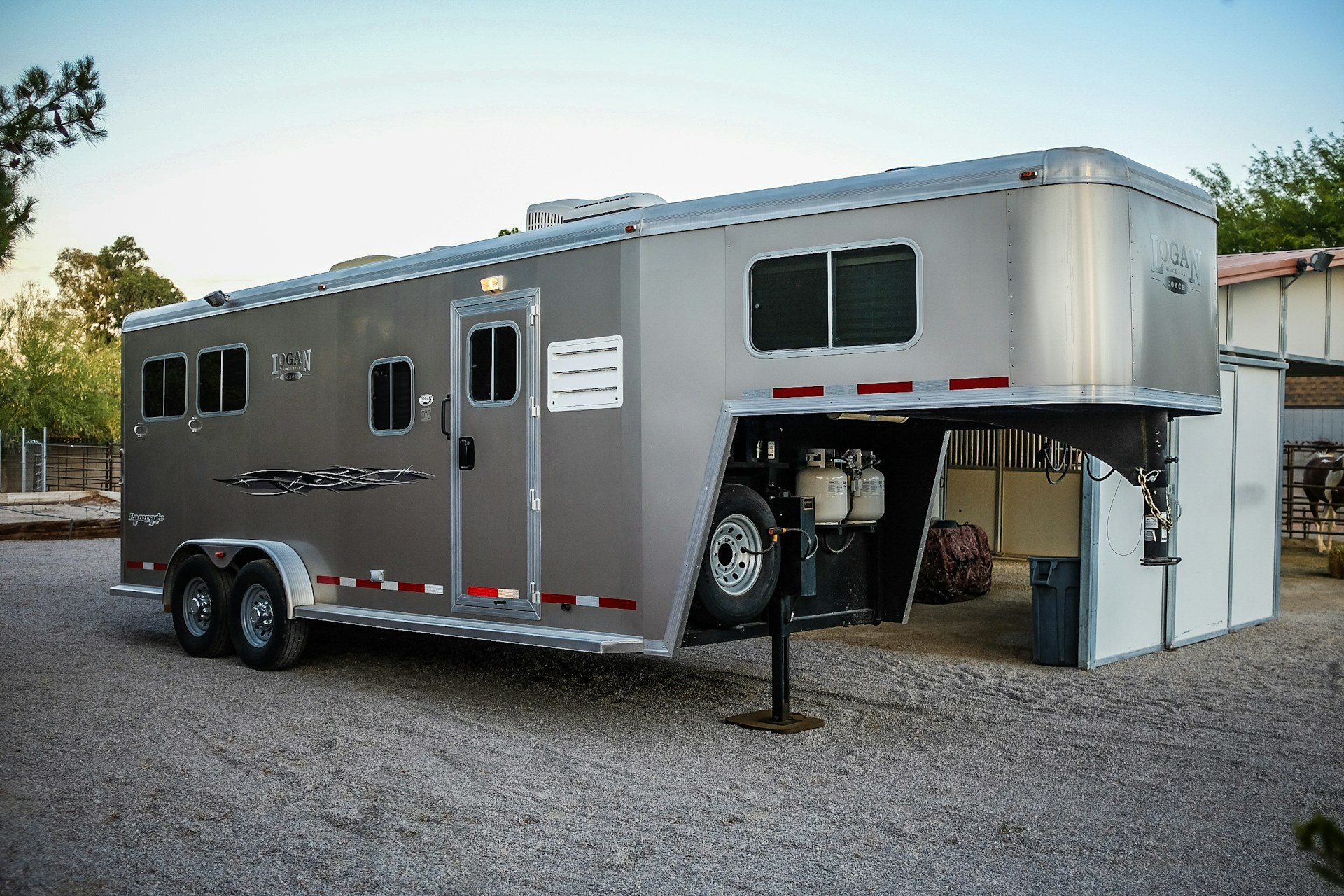
FEMA's National Incident Management System EOC guidance, updated in October 2022, is direct about the requirement: if an EOC cannot support the response, the jurisdiction should identify an alternate EOC with capabilities equal to or greater than the primary. The same guide notes that a mobile unit equipped with communications capabilities greatly improves an EOC's ability to relocate without degrading coordination and control.
FEMA's Continuity Guidance Circular for state, local, tribal, and territorial governments, issued in February 2018, sorts alternate locations into hot, warm, and cold sites, and recommends they sit far enough from the primary facility to escape the same hazard. Most jurisdictions cannot afford a hot site with duplicated circuits. What they can afford is a warm or cold site plus a network that arrives with the team.
That is how agencies actually run it. Rush County Emergency Management and Homeland Security in Indiana operates an R1900-based PNK across its mobile command trailer and field operations. When a lightning strike knocked out the county courthouse internet on an election day, the team deployed the PNK to the Clerk's Office and kept six computers online for nearly a week until service was restored. At a recent event, the kit held a 5G connection nearly 200 feet from the case on its internal antenna alone.
The pattern scales. Harris County deployed 130 R1900 PNKs across its election infrastructure in 2025, and state emergency management agencies use the same configuration for incident command and continuity roles. One kit serves the exercise season, the activation, and the relocation.
What a Deployable 5G Network Adds to Your Continuity Plan
Continuity directives are written as capability requirements, not shopping lists. Here is how the PNK maps to the communications requirements that FCD-1 and FEMA's EOC guidance actually impose.
| Requirement | How the PNK meets it |
|---|---|
| Interoperable communications with internal and external stakeholders | Pre-provisioned SIMs across AT&T, Verizon, and T-Mobile, with public safety priority available: FirstNet-compatible via AT&T SIMs and Verizon Frontline-compatible. |
| Alternate site at sufficient distance from the primary facility | The PNK is site-agnostic. Any building, tent, or vehicle inside cellular coverage becomes a working alternate EOC. |
| Communications resilient enough to perform essential functions at primary and alternate locations | The R1900 Dual configuration runs two modems on two carriers at once, so a single carrier outage does not take the EOC down. |
| Support for leadership in transit | The kit runs from vehicle power. Coordination continues while the team moves between the primary and alternate sites. |
None of this requires construction, circuit orders, or a standing lease on dark office space. The network requirement moves from the facility budget to a single piece of deployable equipment.
Choosing the Right PNK Configuration
Every PNK ships pre-provisioned, NetCloud-managed, and NOC-supported. The configuration decision comes down to headcount, redundancy, and coverage:
- R980 PNK: smaller teams and lighter field use, the most portable option.
- R1900 PNK: the higher-capacity workhorse for an alternate EOC supporting a full activation staff.
- R1900 Dual PNK: two modems on two carriers simultaneously, the right answer when the EOC itself is the mission-critical site.
- Starlink-Ready PNK: satellite and cellular in one kit for activations where the towers themselves are damaged or overloaded.
For most emergency management agencies standing up an alternate EOC, the R1900 Dual is the default recommendation: continuity is exactly the scenario where multi-carrier redundancy earns its cost. For a deeper comparison, see our R980 vs. R1900 configuration guide.
Compatibility, Setup, and Support
Public safety networks
The PNK is FirstNet-compatible via AT&T SIMs, Verizon Frontline-compatible, and T-Mobile public safety-compatible, so your agency's existing priority service carries over to the alternate site.
Setup time
A typical PNK is operational within about 5 minutes of arriving on site: open the case, connect the antenna, power on. No IT staff required at the alternate location.
24/7 NOC support
RCN's U.S.-based Network Operations Center monitors every deployed PNK around the clock. During an activation, your team runs the incident and the NOC runs the network. If your dispatch operation needs the same treatment, see our guide to backup PSAP connectivity.
Funding and Procurement for Government Buyers
Alternate EOC connectivity is fundable. The FY 2024 Emergency Operations Center Grant Program distributed $103,189,080 nationally for equipping, upgrading, and constructing EOC projects. The Emergency Management Performance Grant program funds interoperable communications and sustainment with a 50 percent match, and on August 1, 2025, FEMA announced nearly $1 billion in new funding across 15 preparedness grant programs. Deployable connectivity equipment fits squarely inside these categories.
On the purchasing side, RCN's PNK is available through the contract vehicles your procurement office already uses: GSA Schedule, Sourcewell, NASPO ValuePoint, OMNIA Partners, and Equalis Group, with Carahsoft supporting federal IT buyers. Our team walks agencies through pre-competed PNK procurement so the purchase clears before the next activation, not after.
Configure your PNK for your alternate EOC
RCN's PNK team scopes RF coverage at your continuity sites, recommends the right configuration, and pre-provisions carrier SIMs so your continuity plan includes a network that travels. RCN Technologies is an Ericsson Technical Excellence Partner and a Cradlepoint-certified integrator.
Configure your PNKFrequently asked questions
What is a deployable 5G network for emergency operations centers?
A portable, self-contained network that brings carrier connectivity and secure Wi-Fi to any location an EOC needs to operate. RCN's Pop-Up Network Kit builds one around the Ericsson Cradlepoint R1900: multi-carrier 5G, Panorama antennas, and power in a single ruggedized case, managed by RCN's 24/7 NOC.
How fast can a PNK bring an alternate EOC online?
About 5 minutes from case open to working network. FCD-1 gives continuity plans 12 hours to restore essential functions at an alternate site, so the network stops being the long pole in that timeline.
Does the PNK work on FirstNet and Verizon Frontline?
Yes. The PNK is FirstNet-compatible via AT&T SIMs, Verizon Frontline-compatible, and T-Mobile public safety-compatible, so agency priority and preemption service applies at the alternate site.
Does an alternate EOC need the same network as the primary EOC?
FEMA's EOC guidance calls for an alternate EOC with capabilities equal to or greater than the primary. Duplicating fiber and phone trunks at a second site is rarely affordable, which is why most jurisdictions pair a warm or cold site with deployable connectivity instead.
What if cellular networks are down or overloaded during the activation?
The R1900 Dual PNK runs two carriers simultaneously so one carrier outage does not take the EOC offline, and the Starlink-Ready PNK adds satellite backhaul for incidents that damage or overload the towers themselves.
Can we buy a PNK through cooperative purchasing contracts?
Yes. The PNK is available on GSA Schedule, Sourcewell, NASPO ValuePoint, OMNIA Partners, and Equalis Group, with Carahsoft supporting federal buyers. Grant funding such as the Emergency Operations Center Grant Program and EMPG can apply to deployable communications equipment.
Speak with a Connectivity Expert
Ready to put clinic-grade connectivity on every clinic stop?


Want to Learn More?
Request a custom quote.