

Government POTS Replacement: Built for Compliance. Engineered for Continuity.
GOVERNMENT POTS REPLACEMENT & COMPLIANCE GUIDE
Government agencies are under increasing pressure to replace aging copper telephone lines while preserving the critical services they support, including fire alarms, elevator emergency phones, security systems, and emergency communications.
RCN POTS Link is a fully managed POTS replacement solution purpose-built for government environments. With Advanced E911, resilient multi-carrier connectivity, 24-hour battery backup, and 24/7 U.S.-based monitoring, POTS Link helps agencies modernize legacy infrastructure without sacrificing reliability or oversight.
Download our complimentary guide to understand the regulatory, technical, and procurement considerations of government POTS replacement, including the recommendations outlined in GSA’s EIS POTS Replacement guidance.

Why Government POTS Replacement Requires More Than Basic VoIP

Government agencies face a more complex challenge than simply finding an alternative to traditional copper telephone service. Many legacy POTS lines support essential building systems, emergency communications, and public safety applications that must remain operational throughout the transition.
As telecommunications carriers retire aging copper infrastructure and increase the cost of maintaining legacy services, agencies must navigate four critical challenges:
1. Rising Costs and Copper Retirement
Traditional POTS service is becoming increasingly expensive and difficult to maintain. Carrier-driven copper retirement, escalating monthly rates, and declining support for legacy infrastructure create growing financial and operational risks. Agencies that delay modernization may face unexpected service disruptions, costly emergency replacements, and additional pressure on already constrained public budgets.
2. Regulatory Compliance
Government agencies must account for applicable emergency calling requirements, GSA EIS guidance, and life-safety codes governing fire alarms, elevator emergency phones, and other critical systems. Replacing copper connectivity alone does not guarantee that these applications will satisfy their operational or regulatory requirements.
3. Mission-Critical Service Continuity
Emergency communications, fire alarms, and other essential systems require dependable connectivity, including during network disruptions and power outages. Replacement solutions must incorporate appropriate power resilience, network redundancy, and application-specific compatibility to maintain service continuity.
4. Operational Oversight and Accountability
Government organizations frequently maintain analog communications across dozens or hundreds of facilities. Without centralized visibility, identifying service disruptions, managing equipment, and maintaining accurate line inventories can create substantial administrative burdens. Agencies need reliable monitoring and clear accountability for the services supporting their critical infrastructure.
For government agencies, successful POTS replacement is not simply about restoring dial tone. It is about controlling costs while preserving the reliability, regulatory readiness, and operational accountability of the systems that depend on it.
Why POTS Link Is Purpose-Built for Government Agencies
With experience serving more than 1,100 government agencies across federal, state, local, and education markets, RCN Technologies understands the unique challenges of maintaining mission-critical communications in the public sector.
RCN POTS Link is a fully managed, 1:1 POTS replacement service purpose-built for government environments. Combining GSA-aligned technical architecture, Advanced E911 capabilities, redundant network connectivity, continuous monitoring, and government-ready procurement options, POTS Link delivers a comprehensive alternative to aging copper infrastructure.
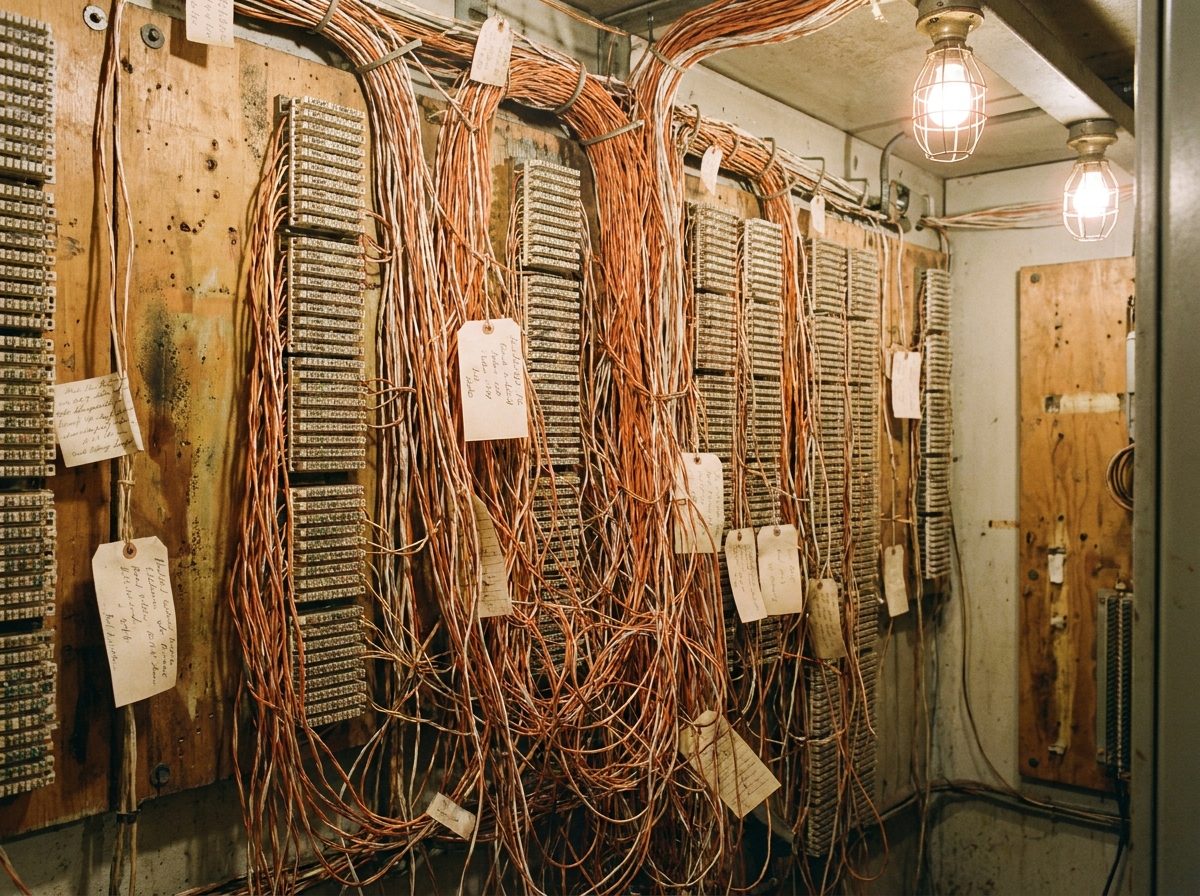
1. Engineered Around GSA EIS Recommendations
The General Services Administration’s Enterprise Infrastructure Solutions (EIS) POTS Replacement guidance discusses considerations for replacing legacy analog telecommunications, particularly emergency calling capabilities, service architecture, and continuity.
- Analog Terminal Adapter (ATA) integration to preserve connectivity with compatible legacy equipment.
- Advanced E911 capabilities supporting accurate emergency caller location information.
- Redundant communications pathways for improved service survivability.
- 24-hour battery backup for continued operation during power outages.
- Support for eligible government priority telecommunications services.
Rather than relying on a basic VoIP adapter, agencies receive a managed solution designed around the operational requirements of critical analog applications.
2. Advanced E911 for Critical Government Communications
Emergency communications depend on more than the ability to dial 911. First responders need accurate information about where an emergency originates, particularly within multi-building campuses and public facilities.
- Dispatchable location records can identify specific buildings, floors, suites, and other relevant details.
- Calling configurations support direct 911 dialing without additional prefixes.
- Designated personnel can receive emergency call notifications.
- Individual analog lines can be provisioned with location information appropriate to each installation.
These capabilities help agencies address applicable emergency calling requirements, including Kari’s Law and RAY BAUM’S Act where relevant. Applicability and compliance depend on deployment configuration.
3. Multi-Carrier Resilience and 24-Hour Backup Power
- Dual-SIM cellular connectivity is included to support network redundancy.
- Compatible configurations can incorporate optional wireline broadband or satellite connectivity.
- Intelligent WAN management supports switching between available communications pathways.
- 24-hour backup power supports operation through local outages.
- Voice infrastructure incorporates three geographically dispersed U.S. data centers.
These layers reduce dependence on any single communications pathway but do not guarantee uninterrupted service.
4. Fully Managed Service with 24/7 U.S.-Based NOC Support
- 24/7 monitoring of managed connectivity and service infrastructure.
- Oversight of cellular gateways, SIMs, ATA registration, and power status.
- Remote diagnostics, troubleshooting, and service restoration assistance.
- Managed equipment replacement support and ongoing service administration.
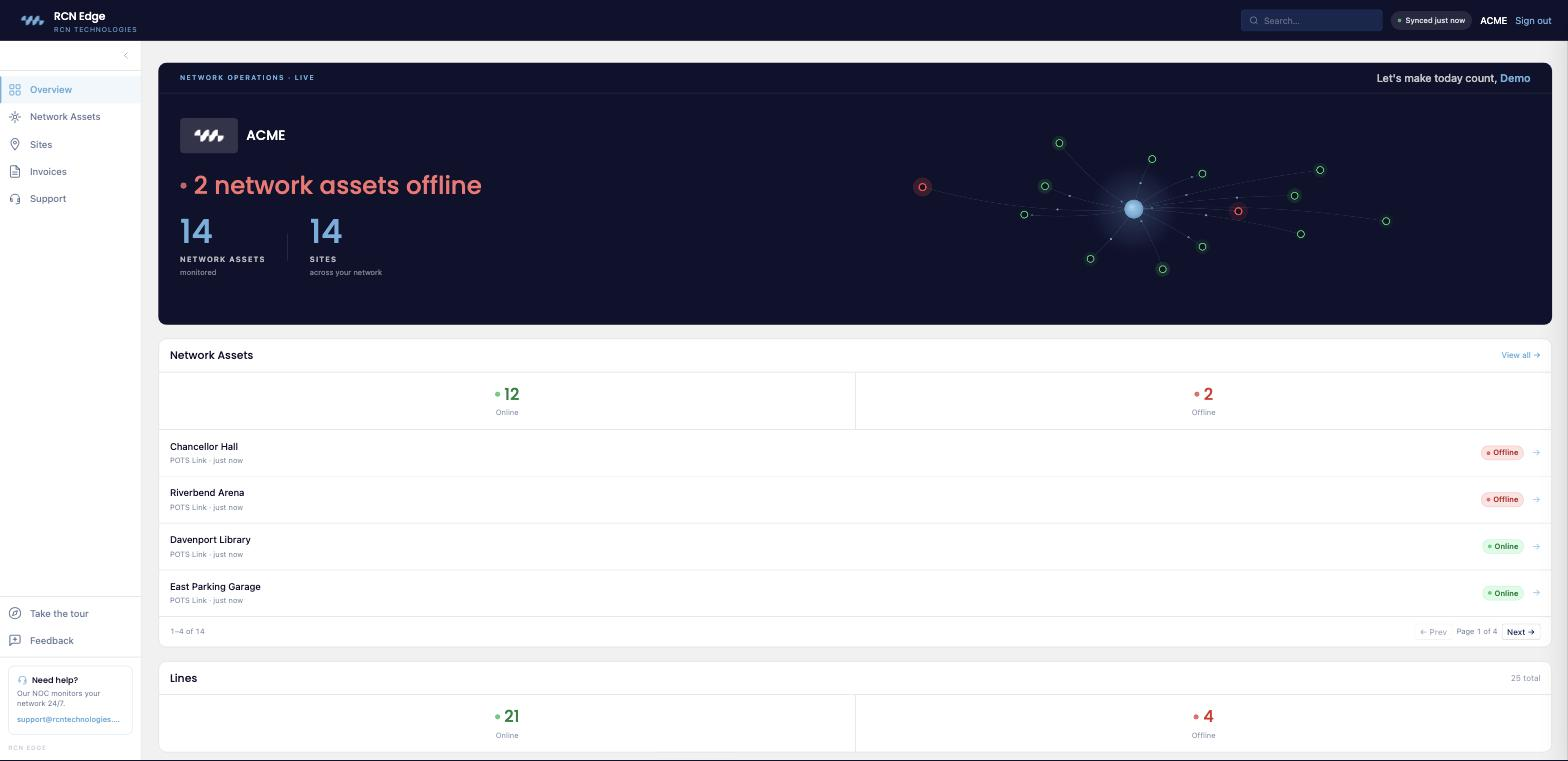
5. Centralized Visibility and Accountability with RCN Edge
- Visibility into individual replacement lines.
- Associated gateways and equipment.
- Carrier SIM cards and physical asset locations.
- Service and billing information in a single interface.
POTS Link does more than replace aging copper connectivity. It brings modern operational visibility to legacy analog infrastructure.
6. Government-Ready Procurement and Deployment
- GSA Multiple Award Schedule and national cooperative options.
- Applicable state procurement pathways.
- TAA-compliant equipment configurations for applicable federal purchasing needs.
- Support from line assessment through installation, functional validation, and ongoing management.
Government POTS Replacement Compliance: How POTS Link Aligns with Federal Guidance
Government POTS replacement requires careful evaluation of emergency calling, network resilience, backup power, and legacy equipment compatibility. The General Services Administration’s Enterprise Infrastructure Solutions (EIS) POTS Replacement guidance provides a framework for evaluating alternatives to traditional copper telephone service.
RCN POTS Link was engineered around the technical considerations discussed in Sections 5 and 6 of this guidance, combining Advanced E911 capabilities with resilient connectivity, backup power, and support for legacy analog applications.
| Requirement or Consideration | POTS Link Capability | Government Benefit |
|---|---|---|
| GSA EIS GUIDANCE | ||
| GSA EIS §5 Enhanced 911 | ✔Advanced E911 with provisioned location-specific emergency calling information | Helps first responders identify the location of an emergency call |
| GSA EIS §6 Analog Terminal Adapters | ✔Integrated ATA connectivity for compatible legacy analog devices | Helps retain existing equipment and reduce replacement costs |
| GSA EIS §6 Power Resilience | ✔24-hour backup battery system | Helps maintain service during local power outages |
| GSA EIS §6 Transport Diversity | ✔Dual-SIM cellular connectivity with optional wireline and satellite | Reduces dependence on a single transport path |
| GSA Priority Telecommunications Services | ✔Eligible carrier priority configurations and applicable programs | Additional resilience for qualifying agencies |
| FEDERAL EMERGENCY CALLING | ||
| E911 Kari’s Law | ✔Support for direct 911 dialing and emergency call notification | Supports applicable emergency calling obligations |
| E911 RAY BAUM’s Act | ✔Dispatchable location information including building, floor, suite, or other identifiers | Improves emergency caller location accuracy for first responders |
| LIFE-SAFETY CODES | ||
| NFPA 72 Fire Alarm Communications | ✔Application-specific analog connectivity and signaling support | Supports planning for applicable code compliance |
| ASME A17.1 Elevator Emergency Communications | ✔Analog elevator phone connectivity and location-specific calling | Supports elevator emergency phone migration planning |
| PROCUREMENT | ||
| TAA Trade Agreements Act | ✔TAA-compliant equipment configurations available | Supports applicable federal purchasing requirements |
More Than Compliance: A Fully Managed Government Communications Solution
RCN complements POTS Link’s architecture with 24/7 U.S.-based NOC support, centralized asset visibility through RCN Edge, and ongoing management of the service infrastructure supporting each deployed line. This combination helps agencies maintain visibility and accountability after copper retirement.
Proven Government POTS Replacement: Real-World Results
Government agencies need more than promises of reliability and compliance. They need proven solutions capable of meeting demanding deployment schedules, supporting critical communications, and delivering dependable performance over time.
 Municipal Government · Texas
City of Round Rock
Pool Emergency Phone POTS Replacement
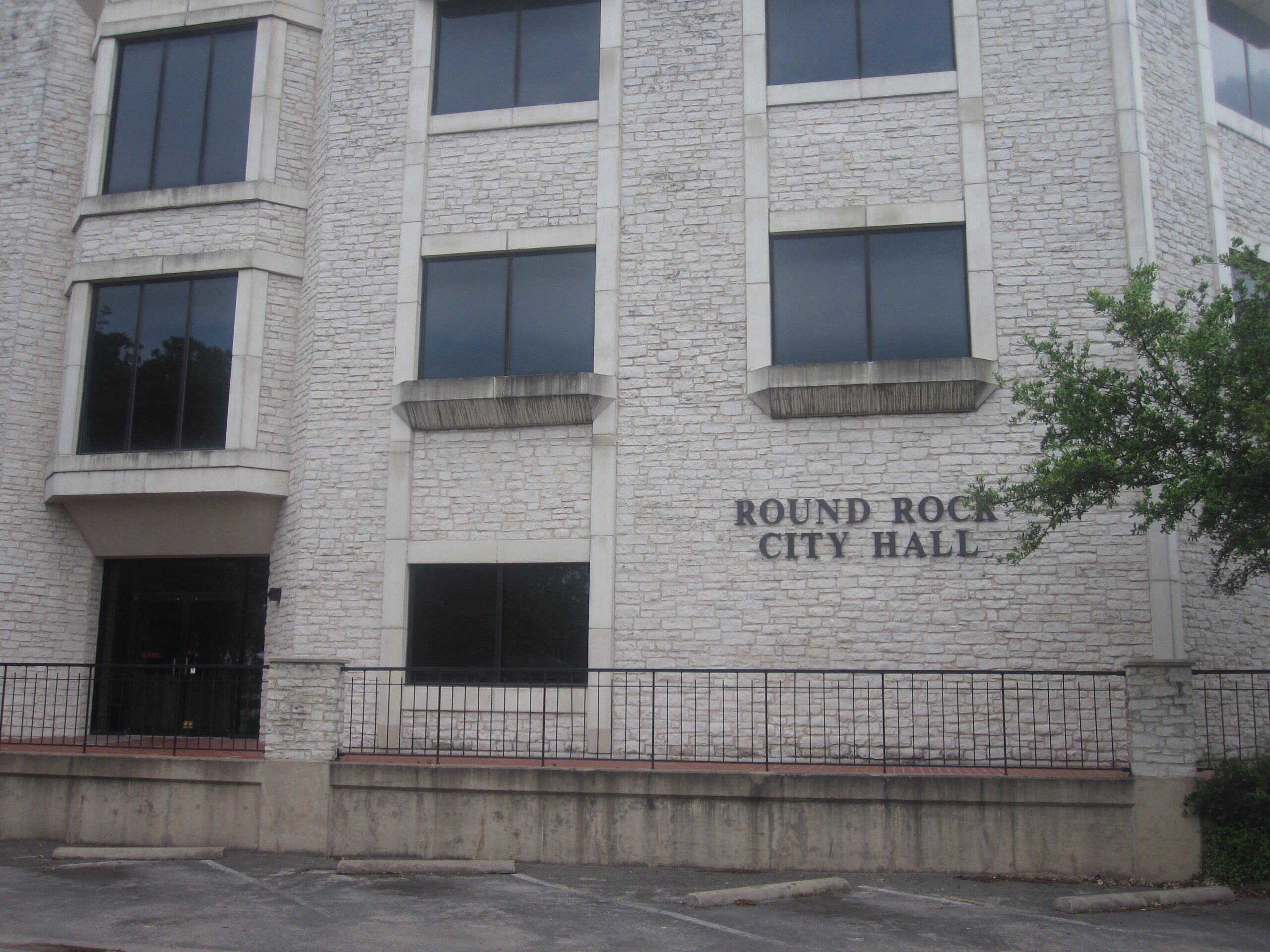
City of Round Rock
Pool Emergency Phone POTS Replacement
When the City of Round Rock received notice that its legacy copper service would be disconnected, the city needed to preserve communications ahead of its public swimming facilities' Memorial Day 2025 opening.
RCN deployed POTS Link within two weeks, transitioning the emergency telephone away from its threatened copper connection while preserving location-based emergency calling information for the receiving PSAP.
- ⚡ 2 weeks to full deployment
- 🎯 Memorial Day pool opening preserved
- 📍 E911 location provisioned for PSAP
- 🔄 No hardware replacement required
Higher Education · TennesseeUniversity of Tennessee at Chattanooga
Campus Emergency Phone Modernization

University of Tennessee at Chattanooga
Campus Emergency Phone Modernization
Working with UTC's E911 Coordination Office, RCN deployed 67 POTS Link lines supporting elevator emergency phones and campus emergency call stations, incorporating location-specific emergency calling and ongoing managed service oversight.
UTC transitioned essential campus communications away from deteriorating copper infrastructure while adopting a managed solution designed around emergency calling requirements.
- 📞 67 POTS Link lines deployed
- 🏢 Elevator phones + campus call stations
- 📍 Location-specific E911 provisioned
- 🔒 E911 Coordination Office partnership
K–12 Education · WisconsinWauwatosa School District
14 Buildings Before an AT&T Shutdown Deadline
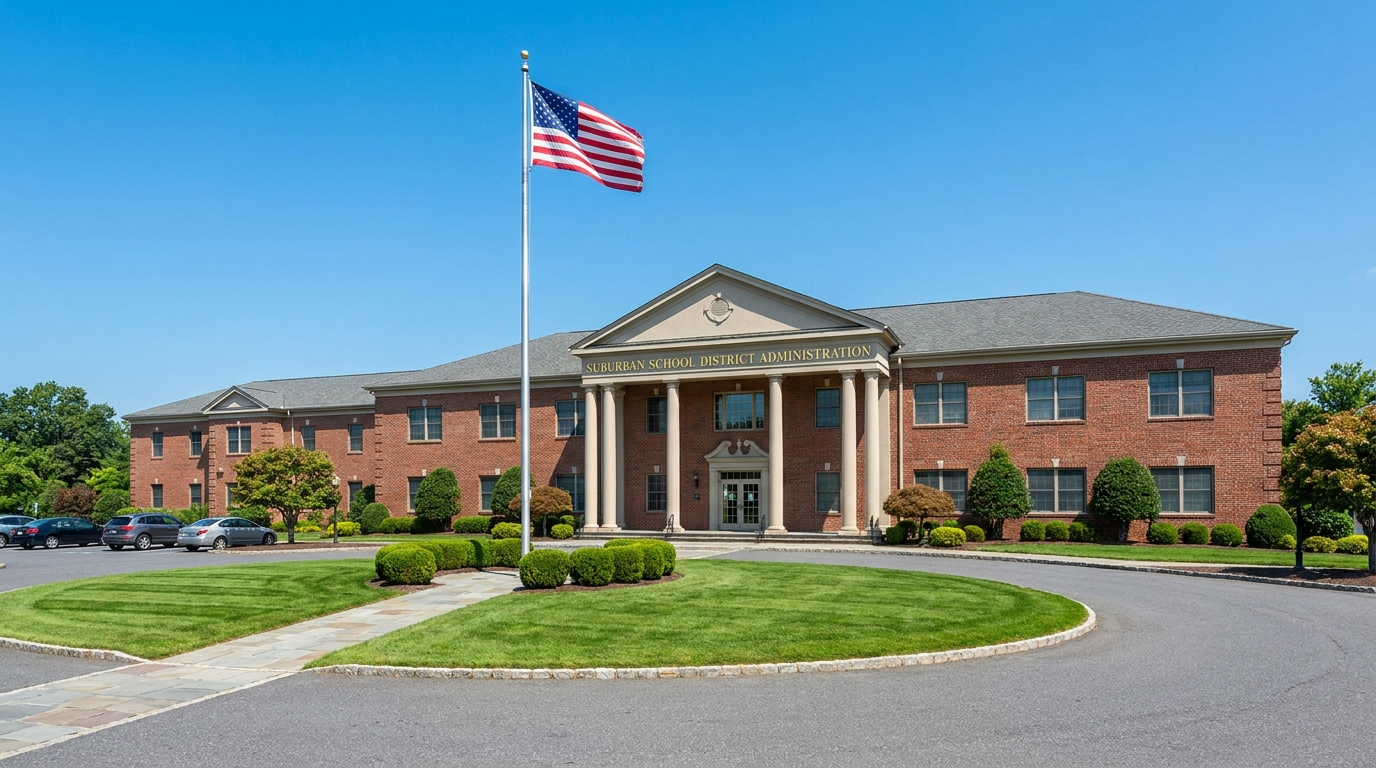
Wauwatosa School District
14 Buildings Before an AT&T Shutdown Deadline
When AT&T announced an October 8 copper shutdown, Wauwatosa needed to replace lines across 14 school buildings. Two other vendors had failed functional testing with the district's Webex calling environment. RCN staged deployment around school schedules and performed thorough 911, failover, and district-wide verification testing.
The district transitioned before the shutdown, improved emergency communications visibility, and reduced recurring operating costs.
- 🏫 14 school buildings transitioned
- ⏱️ AT&T shutdown deadline met
- ❌ 2 prior vendors failed testing
- ✅ Webex environment validated
K–12 Education · TexasProsper Independent School District
32 Sites, Long-Term Reliability

Prosper Independent School District
32 Sites, Long-Term Reliability
Serving approximately 30,000 students across 32 sites, Prosper ISD relied on legacy lines for fire alarms, fax, and backup 911. Outages and provisioning errors drove the district toward POTS Link. After more than three years, Prosper reported only two or three service issues, compared with monthly problems under its previous arrangement.
- 🏫 32 sites, ~30,000 students
- 📉 Monthly issues → 2-3 in 3+ years
- 💰 Lower equipment and service costs
- 🔥 Fire alarms, fax, backup 911 covered
Government POTS Replacement Procurement Made Simple
RCN Technologies helps simplify government POTS replacement procurement through established federal, state, and cooperative purchasing contracts. With experience serving more than 1,100 government agencies, our team helps buyers identify purchasing pathways, evaluate eligibility, and move projects forward with confidence.
Federal, State, and Cooperative Purchasing Options
GSA Multiple Award Schedule (MAS)
Federal agencies and other eligible buyers
Sourcewell
Participating state/local governments, schools, higher education, and eligible entities
OMNIA Partners
Participating public sector organizations
NASPO ValuePoint
Eligible states and participating political subdivisions
Equalis Group
Eligible public agencies and participating organizations
Texas DIR
Eligible Texas state agencies, public universities, school districts, and local governments
New York OGS
Eligible New York state agencies, municipalities, schools, universities, and authorized purchasers
State of Georgia Contract
Eligible Georgia public entities
Commonwealth of Pennsylvania Contract
Eligible Pennsylvania public entities
Contract availability, participating products and services, expiration dates, and buyer eligibility vary. RCN can help verify the applicable purchasing route for each agency.
TAA-Compliant Options for Federal Procurement
POTS Link offers TAA-compliant equipment configurations to support applicable federal acquisition requirements. RCN can assist agencies in identifying appropriate configurations and purchasing pathways for their particular needs.
From Procurement to Deployment: One Experienced Partner
RCN supports agencies from initial line assessment and procurement assistance through installation, functional validation, and ongoing managed service.
Frequently Asked Questions About Government POTS Replacement
Are government agencies required to replace their POTS lines?
There is no single federal mandate requiring every government agency to disconnect all traditional POTS lines by a specific nationwide deadline. However, telecommunications carriers are retiring aging copper infrastructure, increasing legacy service costs, and discontinuing service in affected areas. Agencies should evaluate carrier notices, service reliability, and applicable emergency communications requirements. POTS Link offers a managed alternative for compatible analog applications.
What does GSA recommend for government POTS replacement?
GSA’s Enterprise Infrastructure Solutions (EIS) POTS Replacement guidance discusses emergency calling capabilities and service architecture, including Enhanced 911, analog terminal adapters, power resilience, network redundancy, and priority telecommunications services. POTS Link is designed around these considerations, incorporating Advanced E911, dual-SIM cellular connectivity, backup power, and managed monitoring. Agencies must also assess their own technical and procurement requirements.
Can government agencies replace POTS lines without replacing existing analog equipment?
In many cases, yes. POTS Link uses analog terminal adapter technology to support compatible legacy devices, including elevator emergency phones, fire alarms, security systems, fax machines, and emergency communications equipment. Application-specific evaluation and functional testing remain necessary, particularly for life-safety systems.
How does POTS Link support E911, Kari's Law, and RAY BAUM's Act?
POTS Link supports provisioned dispatchable location details, direct 911 dialing configurations, and emergency call notifications. These capabilities can help address applicable emergency calling obligations. Kari’s Law and RAY BAUM’s Act have specific applicability requirements, and actual compliance depends on the system and deployment.
Can POTS Link support government fire alarms and elevator emergency phones?
Yes, for compatible applications. POTS Link provides analog connectivity, redundant cellular transport, and backup power. Functional testing and coordination with fire alarm providers, elevator contractors, monitoring companies, and authorities having jurisdiction may be necessary for final acceptance.
What happens during a power outage or cellular network disruption?
POTS Link includes 24-hour backup power and dual-SIM cellular connectivity, with optional additional wireline or satellite pathways for compatible configurations. Service continuity depends on battery condition, available networks, configuration, and outage characteristics. RCN’s 24/7 U.S.-based NOC provides ongoing infrastructure monitoring and support.
How can government agencies purchase POTS Link?
RCN identifies purchasing pathways including GSA MAS, Sourcewell, OMNIA Partners, NASPO ValuePoint, Equalis Group, Texas DIR, New York OGS, and applicable state contracts. Purchasing eligibility and contract coverage require verification for each agency and transaction.
How long does a government POTS replacement deployment take?
Timing depends on line count, site access, equipment, purchasing process, and application testing. RCN coordinates assessments, installation, provisioning, and validation. For example, RCN deployed POTS Link for the City of Round Rock within two weeks before a critical facility opening. Larger projects may require phased schedules.
Ready to Modernize Your Agency’s Critical Communications?

Aging copper infrastructure, rising telecommunications costs, and carrier-driven service retirement are creating new challenges for government agencies nationwide.
But replacing legacy POTS lines does not have to mean replacing compatible existing equipment, compromising emergency communications, or disrupting the facilities that depend on them.
With POTS Link, government agencies gain more than a replacement for copper telephone service. They gain a fully managed communications solution engineered for critical analog applications, Advanced E911, resilient connectivity, continuous monitoring, and long-term accountability.
Download the Government POTS Link Compliance Guide
Understand the technical, regulatory, and procurement considerations involved in transitioning government facilities away from traditional copper telephone lines. Inside the free guide:
- GSA EIS Sections 5 and 6 considerations for POTS replacement.
- Advanced E911, Kari’s Law, and RAY BAUM’S Act considerations.
- Backup power, transport redundancy, and analog equipment compatibility.
- Fire alarm and elevator emergency communications applications.
- Federal, state, and cooperative purchasing options.
Have an Active POTS Replacement Project?
RCN’s government specialists can help evaluate existing analog lines, assess application requirements, identify available purchasing contracts, and develop a replacement strategy. From individual facilities to multi-site programs, our team can help agencies move forward.
Question? Let's Talk.
Need help mapping your legacy lines or validating E911 compliance?
ADDITIONAL POTS REPLACEMENT RESOURCES
Use these resources to deepen your understanding of POTS modernization.

POTS Link Risk Assessment
Uncover hidden costs, risks & inefficiencies in your POTS setup with our 3-min, 15-question VLE Score assessment.

Code Compliant Replacement Bible
Discover how to replace POTS lines without violations or downtime. Get code compliance tips for NFPA 72, ASME A17.1, ADA, and more — free guide.
POTS Replacement Insights
Explore our library of POTS replacement articles, compliance guides, and industry insights, written for government IT directors, facilities managers, and procurement teams.
🏢 About RCN Technologies
RCN Technologies partners with over 1,100 unique government agencies across local, state, education, and federal sectors. We specialize in delivering turnkey wireless connectivity where wired options fall short — and we have the public sector procurement experience to help you find an approved purchasing path fast.