

POTS Line Replacement for Gate and Door Entry Systems: Keep Compatible Entry Hardware Working Without Replacing It

By: Reed Perryman, VP of Sales & Marketing, RCN Technologies
Reed Perryman is VP of Sales & Marketing at RCN Technologies with 10 years of experience in POTS line replacement for government agencies, K–12 school districts, and critical infrastructure. He specializes in POTS replacement strategy, GSA procurement, NFPA 72 compliance, and the FCC copper retirement framework.
Your gate opens. Your entry panel lights up. Residents can still find themselves in the directory. But if the copper telephone line behind that system fails, a visitor may not be able to reach anyone to request access. For property managers and facilities teams, the aging analog phone line can become the weak link in an otherwise functional entrance.
POTS lines have supported gate intercoms, apartment telephone entry systems, commercial door entry phones, and parking access call boxes for decades. As providers transition away from legacy copper service, some property owners face higher bills, deteriorating reliability, or migration notices.
The question is not always whether the entire access control system must be replaced. Often, the first question should be: Can we replace the phone line and keep the entry system we already own?
For compatible telephone-based equipment, a managed cellular POTS replacement can provide an alternative communications path. The critical requirement is to test the complete entry workflow, not just dial tone, before the legacy line is retired.
Why Gate Intercoms and Door Entry Phones Still Depend on POTS Lines
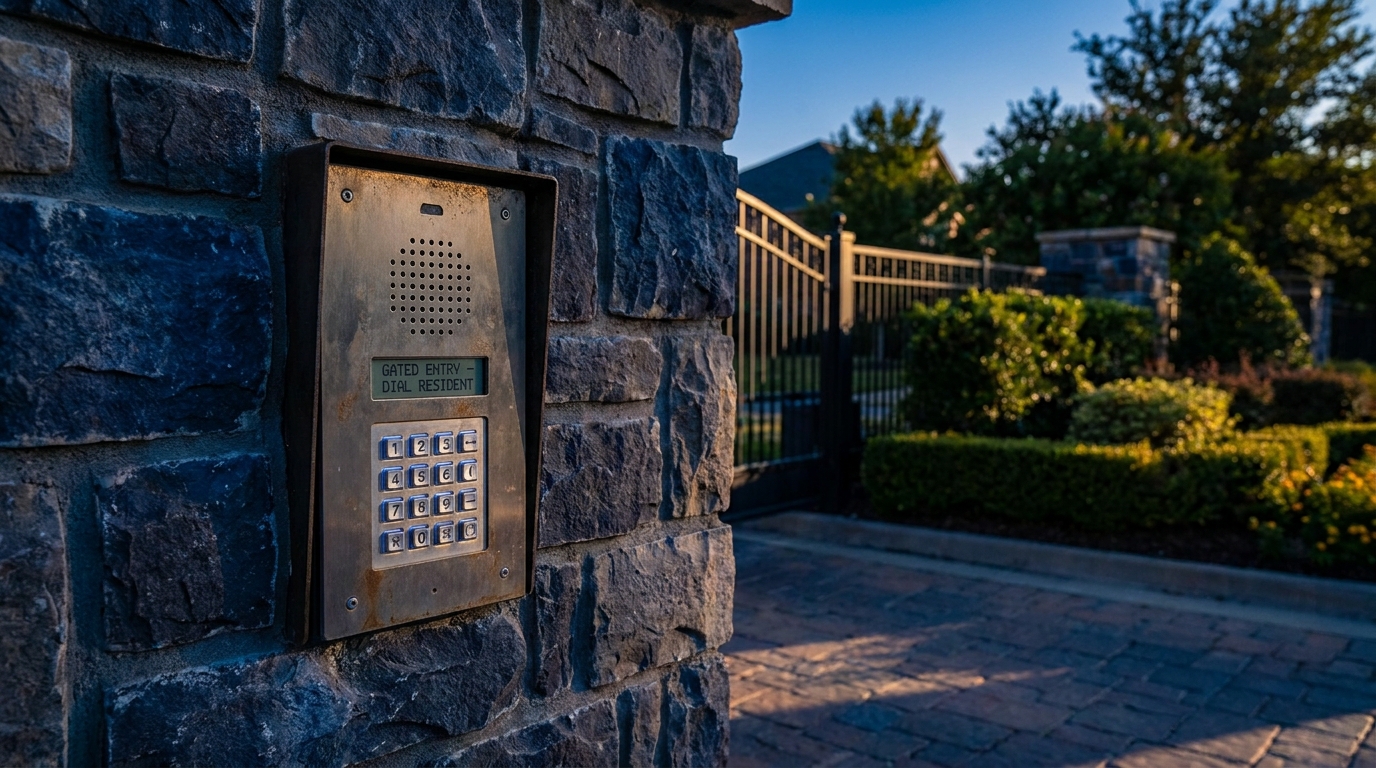
Many legacy entry systems were designed around a simple sequence: A visitor selects a resident or presses a call button at an entry station. The station uses its telephone line to dial the configured phone number. The resident or attendant speaks with the visitor. If permitted, the authorized party enters the system’s keypad release command. The entry station activates its existing control relay, allowing the gate or door control equipment to respond.
The same basic pattern appears in gated HOA communities, multifamily buildings, commercial lobbies, parking garages, campus service gates, warehouses, and secured facilities. One phone line can support an operationally important entrance, even when the rest of the property has moved to fiber, cellular, or IP networks.
Not every modern intercom or access control system needs a phone line. IP-native video intercoms, cloud-managed controllers, and local-only access readers should be assessed separately. This article specifically addresses equipment that still uses an analog telephone connection.
Can You Replace a Gate Entry Phone Line Without Replacing the Gate System?
Often, yes, but compatibility depends on the specific equipment and the functions that use the line. A telephone entry station may rely on its analog connection to call a resident, receptionist, guard station, or designated telephone number. After answering, the authorized person might press a digit that the entry station interprets as permission to release a gate or door.
The phone connection is different from the gate operator, electric strike, door controller, reader, credential database, and mechanical access equipment. A POTS replacement addresses the communications path. It does not automatically replace or control those other components. That distinction can prevent an unnecessary capital project.
A property with reliable entrance hardware may be able to preserve its existing caller directory and day-to-day access workflow while replacing only its vulnerable telephone service. But an older entry station that requires unsupported modem programming or has failing components may still warrant a manufacturer-specific retrofit or full hardware modernization.
What Must Work After POTS Replacement: More Than Dial Tone
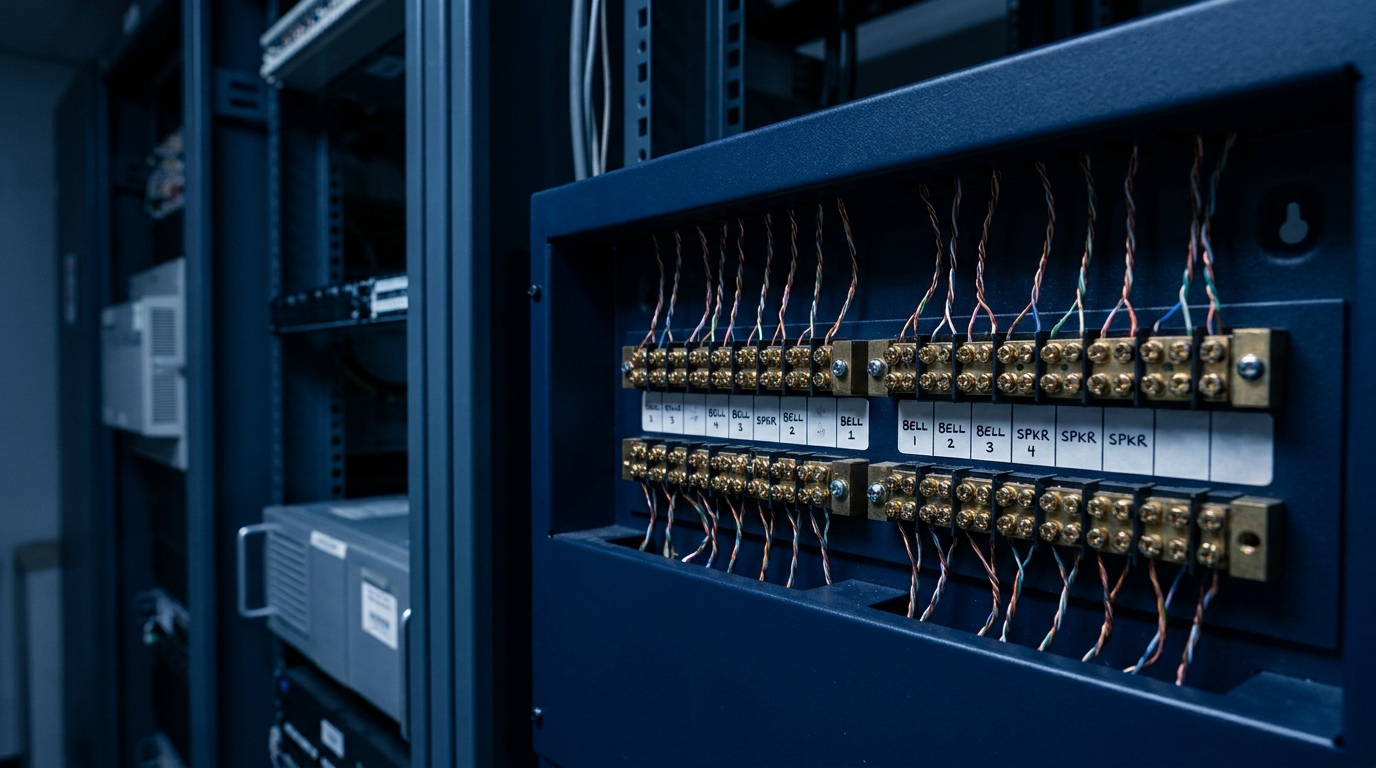
A successful gate or doorway entry migration must preserve every required function that actually depends on the telephone line:
- Outbound calling: The panel must reach the intended resident, reception desk, security operator, or other contact.
- Two-way voice: Visitors and authorized users must be able to hear each other clearly.
- DTMF gate or door release: If a keypad tone triggers access, the replacement path must reliably convey the correct tone through a real call and the entry station must recognize it.
- Call completion and reset: The station must detect disconnects and return to a ready state for the next visitor.
- Inbound calling, if used: Some installations require inbound access to the station. Confirm the supported call flow and telephone-number requirements.
- Programming and administration: A legacy analog modem connection used to update residents or settings is a separate data requirement, not proof of voice compatibility.
A working voice call does not prove that DTMF release or modem-based programming will work. Test both where they are required.
Check Legacy Entry Panel Programming Separately
Some older telephone entry panels use an analog line for visitor calls and dial-up modem programming. These are different technical requirements. A cellular or VoIP-based voice replacement does not automatically support modem data sessions. Confirm whether the resident directory and system settings are maintained locally, through a separate network connection, or through a telephone modem.
If modem programming is required, an approved alternate programming method or equipment update may be necessary. The same review principle applies across entry system manufacturers: document the exact model, firmware where relevant, analog interface, calling behavior, DTMF requirements, and how the directory is maintained. Do not assume universal compatibility.
How Cellular POTS Line Replacement Works with an Existing Entry System
Instead of carrying visitor calls across a traditional carrier copper loop, an approved analog entry line connects to a POTS Link managed service gateway. The gateway supplies a supported analog telephone interface and transports eligible calling over its managed communications service.
Illustrative call path:
Visitor presses Call at the existing entry panel → existing analog telephone wiring → POTS Link gateway → managed cellular communications → resident or authorized attendant.
If the system uses telephone-keypad release, the return DTMF command must travel back and be recognized by the entry station before that station activates its existing relay. This is a communications retrofit, not a promise to remotely operate the gate.
Actual installation design depends on the equipment, available wiring, gateway placement, coverage, and RCN’s engineering review. For compatible sites, POTS Link offers a managed alternative to retaining an aging copper circuit, with RCN handling provisioning and support for the POTS Link service.
Site qualification should include suitable cellular coverage, an appropriate installation environment, antenna placement if necessary, number-porting requirements, and complete acceptance testing.
POTS Link vs. Replacing the Entire Access Control System
Choosing between replacing the phone line and replacing the entry hardware depends on the condition of the existing equipment and what the property actually needs. This comparison outlines the key differences:
| Consideration | Option A Keep Existing System with POTS Replacement | Option B Replace the Entry Equipment |
|---|---|---|
| Primary Objective | Replace legacy analog connectivity | Modernize the entrance experience and hardware |
| Existing Entry Panel | Preserved if compatible | Typically replaced |
| Resident Calling Workflow | Usually retained after validation | May change to video, mobile apps, or other methods |
| Keypad DTMF Release | Must be proven by testing | Depends on the new system design |
| Legacy Modem Programming | Not assumed to work; separate solution may be needed | New platform may offer cloud or IP administration |
| Project Scope | Communications equipment, connectivity, wiring and testing | New panels, mounting, integrations, training and possible database migration |
| Best Fit | Reliable hardware with a failing or expensive copper line | Failed, unsupported, feature-limited, or fundamentally incompatible hardware |
A full IP or video entry upgrade can be the right investment if the building needs mobile credentials, video verification, new integrations, or a supported path away from obsolete equipment. But when the current experience works well, replacing the connection rather than the whole entrance deserves a careful evaluation first.
Why RCN POTS Link Is a Practical Fit for Multi-Property Facilities Teams
A single entrance might have one aging telephone bill. A regional property manager, university, or facilities department can have many analog lines dispersed across buildings and sites. Without a coordinated inventory, an entry-system line may be overlooked until visitors cannot get through.
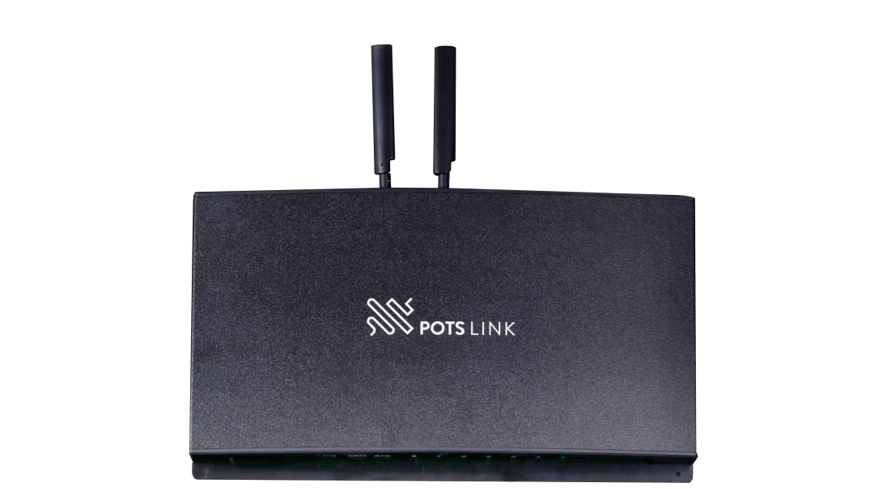
RCN Technologies provides POTS Link as a managed POTS replacement service. Depending on engineering and service configuration, its advantages include:
- Retaining compatible assets: Keep working telephone entry panels and associated entrance hardware where functional testing supports reuse.
- Managed cellular service: Reduce dependence on the old incumbent copper local loop. POTS Link architectures support dual cellular pathways; carrier and failover design should be confirmed for the site.
- RCN deployment and technical support: Gateway provisioning, installation coordination, and managed communications troubleshooting through RCN’s 24/7 U.S.-based Network Operations Center.
- Backup communications power: POTS Link’s 24-hour backup-power architecture is intended for specified communications equipment. It does not supply backup power to a separate entry station, strike, controller, or gate motor.
- RCN Edge visibility: RCN’s customer portal provides centralized visibility into POTS Link lines, service gateways, carrier SIMs, asset locations, and billing, making multi-site telecom administration easier.
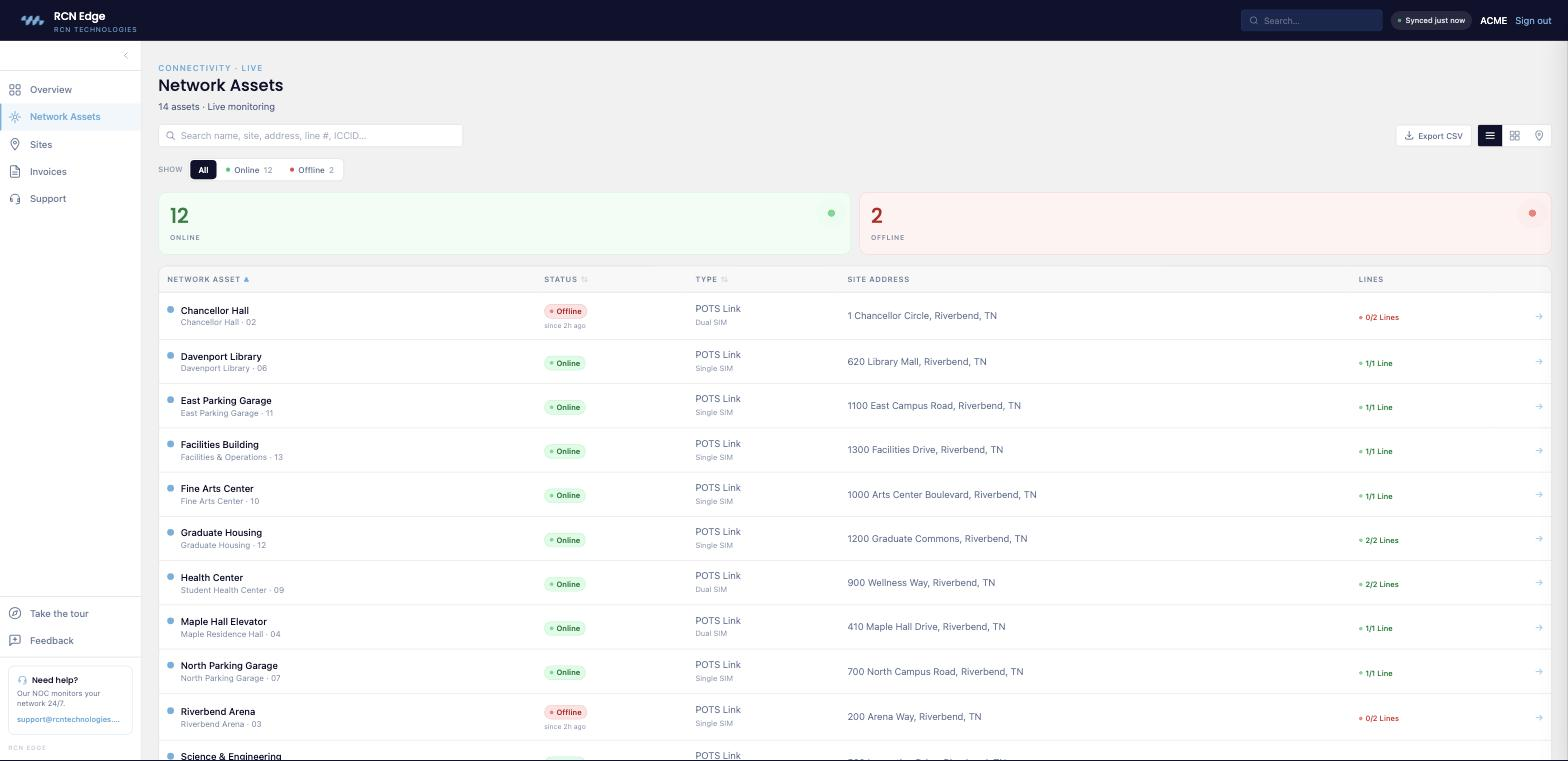
Service-boundary note: RCN Edge monitors the managed POTS Link service, not gate position, access credentials, door unlock logs, visitor video, or a property’s separate physical security controls. The property or access-control contractor remains responsible for equipment beyond the agreed POTS Link service boundary.
Which Properties Should Prioritize a Gate or Door Entry Line Audit?
Any property with telephone-based entry infrastructure that has not been audited against current carrier retirement schedules is carrying unquantified risk. These categories warrant particular attention:
- Gated neighborhoods and HOAs: Entrance call boxes can be the only way visitors and deliveries reach residents. Document who administers the directory and how remote release works.
- Apartments and multifamily communities: Lobby telephone entry stations and parking-garage call boxes may share responsibility across a property manager, security integrator, and telephone carrier.
- Commercial offices and mixed-use facilities: Exterior door phones often call reception, tenant locations, or an after-hours answering team.
- Universities and campuses: Service-road barriers, controlled parking entrances, remote buildings, and staff-only entries may be scattered across large sites.
- Industrial, warehouse, and government locations: Driver gates, loading entrances, security posts, and remote compounds can depend on simple telephone entry communications.
Frequently Asked Questions
Can I keep my existing gate intercom and just replace the phone line?
Often yes, but compatibility must be confirmed for your specific equipment. POTS Link replaces the copper telephone connection with a managed cellular alternative. Your entry panel, gate operator, and access control hardware remain in place if they are functional. Full acceptance testing, including DTMF release if your system uses it, is required before retiring the legacy line.
Does POTS Link support DTMF-based gate release?
DTMF tones must travel through the full communications path and be correctly recognized by the entry station before the system can activate its relay. This requires testing on your specific equipment. POTS Link is designed to support voice calling and DTMF signaling, but compatibility must be validated in your installation environment.
What if my entry panel uses modem programming to update the resident directory?
Analog modem programming and voice calling are different technical requirements. A cellular or VoIP-based voice replacement does not automatically support modem data sessions. If modem-based programming is required, an alternate programming method or equipment update may be necessary. Confirm how your directory is maintained before finalizing a replacement plan.
Does POTS Link provide backup power to the gate operator or entry panel?
No. POTS Link’s 24-hour battery backup supports the POTS Link communications gateway only. It does not supply backup power to a separate entry station, electric strike, door controller, or gate motor. Each component in the entry system has its own power requirements that must be addressed independently.
How do I know if my entry system is compatible with cellular POTS replacement?
RCN conducts a site qualification that includes reviewing equipment specifications, available cellular coverage, installation environment, antenna placement if needed, and complete acceptance testing. The best starting point is documenting the exact make, model, and firmware of your entry panel along with how the system uses its telephone line.
Which cooperative contracts can government agencies use to purchase POTS Link for entry system replacement?
POTS Link is available through GSA Multiple Award Schedule, Sourcewell, OMNIA Partners, NASPO ValuePoint, Equalis Group, Texas DIR, New York OGS, and other cooperative vehicles. Eligibility and contract coverage require verification for each agency and transaction.
About RCN Technologies
RCN Technologies partners with 4,200 businesses & over 1,100 unique government agencies across local, state, education, and federal sectors. We specialize in delivering turnkey wireless connectivity where wired options fall short, and we have the procurement experience to help you find an approved purchasing path fast.
ADDITIONAL POTS REPLACEMENT RESOURCES
Use these resources to deepen your understanding of POTS modernization.

POTS Link Risk Assessment
Uncover hidden costs, risks & inefficiencies in your POTS setup with our 3-min, 15-question VLE Score assessment.

Code Compliant Replacement Bible
Discover how to replace POTS lines without violations or downtime. Get code compliance tips for NFPA 72, ASME A17.1, ADA, and more — free guide.

GSA EIS Guide
Many public sector organizations continue to use POTS for life safety, compliance, and facility management functions–but without a migration strategy, thes…
Speak with a POTS Replacement Specialist
You May Also Be Interested In…

Pool Emergency Phone POTS Replacement: How Round Rock Saved Its Memorial Day Opening
By: Reed Perryman, VP of Sales & Marketing, RCN Technologies Reed Perryman is VP of Sales & Marketing at RCN Technologies with 10 years of experience in POTS line replacement for government agencies, K–12 school districts, and critical infrastructure. He...

Area of Refuge Phone Line: Every Floor Rides on One Copper Pair
Speak with a Connectivity ExpertSpeak with a POTS Replacement Specialist about replacing your CenturyLink lines before the next notice arrives.Want to Learn More? Request a custom quote.
POTS Line Number Porting: The Copper Has to Be Live to Port From
Speak with a Connectivity ExpertSpeak with a POTS Replacement Specialist about replacing your CenturyLink lines before the next notice arrives.Want to Learn More? Request a custom quote.