

Wireless Insights
POTS Line Number Porting: The Copper Has to Be Live to Port From
A simple port closes in one business day. Almost no commercial analog line qualifies as simple, and none of them can be ported at all once the copper is cut.
Talk to a POTS Replacement SpecialistThe install date was never the deadline. A facilities director in an AT&T D2 wire center does the responsible thing: reads the discontinuance notice, books the cutover for the second week of November, gets the purchase order signed. Then the port request comes back rejected. There is a pending disconnect order sitting on the account, and a pending order blocks a port-away until it clears.
The building will get dial tone. What it may not get back are the twelve-digit strings printed on an elevator placard, filed on an alarm permit and loaded into a central station account record. Copper retirement is discussed as a connectivity problem. The part that actually runs out of road first is POTS line number porting, and it runs on rules most buyers have never read.
Short answer: The FCC requires a simple port to finish in one business day, but its definition of simple excludes any account with more than one line and any line carrying Centrex, ISDN, remote call forwarding or multiple services on the loop. Commercial analog lines therefore port as complex work, four to five business days, or as a project of twenty or more numbers on a negotiated interval. Every one of those paths requires the line to still be working. Once the copper is discontinued the number ages a minimum of 45 days and then goes back into circulation for someone else. Against a November 15, 2026 discontinuance date and a 19-day average deployment, the last comfortable signature date is late October, and the port has to be filed before the carrier posts the disconnect.
The FCC's definition of a simple port is narrower than the word suggests
Most people who have moved a cell number assume porting is a one-day formality. It is, for that number. Under 47 CFR 52.35(a), carriers must complete a simple wireline-to-wireline or simple intermodal port within one business day. The trap is the word simple, which the Commission adopted from the industry definition in its 2009 Porting Interval Order and did not write loosely.
A port is simple only if all four of these hold:
- It does not involve unbundled network elements.
- It involves an account for a single line.
- It does not include complex switch translations: no Centrex, no ISDN, no AIN services, no remote call forwarding, and no multiple services on the loop.
- It does not include a reseller.
Read that against a real building. A campus with forty analog lines on one billing account fails the single-line test on line two. A municipal complex behind a Centrex arrangement fails on line three. A site whose lines were bought through an agent or a managed provider can fail on line four. The lines that pass the simple test are the ones nobody worries about.
| Port type | What triggers it | Interval |
|---|---|---|
| Simple | One line on the account, no complex translations, no reseller, no unbundled elements | One business day, 47 CFR 52.35(a) |
| Non-simple | Anything failing the simple test, including multi-line accounts and Centrex | Four business days under 47 CFR 52.35(d). Verizon issues a five business day firm order commitment for 2 to 19 numbers |
| Project | Verizon treats more than 20 numbers as a project | Negotiated. Carriers commonly quote three to four weeks, with a due date returned within 48 hours |
Nothing here is a carrier being difficult. It is the published interval structure, and it is the reason a forty-line site that starts porting three weeks out is not early. It is on time at best.
You cannot port a line that is already gone
This is the single fact that turns a scheduling question into a deadline. Porting moves a working number between providers. It is not a recovery mechanism.
AT&T's port-out procedures state plainly that the company only supports porting working numbers, and that pending order activity on an account will result in a reject of a port-away request, with pending orders taking 30 to 45 days to clear depending on service type. Wholesale porting guidance is blunter still: disconnected or inactive numbers cannot be ported, and the end user has to reactivate service with the existing provider before a port request can be filed at all.
After disconnection the clock is not in your favor either. In the Reassigned Numbers Database Order, adopted December 12, 2018, the FCC established a minimum aging period of 45 days before a permanently disconnected number may be handed to a new subscriber. That period is a floor, not a grace window you can negotiate against. It protects the next person who gets the number. It does nothing for you.
So the sequence is fixed and it only runs one direction. Port first, cut second. A conversion that installs new service and then asks the losing carrier for the number is asking for something the process does not offer.
Two rejections that have nothing to do with the new provider
Ports fail for boring reasons, and boring reasons still cost a week each.
The customer service record has to match exactly
A port request is validated against the losing carrier's customer service record. The billing name, the service address and the account number on the request must match what that carrier has on file, not what the organization calls itself now. Buildings acquired in a merger, departments renamed in a reorganization, and addresses entered before a street was renumbered all produce mismatches. Each mismatch is a rejection, a correction and a resubmission on a fresh interval.
Port-out protection can be working against you
Many business accounts carry a port-out freeze or require a port-out PIN, often added years ago as fraud protection and forgotten. The protection does exactly what it was configured to do. Clearing it takes an authorized contact on the account, and on a legacy analog account the authorized contact is frequently a person who retired.
Neither problem is hard once it is visible. Both are expensive when they surface in the last fortnight before a discontinuance date, because the remedy runs on the losing carrier's clock rather than yours. Pull the customer service record and confirm the authorized contact at the start of the project, not at the cutover.
What those numbers are actually attached to
A phone number on a desk is a convenience. A phone number on a life-safety device is a record held by three parties who did not sign your telecom contract.
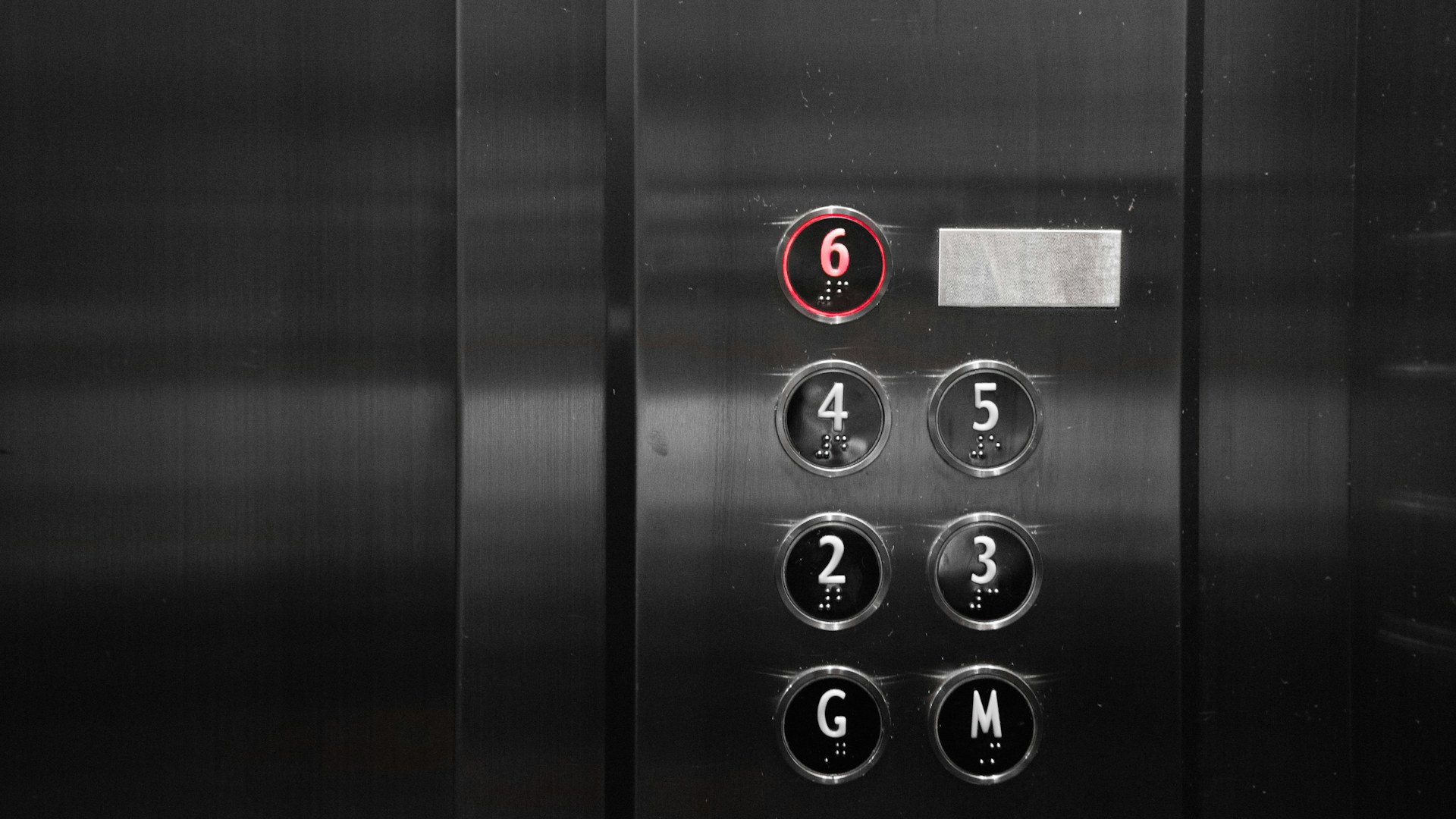
- Elevator emergency communication. ASME A17.1 requires two-way communication from the car to authorized personnel who can take action. The monitoring arrangement, and the identifying information posted in the car, reference the line that reaches them.
- Fire alarm communicators. NFPA 72 governs transmission to the supervising station. The account the supervising station monitors is tied to the communication path it was commissioned with, and a changed path is a change the authority having jurisdiction expects to see documented.
- Permits and inspection records. Alarm registrations and elevator permits carry contact numbers. Where a jurisdiction charges for re-registration, a number change is a line item, not a formality.
- Everything printed. Building directories, gate call boxes, after-hours signage, vendor records, published main lines. None of it updates itself.
The cost of losing a number is rarely the number. It is the re-registration, the re-commissioning documentation and the inspection cycle that follows, arriving in a quarter that did not budget for it. That is the case for treating porting as the first task in a POTS replacement project rather than a detail of the install.
Working the calendar backward from the discontinuance date
AT&T notified customers on November 14, 2025 that copper voice service in its second tranche of wire centers, the D2 group, could be discontinued on or after November 15, 2026. The first tranche, D1, carried a June 30, 2026 date and has already passed. Separately, an AT&T discontinuance application was automatically granted in January 2026 covering wire centers serving roughly 90,000 customers across 18 states, which the company described as more than 30 percent of its copper footprint outside California. Under the FCC's Network and Services Modernization Order, adopted March 26, 2026, discontinuance applications now receive automatic grant after 31 days regardless of whether the carrier is dominant.
Against a November 15 date, the arithmetic looks like this:
| When | What has to be true |
|---|---|
| Now | Serving wire center pulled for every address and checked against a shutdown tracker. Scattered sites often span several wire centers on different dates |
| Now | Customer service record pulled from the losing carrier. Billing name, address and authorized contact confirmed. Any port-out freeze identified |
| Early October | Site survey completed. Signal confirmed at the demarcation point, panel interfaces identified, line inventory matched to the code each line is inspected under |
| Late October | Contract executed. At a 19-day average from signature to activation, roughly October 27 is the last date that activates before November 15 |
| Before the cut | Port requests filed while every line is still working, complex and project intervals accounted for, and no pending disconnect order posted to the account |
That last row is the one that gets missed. An organization can hit every install milestone and still lose numbers by filing the port after the carrier has queued the disconnect.
How RCN sequences a conversion so the numbers survive it
RCN Technologies treats porting as the gating item in a POTS line replacement project, not as paperwork that trails the hardware. The order of operations is deliberate.
The site survey establishes what is actually on each pair, because the line inventory drives the port classification. Eight analog lines on one account is a non-simple port before anyone discusses hardware. Port requests go in while the copper is live, and POTS Link runs in parallel with the existing service through the cutover window, so the analog device sees continuous service rather than a gap it has to be reprogrammed around. Each converted line is tested against the system it serves, and the documentation the authority having jurisdiction will ask for is produced as part of the conversion.
The hardware side is the part buyers usually ask about first. POTS Link keeps existing analog devices and existing wiring, carries 24 hours of battery backup, and runs multi-carrier with dual SIM so a single carrier issue is not a single point of failure. It is code-compliant for the life-safety applications these lines typically serve, including NFPA 72 fire alarm transmission and ASME A17.1 elevator communication.
Procurement does not have to be the constraint either. POTS Link is available on GSA Schedule, NASPO ValuePoint, Sourcewell, OMNIA Partners and Equalis Group, which means an agency that can buy from a cooperative vehicle goes straight to a site survey instead of writing a solicitation. If the copper timeline is the pressure, see the POTS line replacement checklist for the triage order, the wire center shutdown tracker for your dates, and carrier of last resort for why a state obligation is not protecting these lines. Sites still behind a Centrex arrangement should start earliest, because Centrex is named in the rule that disqualifies a simple port.

Find out which of your lines port in a day and which do not
Most buildings discover their line count is wrong and their authorized contact has retired. Both are cheap to fix in September and expensive to fix in November.
Speak with a POTS Replacement SpecialistFrequently asked questions
Can you keep your phone numbers when copper POTS lines are retired?
Yes, as long as each line is still working when the port request is filed. Porting moves a live number between providers. Once the copper is discontinued the number cannot be ported, and after a minimum 45-day aging period it can be reassigned to someone else.
How long does POTS line number porting take?
One business day for a simple port under 47 CFR 52.35(a), four business days for a non-simple port under 47 CFR 52.35(d), and a negotiated interval for a project. Verizon treats 2 to 19 numbers as complex with a five business day firm order commitment and more than 20 numbers as a project.
Why is a commercial analog line almost never a simple port?
Because the FCC's definition of a simple port requires an account with a single line and excludes Centrex, ISDN, AIN services, remote call forwarding and multiple services on the loop. A building with several analog lines on one billing account fails the test on the line count alone.
Does a pending disconnect order stop a port request?
Yes. AT&T states that pending order activity on an account will result in a reject of a port-away request, and that pending orders take 30 to 45 days to clear depending on the service type. That is why port requests should be filed before a disconnect is queued.
What happens to an elevator or fire alarm line if its number changes?
The monitoring and permitting records tied to that line have to be updated. Supervising station account records, elevator car identification, alarm registrations and inspection documentation all reference the number, and some jurisdictions charge to re-register. The cost of a changed number is usually administrative rather than technical, and it lands after the fact.
When should a site start porting ahead of a November 15, 2026 discontinuance date?
Now. AT&T set November 15, 2026 as the earliest date copper voice may be discontinued in its D2 wire centers. At a 19-day average from signed contract to activation, roughly October 27 is the last signature date that activates before it, and the customer service record and port-out freeze checks need to happen weeks earlier than that.
Speak with a Connectivity Expert
Speak with a POTS Replacement Specialist about replacing your CenturyLink lines before the next notice arrives.


Want to Learn More?
Request a custom quote.