

Wireless Insights
POTS Line Replacement for Airports: The Lines Under Part 139
Elevator phones, fire alarm communicators, jet bridge lines and airfield alarm dial-outs all ride copper that carriers are retiring. Here is how to count them and what replaces them.
Scope your airport line inventoryAsk an airport facilities director how many analog phone lines the airport pays for and you usually get a range, not a number. The lines went in over four decades, installed by different contractors for different systems, billed across several accounts, and no single department owns all of them. Meanwhile the copper underneath them is being retired on a schedule the airport does not set.
That is an awkward place to be for a facility that holds a federal operating certificate and gets inspected on it every year. These are not convenience phones. They are elevator emergency communication, fire alarm reporting, parking structure call stations, jet bridge phones, and alarm dial-outs from buildings on the far side of the airfield. Each one answers to a code or a plan requirement, and each one sits on a copper pair with a shrinking future.
Short answer: An airport's POTS exposure is not one line on a phone bill. Count it as (elevator and escalator emergency phones) + (fire alarm communicators in every building on the certificate) + (parking structure and curbside call stations) + (jet bridge and gate podium phones) + (ARFF, airfield vault and fuel farm alarm dial-outs). Every one of those lines lives under the same 12 month review cycle the FAA already applies to your Airport Emergency Plan under 14 CFR 139.325(g)(4), and a single POTS Link unit carries up to eight of them.
What Part 139 actually asks of your communications
The FAA certificates roughly 520 U.S. airports under 14 CFR Part 139. Certification is triggered by air carrier service: scheduled and unscheduled operations in aircraft with more than 30 seats, and scheduled operations in aircraft with more than 9 but fewer than 31 seats. Those airports are inspected, typically once a year, across a sequence that runs from a pre-inspection file review through administrative records, the movement area, rescue and firefighting, fueling facilities, and night operations.
The communications requirement is not buried. Section 139.325 requires the Airport Emergency Plan to include a communications network at 139.325(a)(1), procedures for notifying the facilities, agencies and personnel with responsibilities under the plan at 139.325(e), and coordination with law enforcement, rescue and firefighting agencies, medical organizations and principal tenants at 139.325(g). The plan has to be reviewed at least once every 12 consecutive calendar months so that the information in it stays current.
Read that plainly: Part 139 does not name POTS lines and does not specify a transport technology. It requires that the communication paths in your plan work and that you can demonstrate they work. An inspector is not going to write you up for owning analog lines. The exposure is what happens when one of those paths quietly stops working between annual reviews because the copper serving it was retired.
Where the analog lines actually live at an airport
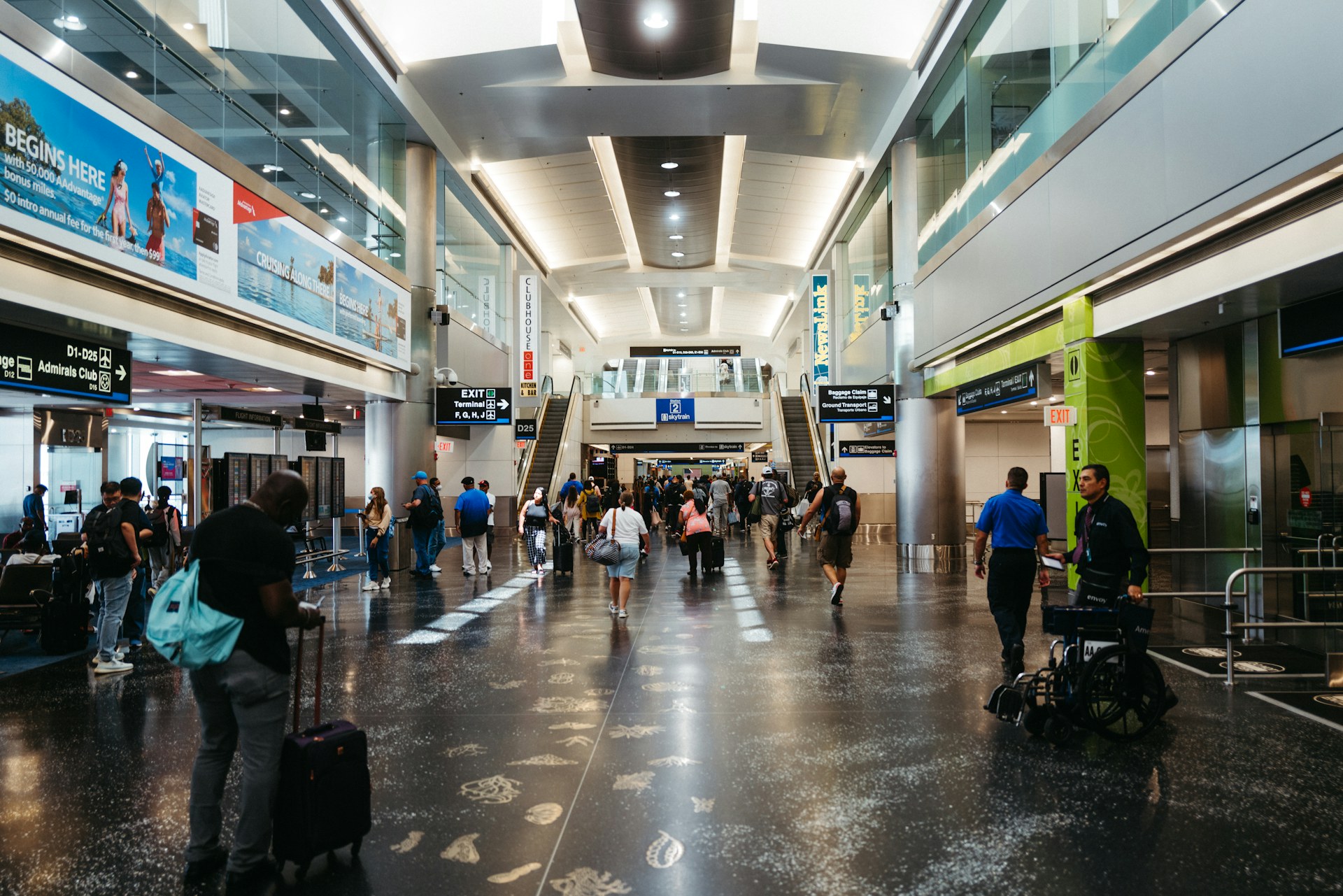
The reason airport analog inventories are hard to pin down is geographic. A terminal is one building on a property measured in square miles, and the lines are scattered across all of it.
| Location | Typical analog device | What it answers to |
|---|---|---|
| Passenger elevators and escalators | Two-way emergency phone | ADA 2010 Standards 407.4.9, ASME A17.1 |
| Parking structures and curbside | Emergency call stations, gate and booth intercoms | Local code, public safety response time |
| Terminal and outbuildings | Fire alarm communicators (DACTs) | NFPA 72 |
| Jet bridges and gate podiums | Ramp, pushback and podium phones | Ground handling and turn procedures |
| ARFF station, airfield vault, fuel farm | Ringdown circuits and equipment alarm dial-outs | 14 CFR 139.325 notification, equipment monitoring |
| Cargo, deicing pads, GA hangars | Alarm and monitoring lines | Property and equipment protection |
This is why the fix is rarely "run fiber to it." Trenching to a deicing pad or a remote vault to serve one alarm circuit is a capital project. The line is worth a few dollars a month on paper and tens of thousands of dollars to re-path physically. That gap is where airports get stuck, and it is the gap wireless closes.
The terminal construction cycle is the forcing function
The Bipartisan Infrastructure Law created the Airport Terminal Program to fund terminal and airport-owned control tower development, about $1 billion a year for five years, FY2022 through FY2026, roughly $5 billion in total. The FY2026 notice of funding opportunity published in the Federal Register on December 11, 2025, applications closed January 15, 2026, and the FAA stated plainly that the FY2026 announcement is the final announcement for the program.
That money does not turn into construction the day it is awarded. It turns into design, then bid, then several years of work inside occupied terminals. The FAA's National Plan of Integrated Airport Systems for 2025 through 2029, dated September 30, 2024, counts 3,287 existing public-use airports and estimates $67.5 billion of capital development across roughly 18,100 projects in that five year window.
Here is why that matters to a phone line. Low-voltage decisions inside a terminal rebuild get made once, at design, and then live for twenty years. If the drawings carry analog copper forward because that is what the existing devices use, the airport pays to install pathways for a transport its carrier is actively retiring. Settling the analog question before the design is stamped costs a meeting. Settling it after costs a change order.
What changed in the copper rules, in plain terms
The FCC adopted its network modernization order, FCC 26-19, on March 26, 2026 and released it the following day under WC Docket Nos. 25-208 and 25-209. Two changes matter to a facilities team.
First, incumbent carriers no longer file network change disclosures with the Commission. They post public notice on a non-paywalled website or through industry channels, and they give direct notice to interconnecting providers and to the entities supporting essential 911 functions. The 90 day advance notice for copper retirement still runs, but it runs carrier to carrier. There is no longer an FCC docket for your building to appear in.
Second, discontinuance applications are now automatically granted on the 31st day after filing, for every applicant class, replacing the older two-test framework with a single consolidated rule. We broke the order down line by line in our analysis for government POTS users.
The practical consequence for an airport is that the paperwork trail an operations team could once watch has thinned out. For many facilities the first real signal will not be a notice at all. It will be a repair ticket on a jet bridge phone that stays open for three weeks because the outside plant serving that building is no longer being maintained the way it was.
How POTS line replacement for airports actually gets scoped
POTS Link is a fully managed cellular replacement for copper lines. A service gateway with a built-in analog telephone adapter presents standard RJ-11 to the equipment already on the wall, so an elevator phone, a fire alarm communicator or a ramp phone connects without being reconfigured or replaced.
- Eight lines per unit. A demarc room with 40 analog lines is five devices, not forty subscriptions. That 8:1 consolidation is the whole scoping exercise at a multi-building airport.
- Dual-carrier LTE and 5G with automatic failover, so a single carrier issue in one corner of the property does not take a life-safety path down.
- 24 or more hours of battery backup, which is the figure used for government and life-safety configurations.
- Code-compliant for NFPA 72, ASME A17.1 and UL 864, with support for Advanced E911, Kari's Law and RAY BAUM's Act, and SIA and Contact ID signaling for alarm equipment.
- Cloud line-status monitoring backed by a 24/7 U.S.-based NOC, which replaces the annual walk-and-test with continuous visibility on whether the path is actually up.
- An average of 19 days from signed contract to activation, against a 90 day carrier notice clock.
Two RCN deployments map closely onto airport geography. The City of Round Rock, Texas moved 200 plus lines across 49 city facilities, which is the same multi-building, multi-account problem an airport authority has. A major Texas university consolidated 75 lines in a single demarc room on a custom high-capacity configuration, which is the terminal MDF case.
The variable that decides the design is RF, not line count. Airport buildings are steel, concrete and frequently below grade, and vaults and fuel farms sit far from the terminal. That is why the site survey drives the deployment rather than the spreadsheet. POTS Link is available on the GSA Schedule, NASPO ValuePoint, Sourcewell, OMNIA Partners and Equalis Group, so an airport authority can buy through a contract it already holds.

Five things to settle before the next certification inspection
- Build one line inventory, not six. Pull every analog circuit across every billing account into a single list before anyone prices a replacement. Departments will each know their own lines and nobody will know the total.
- Tag each line to what it answers to. Code section, plan paragraph, or "convenience." The convenience lines can simply be disconnected, and at most airports that is a meaningful share of the bill.
- Ask your carrier in writing which wire centers serve your buildings. With no FCC filing to watch, the carrier record is the record.
- Test the path, not the device. A handset that lights up proves the handset works. Place the call and confirm it reaches the point it is supposed to reach.
- Decide analog versus wireless before the low-voltage design is stamped on any terminal project already in motion.
Working from a structured list helps. Our POTS line replacement checklist covers the inventory and cutover steps, and the elevator-specific requirements are handled in detail in our guide to compliant elevator line conversions. If your call stations and blue light phones are part of the same project, that path is documented too. When the inventory is built and the survey is done, POTS line replacement for airports stops being a telecom project and becomes a facilities one.
Count the lines before the carrier counts them for you
RCN has moved multi-building public sector campuses off copper on a 19 day average deployment, against a 90 day carrier notice window. Bring us the building list and we will start with the survey.
Speak with a POTS replacement specialistFrequently asked questions
Does 14 CFR Part 139 require analog phone lines?
No. Part 139 does not name a transport technology. Section 139.325 requires the Airport Emergency Plan to include a communications network and notification procedures, and to be reviewed at least once every 12 consecutive calendar months. What matters at inspection is that the communication paths in the plan work and can be demonstrated, not what they run over.
Will a cellular POTS replacement work with an existing elevator emergency phone?
Yes. POTS Link presents a standard analog RJ-11 interface, so elevator emergency phones, fire alarm communicators, ramp phones and call stations connect without being reconfigured or replaced. The service is code-compliant for NFPA 72, ASME A17.1 and UL 864, and supports Advanced E911, Kari's Law and RAY BAUM's Act.
How many analog lines does one POTS Link unit carry?
Up to eight. A terminal demarc room with 40 analog lines scopes to five devices rather than 40 separate subscriptions, which is usually where the cost case for an airport comes from.
How will an airport find out its copper is being retired?
Under FCC 26-19, adopted March 26, 2026, incumbent carriers no longer file network change disclosures with the Commission. They post public notice and give direct notice to interconnecting providers and to entities supporting essential 911 functions. The 90 day advance notice runs carrier to carrier, so ask your carrier in writing which wire centers serve your buildings.
What happens to a life-safety line during a power outage?
POTS Link configurations for government and life-safety use carry 24 or more hours of battery backup and run dual-carrier LTE and 5G with automatic failover, so a single carrier problem in one corner of the property does not take an emergency path down.
How long does an airport deployment take?
The RCN average is 19 days from signed contract to activation, covering site survey, device provisioning, carrier activation and NOC enrollment. Individual deployments vary with building count and RF conditions, but that average sits well inside a 90 day carrier notice window.
Can an airport authority buy this on an existing contract?
Yes. POTS Link is available on the GSA Schedule, NASPO ValuePoint, Sourcewell, OMNIA Partners and Equalis Group, so an airport authority or its parent municipality can procure through a cooperative vehicle it already holds instead of running a new competitive bid.
Speak with a Connectivity Expert
Speak with a POTS Replacement Specialist about replacing your CenturyLink lines before the next notice arrives.


Want to Learn More?
Request a custom quote.