

Wireless Insights
Cradlepoint R1900 for Points of Dispensing: The 48-Hour Clock
When the Strategic National Stockpile rolls in, every dispensing site needs a network in minutes. The Pop-Up Network Kit is the deployable 5G network built for that clock.
Speak with a Connectivity ExpertThe plan on file at nearly every county health department in America makes the same promise: when the federal government decides to deploy the Strategic National Stockpile, the jurisdiction will complete initial dispensing of medical countermeasures to the public within 48 hours. The stockpile side of that bargain moves fast. A push package arrives within 12 hours of the request. Everything after the trucks unload belongs to local teams, and every point of dispensing they open needs registration tablets, screening stations, and a live connection to state systems before the first resident walks in. That is precisely the job a deployable 5G network exists to do.
The federal math: the Strategic National Stockpile delivers a push package within 12 hours of a request, and federal guidance directs jurisdictions to plan for completing initial dispensing to the public within 48 hours of the decision to deploy. Subtract transport, sorting, and staffing call-ups, and each point of dispensing has minutes, not days, to bring its network online.
The Ericsson Cradlepoint R1900 is built for exactly this kind of clock. It is a 5G-native, ruggedized router designed for vehicles and field deployments, with Wi-Fi 6 for on-site devices and a dual-modem configuration for agencies that need two carriers live at once. Public safety fleets already run it in patrol vehicles and mobile command units, which means the hardware inside a dispensing site can be the same hardware the rest of the response is standing on.
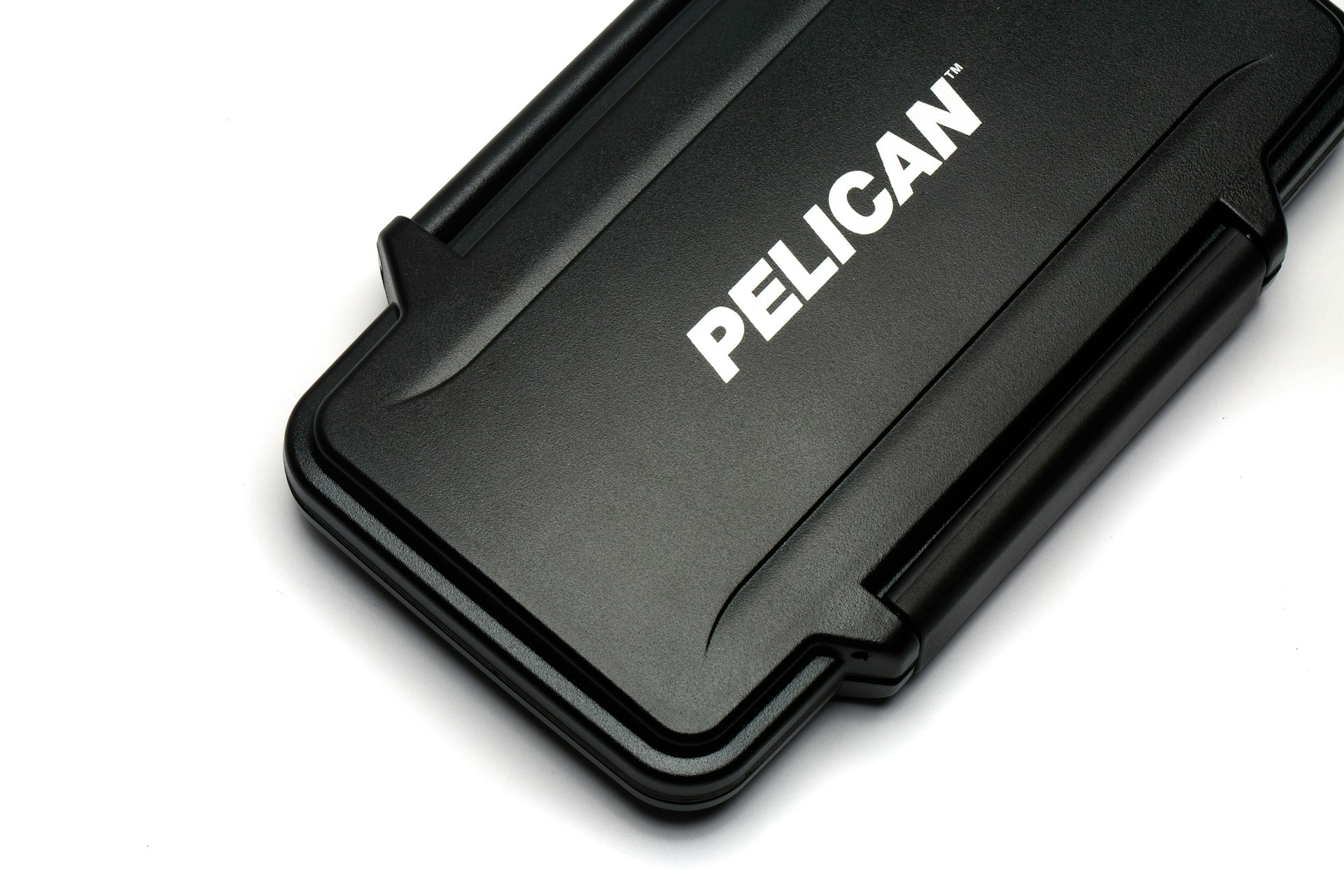
A router alone does not open a dispensing site, though. The Pop-Up Network Kit from RCN Technologies packages the R1900 with Panorama Antennas, pre-provisioned SIMs across AT&T, Verizon, and T-Mobile, an IP64-rated hard case, and 24/7 monitoring from RCN's U.S.-based NOC. It arrives as one case that a volunteer can carry, powers on with one button, and checks in with the NOC on its own.
How Public Health Teams Use the Cradlepoint R1900 at Points of Dispensing
CDC's Cities Readiness Initiative has been funding this exact scenario since 2004 and now covers 72 metropolitan statistical areas, with at least one CRI city in every state. The planning assumption is unforgiving: a school gymnasium, fairground barn, or drive-through lane becomes a functioning medical operation in hours. Massachusetts alone estimates it could take 400 to 700 dispensing sites to reach its 6.5 million residents. None of those venues were chosen for their network coverage. They were chosen for parking, floor space, and traffic flow.
Inside the site, everything that keeps the line moving rides on connectivity. Intake and screening staff work from tablets. Head-of-household pickup, the technique that lets one person collect countermeasures for an entire family, only multiplies throughput if the record system keeps up. Inventory counts feed back to the emergency operations center, and a small rural site may run on 15 to 20 staff who have no IT support on hand. If the venue's guest Wi-Fi buckles or the nearest tower is congested, the line stops.
This is why multi-carrier redundancy is the defining requirement. A dispensing site cannot re-run a coverage survey the morning it opens. The PNK carries SIMs for AT&T, Verizon, and T-Mobile and fails over between them, so the site rides whichever network is strongest at that address on that day.
Emergency management agencies already run this play. Rush County Emergency Management and Homeland Security fields the PNK for incident-driven operations, and Harris County deployed 130 R1900 PNKs across its election infrastructure in 2025. County-scale, surge-driven deployments of this hardware are established practice, not an experiment.

Choosing the Right Deployable 5G Network Configuration
Dispensing plans scale from a two-table closed POD at a business park to a mega site staffed by hundreds, and the kit should match the site, not the other way around.
- R980 PNK: single modem, the most portable option, sized for closed PODs, mobile outreach teams, and smaller sites.
- R1900 PNK: the workhorse for open PODs, with more capacity for tablet fleets and site devices.
- R1900 Dual PNK: two modems, two carriers live simultaneously, for sites where a stalled line is not an acceptable outcome.
- Starlink-Ready PNK: a satellite and cellular hybrid for rural and frontier jurisdictions where towers are sparse or an incident has taken them down.
For a deeper walk through the hardware decision, see the R980 vs. R1900 configuration guide.
Compatibility, Setup, and Support
Public safety network compatibility
The PNK is FirstNet-compatible via AT&T SIMs, is Verizon Frontline Verified, and supports T-Mobile's public safety offerings. A health department POD can sit on the same priority networks its police and EMS partners use during the response.
Operational in about five minutes
A typical PNK is operational within five minutes of arriving on site. No ladder trucks, no cabling, no IT staff on the floor. The kit is pre-provisioned in NetCloud before it ships, so the person opening the case only pushes a button.
The NOC behind every kit
RCN's 24/7 U.S.-based Network Operations Center monitors every deployed PNK. When 400 sites open in a weekend, the health department is not the help desk.
The Procurement Path for Public Health Agencies
Preparedness budgets are tight and getting tighter. The Public Health Emergency Preparedness cooperative agreement, which funds readiness for 62 state, local, and territorial health departments, was appropriated at $735 million in FY 2023, down from $918 million in FY 2003 and roughly half the FY 2003 level after inflation. Nobody in this market has time or money for a six-month RFP cycle.
The PNK is available on GSA Schedule and through pre-competed cooperative contracts including Sourcewell, NASPO ValuePoint, OMNIA Partners, and Equalis Group, with Carahsoft supporting federal purchases. Most public health agencies can buy through a vehicle their purchasing office already uses, which turns procurement into a line item instead of a project.
Plan connectivity for your dispensing sites
RCN's PNK team scopes carrier coverage, recommends the right configuration, and pre-provisions every kit before it ships, so your dispensing sites open on schedule.
Speak with a Connectivity ExpertFrequently asked questions
What is a deployable 5G network for points of dispensing?
A deployable 5G network is a self-contained connectivity kit that brings its own cellular routers, antennas, and multi-carrier SIMs to a site instead of depending on the venue's wiring or Wi-Fi. At a point of dispensing, it connects registration tablets, screening stations, and inventory reporting within minutes of the site opening.
How fast can a PNK be operational at a POD?
A typical PNK is operational within about five minutes of arriving on site. Each kit is pre-provisioned in NetCloud before it ships, so on-site staff push one button and the kit connects and checks in with RCN's NOC on its own.
Does the PNK work on public safety networks?
Yes. The PNK is FirstNet-compatible via AT&T SIMs, is Verizon Frontline Verified, and supports T-Mobile's public safety offerings, so a dispensing site can ride the same priority networks as the police, fire, and EMS units supporting it.
How does multi-carrier redundancy work at a dispensing site?
The PNK carries SIMs for AT&T, Verizon, and T-Mobile and fails over between carriers automatically. The R1900 Dual configuration runs two modems at once, keeping two carriers live simultaneously so a congested or degraded network never stops the dispensing line.
Can a POD handle health information over the PNK?
The PNK supports the technical safeguards required under HIPAA, including encrypted transport and centrally managed access controls, and RCN can help configure a deployment to align with your organization's compliance requirements.
What procurement vehicles cover the PNK?
The PNK is available on GSA Schedule and through cooperative contracts including Sourcewell, NASPO ValuePoint, OMNIA Partners, and Equalis Group. Carahsoft supports federal purchases. Most public health agencies can buy through a vehicle their purchasing office already uses.
Why buy a PNK instead of assembling a router and hotspot ourselves?
Self-sourced components leave the health department as the integrator: sourcing antennas, negotiating carrier plans, provisioning devices, and staffing support during an emergency. The PNK arrives as one tested kit with multi-carrier SIMs, pre-provisioning, and 24/7 NOC support behind every unit.
Speak with a Connectivity Expert
Ready to put clinic-grade connectivity on every clinic stop?


Want to Learn More?
Request a custom quote.