

Why Cradlepoint Routers Are the Perfect “Brain” for Starlink SAT WAN
Starlink has changed the game for connectivity in places where fiber, cable, and even reliable cellular coverage can be a stretch. Low Earth orbit (LEO) satellite brings real bandwidth to remote, temporary, and mobile operations. But Starlink by itself is not designed to be your enterprise WAN edge. It is an internet access method.
That is where Ericsson Cradlepoint comes in.
Cradlepoint routers act as the “brain” that turns a Starlink connection into a manageable, secure, policy-driven WAN link that plays nicely with cellular (LTE/5G) and wired networks, and stays resilient when conditions change. Cradlepoint even positions Starlink plus 5G/LTE as a complementary architecture, not an either-or decision.
Ready to Cut POTS Costs?
Let’s get you a custom quote.
Starlink is powerful, but it still needs an enterprise-grade WAN edge
Starlink’s strengths are obvious: broad coverage, fast deployment, and the ability to connect operations far outside traditional infrastructure footprints. Cradlepoint’s own guidance highlights satellite’s value for remote operations, disaster scenarios, and as a tertiary or augmentation link in multi-WAN designs. Ericsson
At the same time, real-world satellite networking introduces variables that enterprise IT teams care about every day:
- Link performance can fluctuate (latency, jitter, packet loss) as terminals hand off between satellites
- Some applications are sensitive to those fluctuations (voice, real-time control, transactional apps)
- Security requirements do not go away just because the WAN is satellite-based
Cradlepoint’s message is consistent: satellite becomes dramatically more useful when you treat it like one link in a broader WAN strategy, governed by policy and monitored continuously.
What Cradlepoint adds: the “brain” layer that makes Starlink enterprise-ready
1) True multi-WAN control: Starlink plus cellular plus wired
Cradlepoint routers can take Starlink in over Ethernet WAN and incorporate it alongside LTE/5G and wired connections, enabling active-active or active-standby designs depending on the use case. Cradlepoint explicitly notes interoperability with satellite and Starlink via Ethernet WAN.
This is the difference between “we have internet” and “we have a resilient WAN.”
2) SD-WAN policies that treat satellite like any other WAN link
With Cradlepoint NetCloud-managed SD-WAN, Starlink is no longer a special snowflake connection. It becomes a monitored transport that can be:
- Prioritized for certain apps
- Avoided for latency-sensitive traffic unless needed
- Used as backup, tertiary backup, or bandwidth augmentation
Cradlepoint describes SD-WAN as the mechanism that continuously evaluates links and steers traffic based on policy and link conditions, including LEO satellite.
3) Intelligent link bonding features that help when satellite gets “weird”
If you are trying to keep critical apps stable when link quality fluctuates, Cradlepoint calls out intelligent bonding modes such as flow duplication and flow balancing to improve resiliency and predictability across mixed transports like 5G and satellite.
4) Security that goes beyond a basic ISP router
Cradlepoint emphasizes that connecting satellite through a Cradlepoint router adds enterprise security capabilities, including zero trust and SASE-oriented controls managed through a single platform.
If Starlink is your “pipe,” Cradlepoint is the platform that enforces how traffic uses that pipe.
Common architectures where Cradlepoint plus Starlink wins
Cradlepoint’s Starlink content repeatedly comes back to a few practical designs that map cleanly to real deployments:
Fixed site resiliency (primary plus backup plus tertiary)
- Primary: fiber or cable
- Backup: 5G
- Tertiary: Starlink
This gives you layered redundancy for sites that cannot go down.
Remote sites (no wireline available)
- Primary: 5G/LTE where available
- Backup or augmentation: Starlink
Or, depending on geography, Starlink as primary with cellular as backup.
Mobile and field operations
- Cellular-first when coverage is strong
- Satellite for coverage continuity beyond terrestrial footprints
Cradlepoint highlights real use cases like emergency response and utilities where operational continuity matters more than theoretical peak speed.
Where RCN comes in: making the integration actually work in the field
Pairing Starlink with Cradlepoint is conceptually simple. Getting the outcome you want (uptime, application performance, security posture, manageability) requires correct design and tuning.
RCN helps customers maximize a Starlink SAT WAN connection with Cradlepoint by focusing on the things that usually bite teams during deployment:
- Architecture selection: backup-only vs active-active vs bandwidth augmentation based on your apps and risk tolerance
- Policy design: which apps can use Starlink, when, and under what conditions (latency, loss, congestion)
- Security and segmentation: aligning Starlink-connected sites and field kits to enterprise security requirements (including zero trust-oriented approaches) Ericsson
- Operational management: centralized visibility, standardized templates, and repeatable rollout processes (so Starlink is not a one-off snowflake site)
If you are using Starlink for mission-critical operations, the “router brain” layer is where you win or lose. That is the part RCN lives in.
Coming soon: RCN’s Starlink-Compatible Pop-Up Network Kit for portable operations
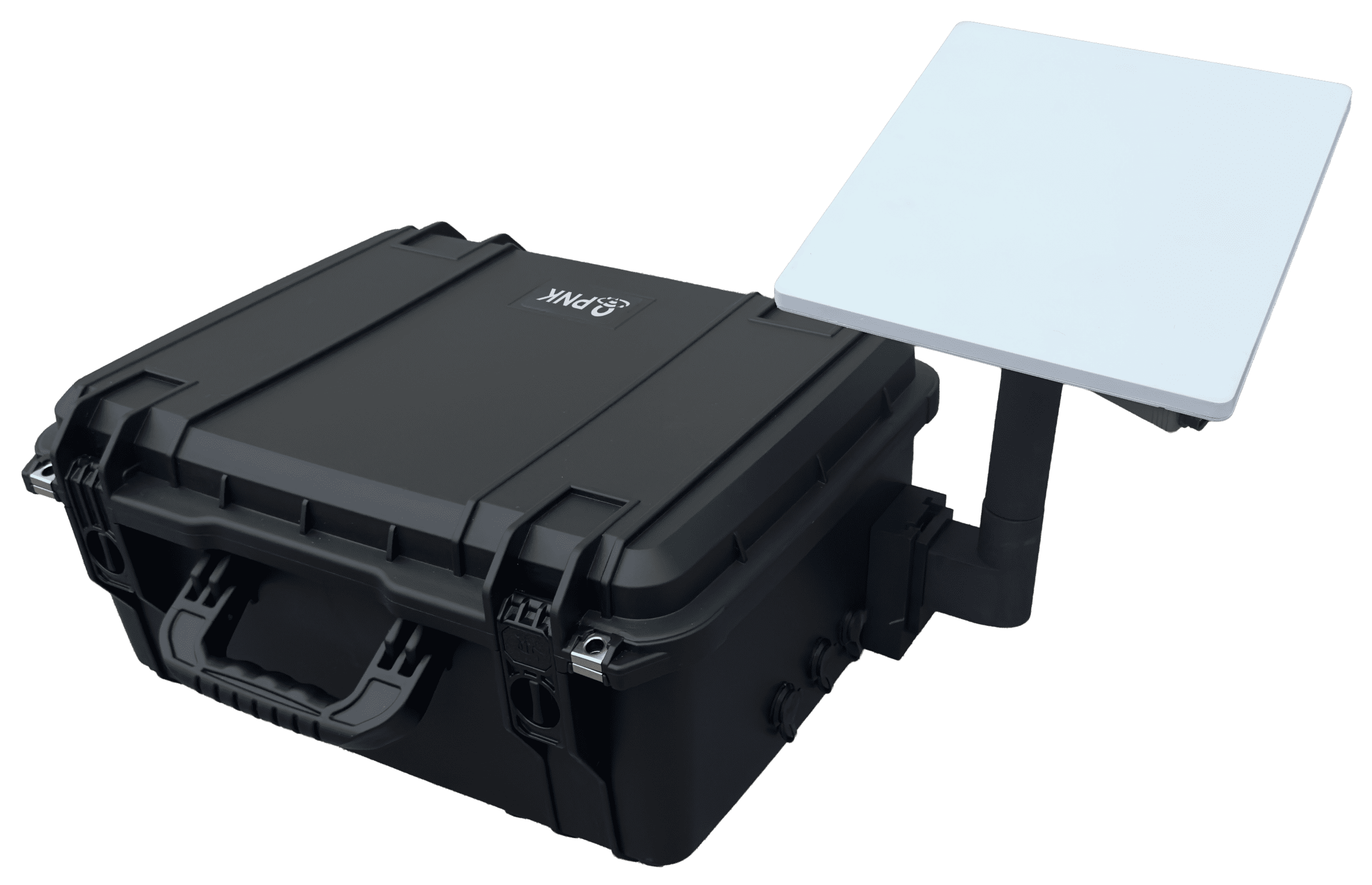
Portable field deployments are exactly where Starlink shines, and exactly where Cradlepoint’s multi-WAN control and policy-driven networking creates leverage. That is why RCN is actively working on a Starlink-compatible Pop-Up Network Kit (PNK) designed for rapid, portable deployments that take advantage of this integration.
The vision is simple:
- Bring Starlink for fast, wide-coverage satellite WAN
- Add Cradlepoint as the WAN brain for multi-WAN resiliency, policy, security, and manageability
- Deliver it in a deployable, field-ready package that shortens time-to-connect
If your teams operate in temporary sites, emergency response, construction, utilities, events, public safety, or any environment where connectivity equals productivity, this is the direction the market is heading.
Coming soon: RCN’s Starlink-Compatible Pop-Up Network Kit for portable operations
Portable field deployments are exactly where Starlink shines, and exactly where Cradlepoint’s multi-WAN control and policy-driven networking creates leverage. That is why RCN is actively working on a Starlink-compatible Pop-Up Network Kit (PNK) designed for rapid, portable deployments that take advantage of this integration.
The vision is simple:
- Bring Starlink for fast, wide-coverage satellite WAN
- Add Cradlepoint as the WAN brain for multi-WAN resiliency, policy, security, and manageability
- Deliver it in a deployable, field-ready package that shortens time-to-connect
If your teams operate in temporary sites, emergency response, construction, utilities, events, public safety, or any environment where connectivity equals productivity, this is the direction the market is heading.
CTA: Want to get more out of Starlink than “just internet”?
If you are running Starlink today (or planning to), RCN can help you design the right Cradlepoint pairing so you get:
- More resilient uptime
- Better application performance through intelligent traffic steering
- Stronger security and centralized control
- A scalable standard for fixed sites and portable field operations
When you are ready, we can also share early details on the Starlink-compatible PNK roadmap and who it is best suited for.
🏢 About RCN Technologies
RCN Technologies is a national wireless WAN and connectivity solutions provider specializing in Cradlepoint-powered networks, managed services, and lifecycle support. As a long-standing Cradlepoint partner, RCN supports customers across enterprise, public sector, and mission-critical environments with a focus on reliability, clarity, and long-term success.
ADDITIONAL POTS REPLACEMENT RESOURCES
Use these resources to deepen your understanding of POTS modernization.

POTS Link Risk Assessment
Uncover hidden costs, risks & inefficiencies in your POTS setup with our 3-min, 15-question VLE Score assessment.

Code Compliant Replacement Bible
Discover how to replace POTS lines without violations or downtime. Get code compliance tips for NFPA 72, ASME A17.1, ADA, and more — free guide.

GSA EIS Guide
Many public sector organizations continue to use POTS for life safety, compliance, and facility management functions—but without a migration strategy, thes…
You May Also Be Interested In…

POTS Link vs. ATEL V810V and V810VD: Which POTS Replacement Is Right for You?

Hurricane Season 2026: Emergency Connectivity Before the Storm Hits
Speak with a Connectivity ExpertReady to deploy one-button connectivity for your mobile blood drives? Want to Learn More? Request a custom quote.

POTS Link vs. Inseego BPC100: Which POTS Replacement Is Right for You?
Speak with a Connectivity Expert
Fill out the interest form to request that one of our 5G & LTE experts contact you to discuss how we can best support your organization’s connectivity needs.


Ready to Cut POTS Costs?
Let’s get you a custom quote.