


The need for reliable, secure, and high-performance connectivity is growing rapidly. As enterprise organizations look to enhance infrastructure and expand operations, Wi-Fi and public cellular solutions are reaching their limits.
Private Cellular Networks (PCNs) combine the control of Wi-Fi with the reliability, bandwidth, and security of cellular. This allows large organizations to provide best-in-class connectivity to any number of devices in any type of environment – even where Wi-Fi or public cellular wouldn’t work.
The end result is a faster, more reliable, and more secure network for enterprise-grade business applications.
Who Should Consider A PCN Solution?
In large areas that require a wide-area LAN, wireless connectivity solutions like Wi-Fi and public networks can create problems like high latency, the inability to upscale cost-effectively, and require high energy usage.
Private cellular networks are designed to be used by businesses with a large geographic footprint, providing focused widespread coverage to businesses and enterprises. The most common real-world cases for private cellular networks are smart cities, healthcare, manufacturing sites, warehouses and logistics, venues, and beyond.
What Makes Up A Private Cellular Network?

Front-Line Devices: Security cameras, machines, computers, or sensors; any device that accepts a SIM card.
Small Cell (Access Point): Radio access points that can be deployed indoors or outdoors, and in licensed, shared, or unlicensed spectrum. Access points allow your devices like smartphones or handheld scanners to connect to your private cellular network.
User Equipment: LTE & 5G-capable routers, cell phones, and other capable devices.
Evolved Packet Core (EPC): Serves as the “Brains” of the PCN, and can be located on-premise or digitally in the cloud. The EPC is made up of different components that work together to help direct, authenticate, and prioritize network traffic.
Backhaul Router: This separates the PCN from the outside world. The firewall only lets in devices that have the SIM cards specific to your network.
Spectrum Access System (SAS): Applicable to CBRS networks and acts as a traffic cop for the three types of spectrum that can be used for PCNs (licensed, shared, and unlicensed.) If spectrum isn’t being used by one tier, the SAS securely facilitates access without interference.
Benefits of a Private Cellular Network
Reliability: PCNs are established using one of three basic spectrum models: licensed, shared, or unlicensed. In the U.S., the most commonly used spectrum for PCNs is the Citizens Broadband Radio Service (CBRS), which operates in the 3.55-3.7 GHz range. CBRS is particularly effective for PCNs because it prioritizes access to alleviate severe network congestion, providing interference-free connectivity.
Coverage: Because private 5G and LTE cellular radios reach much further than Wi-Fi access points, private networks have the unique flexibility to effectively cover small or large areas while minimizing hardware requirements. Placing cellular access points on-site allows companies to mimic a standard public cellular network while having the visibility and control of Wi-Fi.
Security: PCNs offer robust security for businesses handling sensitive data. They use SIM-based authentication, ensuring only authorized devices can connect. Built on zero-trust principles with dynamic, context-aware policies, PCNs allow organizations to tailor their security architecture, providing comprehensive protection against unauthorized access and threats.
Cost-effective: Compared to Wi-Fi, fewer access points are required due to the superior coverage capabilities. Improved network reliability prevents expensive downtime that can result in productivity losses or worker safety incidents. When used in the same area, Wi-Fi was found to be 2-4x more expensive compared to PCN.
Control: Organizations can prioritize traffic as needed, whether on a user-by-user or application-by-application basis. This control extends to managing connectivity and Quality of Service (QoS). With PCNs, organizations can ensure reliable and tailored network performance, enhancing operational efficiency and user experience across their enterprise environments.
Other Education Resources
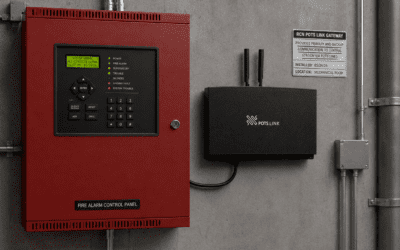
POTS Link vs. NAPCO StarLink Fire: Which Fire Panel POTS Replacement Is Right for You?

Blue Light Emergency Phone POTS Line Replacement: Extend Your Campus Emergency Call Infrastructure Without Replacing the Hardware
By: Reed Perryman, VP of Sales & Marketing, RCN Technologies Reed Perryman is VP of Sales & Marketing at RCN Technologies with 10 years of experience in POTS line replacement for government agencies, K–12 school districts, and critical infrastructure. He...