
AT&T POTS Replacement: Understanding Your Options
A buyer’s-eye view of AT&T Phone for Business — Advanced, and how POTS Link by RCN, an AT&T partner, offers a second path on AT&T’s network.
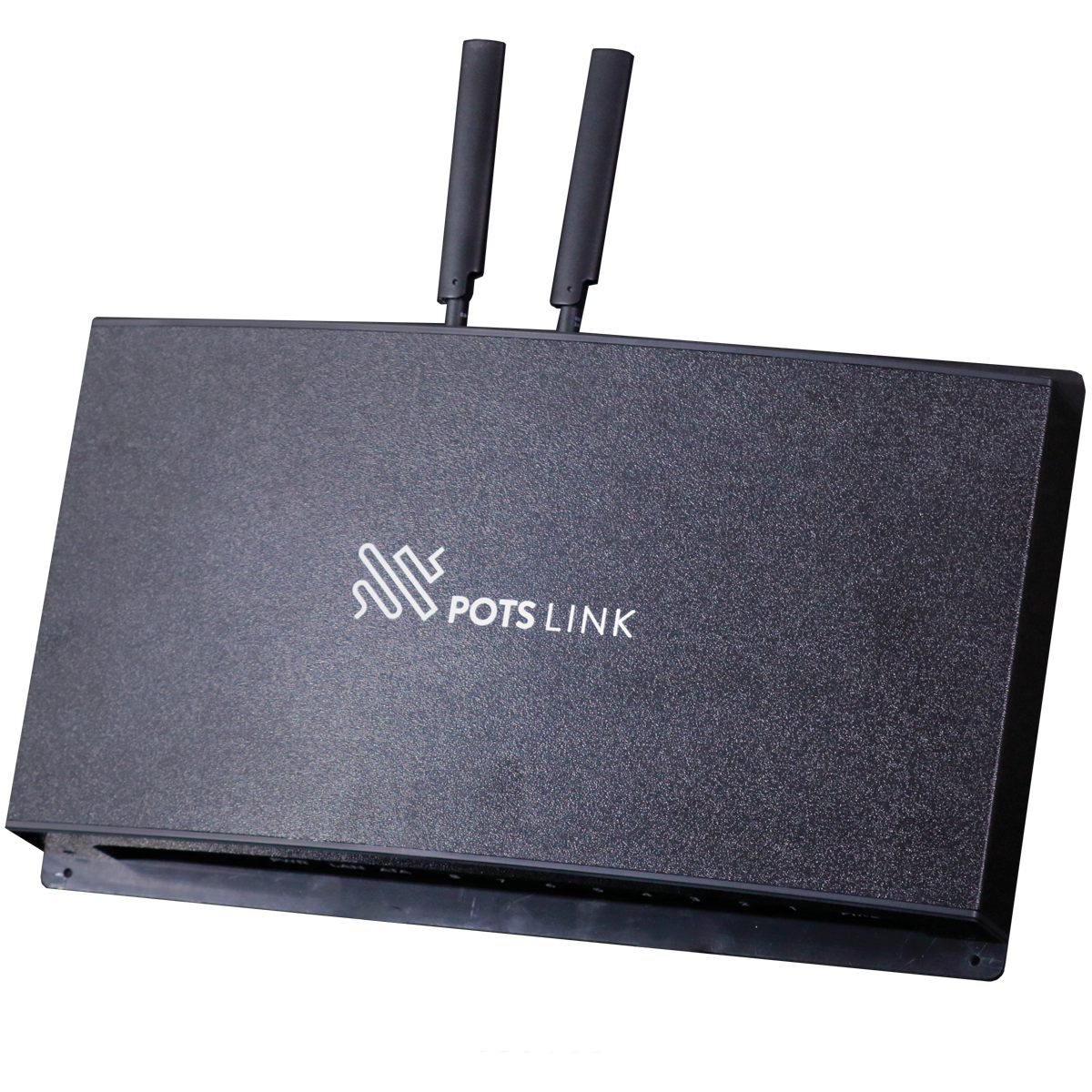
AT&T has invested significantly in POTS replacement infrastructure, offering a purpose-built cellular solution directly to business customers through its AT&T Business channel: AT&T Phone for Business — Advanced. For many buyers, the gravitational pull of sourcing a POTS replacement from a carrier they already have a billing relationship with is considerable. AT&T is a known entity, the hardware is professionally installed, and the service is presented as a complete, end-to-end solution.
This page is written for buyers who want to understand what that solution actually covers — and what it doesn’t — before committing. It’s also written to introduce a second path that most AT&T customers don’t know exists: POTS Link by RCN Technologies, a fully managed POTS replacement service that runs on AT&T’s network, available to customers who want to maintain their AT&T connectivity while accessing a different service architecture.
What AT&T Offers: AT&T Phone for Business — Advanced
AT&T does not manufacture its own POTS replacement hardware. AT&T Phone for Business — Advanced is built on the VAB-1 appliance — a device manufactured by DataRemote, whose commercial product line is branded POTS IN A BOX®. It’s a credible, purpose-built cellular POTS replacement unit, but buyers should understand what they’re evaluating: a third-party hardware product, distributed through AT&T’s business channel under AT&T branding.
The VAB-1 supports up to eight RJ-11 FXS ports, connecting legacy analog devices — phones, fax machines, fire alarm panels, elevator phones, access control, POS terminals, SCADA — to an IP path over LTE or a wired WAN connection. The device provides 24-hour internal battery backup via an integrated lithium-ion UPS, which is the threshold required by NFPA 72 for fire alarm communicators. It holds AT&T FirstNet Trusted certification and is also certified on Verizon’s network at the hardware level. AT&T’s published documentation confirms NFPA 72 compliance and UL 62368-1 conformance.
That last point is worth pausing on: the VAB-1 hardware itself is carrier-agnostic — certified on both AT&T and Verizon. What AT&T’s distribution channel delivers is a service wrapper that locks the connectivity layer to AT&T. The question worth asking is whether the AT&T billing relationship and the POTS replacement service architecture have to come from the same source.
What AT&T’s Channel Doesn’t Make Obvious
When an AT&T business customer encounters AT&T Phone for Business — Advanced through the AT&T Business channel, the natural inference is that this is the AT&T POTS replacement solution — full stop. AT&T’s marketing positions it as such, and most buyers don’t ask whether an alternate service provider could run on the same underlying AT&T network connection.
That framing has several downstream effects that buyers in government, healthcare, and life-safety environments should evaluate carefully.
Single-carrier architecture. The VAB-1 is built around a primary broadband WAN path with cellular LTE as a backup layer. When sourced through AT&T’s channel, the cellular backup layer runs on AT&T. AT&T’s published documentation does not describe active multi-carrier SIM redundancy — a persistently engaged second carrier path at the network core that dynamically routes to the strongest available carrier in real time. For commercial facilities in strong AT&T coverage areas, a single-carrier deployment is often adequate. For fire alarm panels in basement mechanical rooms, elevator phones in concrete shafts, or facilities in markets where AT&T LTE coverage has gaps, the absence of a carrier-agnostic backup path is a meaningful architectural gap.
Management model. AT&T Phone for Business — Advanced is professionally installed, but the ongoing service management model is carrier-tier support — not the wireless WAN integration model that a specialist integrator provides. When a unit loses connectivity at 2 a.m. at a managed care facility, the resolution path matters as much as the initial installation.
Government procurement. AT&T Phone for Business — Advanced is a commercial product available through AT&T’s standard business channel. AT&T’s published product documentation and ordering pages do not reference the government cooperative contract vehicles that public sector buyers use to procure without a new competitive bid event: GSA Schedule, OMNIA Partners, Sourcewell, NASPO ValuePoint. For state and local government agencies, school districts, municipalities, and nonprofits, that matters directly.
POTS Link on AT&T's Network
RCN Technologies is an AT&T partner. POTS Link, RCN's fully managed cellular POTS replacement service, supports AT&T SIMs — including AT&T FirstNet SIMs and SIMs billed directly to a customer's existing AT&T for Business account.
That creates a service model that AT&T's own channel doesn't offer: a customer can bring an AT&T SIM as the primary connection in POTS Link's SIM slot 1, maintaining their AT&T billing relationship and carrier preference, while RCN manages the backup layer independently. SIM slot 2 is always occupied by RCN's multi-carrier SIM — a single physical SIM with tri-carrier redundancy that dynamically routes to the strongest available carrier at the network core across AT&T, Verizon, and T-Mobile. SD-WAN technology manages path selection across both slots in real time, without manual intervention.
The result: an AT&T customer keeps AT&T as the primary carrier for POTS replacement — and gets a fully managed backup layer that doesn't depend on AT&T being available.
How POTS Link Differs from AT&T Phone for Business — Advanced
Network Architecture
AT&T Phone for Business — Advanced is built around a primary WAN path with AT&T LTE as the backup. There is no published reference to an active secondary carrier path at the network core. POTS Link takes a different architectural position from the start. POTS Link runs AT&T (or AT&T FirstNet) as a customer-elected primary carrier in SIM slot 1, with RCN’s tri-carrier multi-carrier SIM in SIM slot 2 providing real-time failover across AT&T, Verizon, and T-Mobile at the network core. A customer’s wired Ethernet connection can also be incorporated into the SD-WAN path mix — it’s never required, but it’s an available layer.
POTS Link is compatible with all three major public safety and priority networks: FirstNet-compatible via AT&T, Verizon Frontline-compatible, and T-Mobile public safety network-compatible. These networks provide priority access to spectrum and routing during declared emergencies — precisely when commercial LTE capacity is most congested. AT&T Phone for Business — Advanced references Band 14 (FirstNet spectrum) as a hardware option. It does not reference Verizon Frontline or T-Mobile public safety network compatibility.
Line Capacity and Scalability
AT&T Phone for Business — Advanced supports up to 8 RJ-11 ports per unit. POTS Link supports 8 lines natively and scales to 24–32 lines per device via extended configurations. For large commercial campuses, healthcare facilities, or government buildings with a high volume of legacy analog lines, per-device line counts matter — both for cost and for the total number of managed endpoints.
Battery Backup and NFPA 72
Both AT&T Phone for Business — Advanced and POTS Link provide 24-hour native battery backup in standard configuration, meeting the NFPA 72 threshold for fire alarm communicators. This is a genuine point of parity — AT&T’s VAB-1 does not require a hardware add-on to reach the 24-hour threshold, which is a meaningful specification.
Government Procurement
POTS Link is available directly on GSA Schedule, OMNIA Partners, Sourcewell, NASPO ValuePoint, State of Georgia, State of New York, and State of Pennsylvania — without routing through a third-party distributor. AT&T Phone for Business — Advanced does not reference direct access to these cooperative vehicles in AT&T’s published product documentation or ordering pages. For government agencies and public institutions with existing cooperative contract relationships, POTS Link can be placed under those vehicles without initiating a new competitive procurement event.
Service Model and Integrator Background
AT&T distributes Phone for Business — Advanced as a carrier product, with professional installation and carrier-tier support. RCN is a wireless WAN integrator — an Ericsson Technical Excellence Partner and AT&T partner with 13 years of cellular and RF deployment experience. That engineering background shapes how every POTS Link deployment is commissioned: RCN evaluates carrier signal at each site during installation, provisions the strongest available carrier into SIM slot 1, and deploys RCN’s multi-carrier SIM into SIM slot 2 — so the backup path is tri-carrier redundant from day one, not configured as an afterthought.
For fire alarm panels in basement mechanical rooms, elevator phones in concrete shafts, or government facilities with marginal signal, the difference between a carrier distribution channel and a wireless WAN integrator is not abstract.
Head-to-Head Comparison
AT&T Phone for Business — Advanced (VAB-1) compared to POTS Link by
RCN Technologies across architecture, compliance, procurement, and provider background.
| Feature | AT&T Phone for Business — Advanced (VAB-1) | POTS Link by RCN Technologies |
|---|---|---|
| Carrier layer | AT&T LTE primary; AT&T LTE backup | Customer-elected AT&T (or FirstNet) SIM in slot 1; RCN tri-carrier multi-carrier SIM (AT&T / Verizon / T-Mobile) in slot 2 |
| Multi-carrier redundancy | Not referenced in published documentation | Active; real-time SD-WAN path selection across three carriers at network core |
| Public safety networks | Band 14 (FirstNet spectrum) hardware option | FirstNet-compatible, Verizon Frontline-compatible, T-Mobile public safety network-compatible |
| Lines per device | 8 | 8 native; 24–32 extended |
| Battery backup | 24HR native; NFPA 72 aligned | 24HR native; NFPA 72 aligned |
| NFPA 72 / ASME A17.1 | NFPA 72 compliant; UL 60950-1 listed | Certified |
| Kari's Law / RAY BAUM'S Act | Not addressed in published documentation | Compliant |
| TAA / NDAA | Not referenced | Compliant |
| Service model | Professional install; carrier-tier support | RCN fully managed |
| Gov contract vehicles | Not referenced in published documentation | GSA, OMNIA, Sourcewell, NASPO, State of GA, NY, PA (direct) |
| Provider background | Carrier distribution channel (DataRemote hardware) | Wireless WAN integrator; Ericsson Technical Excellence Partner; AT&T partner; 13 years RF and cellular deployment |
Which Solution Fits Which Buyer?
AT&T Phone for Business — Advanced
A reasonable fit if your organization wants to consolidate POTS replacement under your existing AT&T business account with minimal vendor complexity, your facilities are in strong AT&T coverage markets, you have a manageable number of lines per location, and your compliance requirements are satisfied by AT&T's standard NFPA 72 and UL documentation.
POTS Link by RCN Technologies
- You want to maintain an AT&T SIM as your primary POTS replacement carrier while adding a managed backup layer that doesn't depend on AT&T's availability.
- You need active multi-carrier redundancy at the network core across AT&T, Verizon, and T-Mobile, not a single-carrier fallback.
- You need documented compatibility with FirstNet, Verizon Frontline, and T-Mobile public safety networks.
- You require documented Kari's Law and RAY BAUM'S Act compliance.
- You're managing more than 8 lines per location.
- You're a government agency, municipality, school district, or nonprofit that needs to procure through GSA, Sourcewell, OMNIA, NASPO, or a state contract in GA, NY, or PA.
- You need a wireless WAN integrator, not a carrier distribution channel, engineering and managing your POTS replacement infrastructure.
Frequently Asked Questions
Does POTS Link work on AT&T's network?
Yes. RCN Technologies is an AT&T partner, and POTS Link supports AT&T SIMs — including AT&T FirstNet SIMs billed to a customer’s existing AT&T for Business account. Customers can bring an AT&T SIM as the primary carrier in POTS Link’s SIM slot 1, maintaining their AT&T billing relationship, while RCN manages the backup path via a multi-carrier SIM in SIM slot 2. That multi-carrier SIM dynamically routes across AT&T, Verizon, and T-Mobile at the network core — providing tri-carrier redundancy without a separate SIM card for each carrier.
What is AT&T Phone for Business — Advanced?
AT&T Phone for Business — Advanced is AT&T’s primary POTS line replacement solution for business customers. It is built on the VAB-1 appliance — hardware manufactured by DataRemote, whose commercial product line is branded POTS IN A BOX® — and distributed through AT&T’s business channel with professional installation. The device supports up to 8 analog lines, 24-hour battery backup, NFPA 72 compliance, and LTE connectivity over AT&T’s network. It’s designed to replace traditional wireline POTS lines for voice, fax, fire alarm, elevator, and other legacy analog applications.
What is the difference between AT&T Phone for Business — Advanced and POTS Link?
Both solutions support up to 8 analog lines, 24-hour native battery backup, NFPA 72 compliance, and AT&T LTE connectivity. The primary architectural difference is the backup layer. AT&T Phone for Business — Advanced uses AT&T as both the primary and backup carrier path. POTS Link uses the customer’s elected carrier — which can be AT&T or AT&T FirstNet — as the primary SIM, and deploys RCN’s tri-carrier multi-carrier SIM (AT&T / Verizon / T-Mobile) as a persistently active secondary path. That second SIM is not a failover device — it is dynamically engaged by SD-WAN path selection in real time. POTS Link also adds documented Kari’s Law compliance, Verizon Frontline and T-Mobile public safety network compatibility, extended line capacity up to 32 lines per device, and direct availability on government cooperative contract vehicles.
Does AT&T Phone for Business — Advanced meet NFPA 72 battery backup requirements?
What government procurement vehicles does POTS Link support?
POTS Link is available directly on GSA Schedule, OMNIA Partners, Sourcewell, NASPO ValuePoint, State of Georgia, State of New York, and State of Pennsylvania — without routing through a third-party distributor. AT&T Phone for Business — Advanced does not reference direct access to these cooperative vehicles in AT&T’s published product documentation. For government agencies and public institutions with existing cooperative contract relationships, POTS Link can be placed under those vehicles without initiating a new competitive procurement event.
Is POTS Link compliant with Kari's Law and the RAY BAUM'S Act?
Yes. POTS Link is compliant with Federal Enhanced E911 requirements, Kari’s Law, and the RAY BAUM’S Act. Kari’s Law mandates direct 911 dialing without a prefix from multi-line telephone systems; the RAY BAUM’S Act requires that emergency calls include dispatchable location data. AT&T Phone for Business — Advanced does not address these requirements in AT&T’s published product documentation. Any buyer deploying POTS replacement in a multi-line facility should request written compliance documentation from their vendor before executing a service agreement.
Can POTS Link keep AT&T as my primary carrier while adding multi-carrier redundancy?
Yes — and this is the core architectural difference. POTS Link’s dual-SIM architecture is specifically designed for this scenario. SIM slot 1 accepts the customer’s carrier SIM of choice, including AT&T or AT&T FirstNet. SIM slot 2 is occupied by RCN’s multi-carrier SIM, which provides real-time tri-carrier redundancy across AT&T, Verizon, and T-Mobile at the network core. Customers who have invested in AT&T FirstNet prioritization or who have AT&T master service agreements keep those advantages in slot 1 — and gain a carrier-agnostic safety net in slot 2.
Why does wireless WAN integration experience matter for AT&T POTS replacement?
AT&T distributes Phone for Business — Advanced as a carrier channel product with professional installation. RCN is a wireless WAN integrator — an Ericsson Technical Excellence Partner with 13 years of cellular and RF deployment experience, including deployment in RF-adverse environments like basement mechanical rooms, elevator shafts, and government facilities with atypical structural materials. That engineering background shapes every POTS Link installation: RCN evaluates carrier signal at each site, provisions the strongest available carrier into SIM slot 1, and deploys the tri-carrier multi-carrier SIM into SIM slot 2 from day one. For life-safety applications where the consequences of a failed POTS replacement line are regulatory or operational, that engineering rigor matters in ways a carrier distribution channel is not designed to deliver.
Get a no-cost POTS Link assessment for your facility.
RCN Technologies provides no-cost POTS line assessments for government agencies, enterprise facilities, and nonprofits evaluating AT&T POTS replacement options.
Call RCN directly: 865-315-7373
Speak with a Connectivity Expert
Fill out the interest form to request that one of our 5G & LTE experts contact you to discuss how we can best support your organization’s connectivity needs.