

FCC Adopts Network and Services Modernization Order Streamlining POTS Replacement Rules

By: Reed Perryman, VP of Sales & Marketing, RCN Technologies
Reed Perryman is VP of Sales & Marketing at RCN Technologies with 10 years of experience in POTS line replacement for government agencies, K–12 school districts, and critical infrastructure. He specializes in POTS replacement strategy, GSA procurement, NFPA 72 compliance, and the FCC copper retirement framework.

WASHINGTON, March 27, 2026 — The Federal Communications Commission unanimously adopted the Network and Services Modernization Order (FCC-26-19A1) at its March 26 Open Commission Meeting. The order streamlines the regulatory process governing POTS replacement and telecommunications network modernization. The final written order was released March 27, 2026.
The order grants carriers blanket authority to grandfather legacy voice, lower-speed broadband below 25/3 Mbps, and voice over internet protocol services on copper networks. Under the new framework, carriers may implement grandfathering through customer notification without filing a Section 214 discontinuance application with the FCC. A Section 214 filing is required only when a carrier seeks to fully retire the service.
The FCC replaced the existing Adequate Replacement Test and Alternative Options Test with a consolidated Consolidated Technology Transition Discontinuance Rule. The rule establishes a Replacement Service Eligibility Framework defining qualifying replacement services, including facilities-based VoIP, mobile wireless service at or above 5/1 Mbps, high-cost voice support, carrier alternatives, and widely available third-party services.
The order standardizes the automatic grant period for Section 214 discontinuance applications at 31 days for all carriers, replacing the prior 60-day window that applied to dominant carriers such as AT&T, Verizon, Frontier, and Lumen.
A 90-day pre-filing coordination requirement was established for any carrier planning to discontinue a service or facility that supports 911 call delivery. Carriers must initiate structured coordination with relevant 911 authorities, provide a designated point of contact, and document all coordination efforts prior to filing.
The order preempts any state or local law that restricts, delays, or conditions a carrier’s ability to discontinue a service after receiving federal Section 214 authorization. States retain the right to participate in the FCC Section 214 review process.
Several outdated FCC rule sections governing public toll stations, military base exchanges, and related legacy services were eliminated.
Most provisions take effect 30 days following Federal Register publication. Information collection and reporting requirements are contingent on approval from the Office of Management and Budget.
The full order is available at docs.fcc.gov/public/attachments/FCC-26-19A1.pdf.
Talk to a POTS Replacement Specialist | (865) 293-0350 | rcntechnologies.com
Frequently Asked Questions
When does FCC-26-19A1 take effect?
Most provisions take effect 30 days following Federal Register publication. Information collection and reporting requirements are contingent on approval from the Office of Management and Budget.
Which carriers are subject to the new discontinuance rules?
The order applies to all carriers subject to FCC Section 214 authority, including dominant carriers such as AT&T, Verizon, Frontier, and Lumen, as well as non-dominant carriers. The 31-day automatic grant period now applies to all carriers uniformly.
Does the order affect customers with existing POTS service?
Existing POTS customers are not immediately affected by the order. However, carriers may now begin grandfathering legacy voice services through customer notification without filing a Section 214 application. A Section 214 filing is required only when a carrier seeks full retirement of the service.
What counts as a qualifying replacement service under the new framework?
The order establishes five qualifying replacement service categories: facilities-based VoIP, mobile wireless service at or above 5/1 Mbps, high-cost voice support (eligible telecommunications carrier coverage), a carrier alternative service, and a widely available third-party alternative.
Does the order preempt state laws protecting copper customers?
Yes. The order preempts any state or local law that restricts, delays, or conditions a carrier’s ability to discontinue a service after receiving federal Section 214 authorization. States retain the right to participate in the FCC Section 214 review process prior to authorization.
Where can I read the full order?
The full text of FCC-26-19A1 is publicly available at docs.fcc.gov/public/attachments/FCC-26-19A1.pdf.
You May Also Be Interested In…
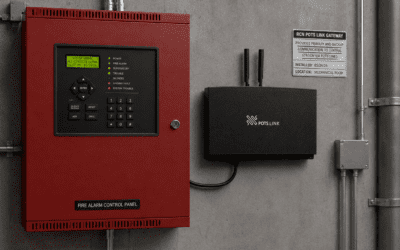
POTS Link vs. NAPCO StarLink Fire: Which Fire Panel POTS Replacement Is Right for You?

Blue Light Emergency Phone POTS Line Replacement: Extend Your Campus Emergency Call Infrastructure Without Replacing the Hardware
By: Reed Perryman, VP of Sales & Marketing, RCN Technologies Reed Perryman is VP of Sales & Marketing at RCN Technologies with 10 years of experience in POTS line replacement for government agencies, K–12 school districts, and critical infrastructure. He...