

Cradlepoint R980 for Mobile Blood Drives: One-Button Connectivity for Bloodmobiles

Mark leads digital growth strategy and marketing analytics, helping organizations navigate the transition from legacy connectivity to modern wireless and 5G solutions.
A bloodmobile pulls into a church parking lot at 7 AM. The staff inside has an hour to get the donor tablets online, establish a secure tunnel to the laboratory information system, and prepare to register the first of 80 donors. Nobody on the unit is an IT technician. And that is exactly why blood centers are moving to deployable 5G networks built on the Cradlepoint R980 — because the drive coordinator does not need to know what a VLAN is to get the network running. They just need to press a button.
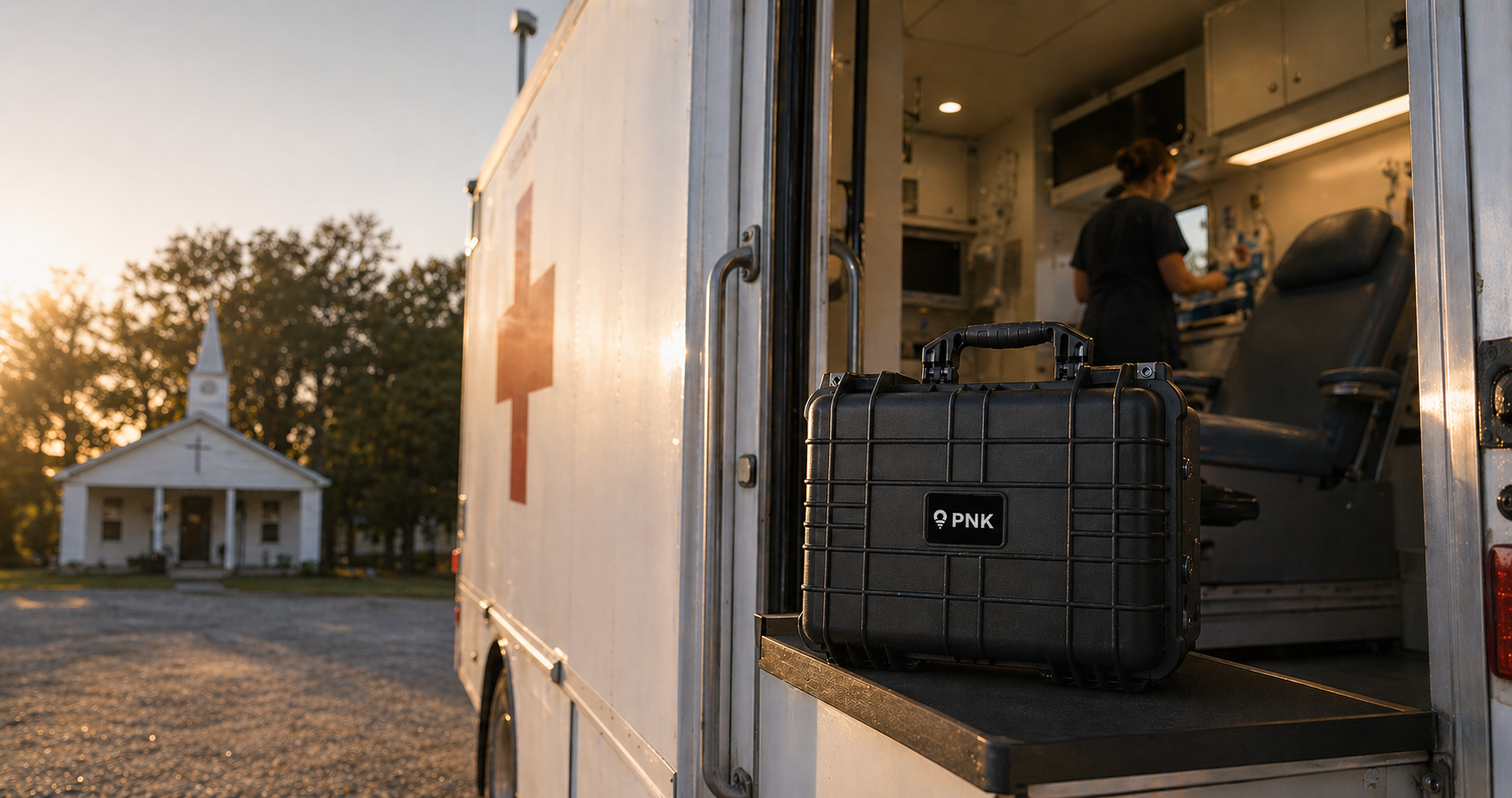
What is the Cradlepoint R980?
The Ericsson Cradlepoint R980 is a compact, 5G-capable ruggedized router designed for field deployment. It delivers multi-carrier cellular connectivity, Wi-Fi 6, VLAN segmentation, and cloud management in a single device — and is specifically engineered for environments without dedicated IT staff on site. For mobile blood drives, the R980 is the right choice for 90% of deployments: it supports up to 100 devices, covers a 300-foot radius, runs 10+ hours on internal battery, and weighs just 14 pounds when housed in RCN’s Pop-Up Network Kit.
For the official R980 specifications, see the Cradlepoint R980 product page. The rest of this guide covers how to turn that hardware into a bloodmobile network any drive coordinator can deploy.
Why a Deployable 5G Network Requires More Than a Router
A Cradlepoint R980 out of the box is still an IT project. It needs SIMs provisioned, firmware flashed, a VPN tunnel configured to the blood center’s core, VLANs mapped to the data classification policy, antenna tuning, and enrollment in NetCloud Manager. Somebody has to do that work before the router is useful — and it is rarely someone on the mobile drive team.
A true deployable 5G network — like the RCN Pop-Up Network Kit (PNK) — handles all of it before the case ever ships:
- R980 pre-configured with the blood center’s network policy
- Multi-carrier SIMs (Verizon + AT&T, with T-Mobile optional) pre-provisioned
- Site-to-site VPN tunnel established and tested
- VLANs for clinical, staff, and guest traffic configured
- Panorama Mako antenna tuned and mounted
- NetCloud Manager enrollment complete
- Rugged case, battery, chargers, and DC converter kit included
The drive coordinator never touches any of this. They receive a sealed case. When they open it, the only decision they have to make is whether to press the power button now or in five minutes.
How the R980 PNK Works for Non-Technical Blood Drive Teams
The operational reality of a mobile blood drive is that the people setting up the network are phlebotomists, donor recruiters, and drive coordinators — not network engineers. The R980 PNK is built for exactly that team.
The setup, in three steps:
- Open the case. The R980, antenna, battery, and power cables are already connected. Nothing comes loose in transit.
- Press the external power button. One button. It is on the outside of the case, labeled, and lit.
- Wait 45 seconds. The network broadcasts the pre-configured SSID. Donor tablets and staff devices connect automatically using stored credentials.
That is the entire deployment procedure. It is printed on a laminated card inside the case for first-time users, but most drive coordinators stop referring to it after their second drive.
What the team does not have to do:
- No SIM swapping
- No antenna alignment
- No firmware updates
- No password distribution
- No carrier selection
- No VPN initiation
- No troubleshooting a failed boot
If something goes wrong in the field — which is rare but happens — the team calls RCN’s NOC at a number printed on the case. A technician sees the unit in NetCloud Manager in real time and resolves the issue remotely in most cases. The drive coordinator stays focused on donors.
What this means operationally:
Blood centers that have deployed the R980 PNK report three consistent outcomes:
- Setup time collapses from 20–40 minutes (with a consumer hotspot and a staff member who “knows tech”) to under one minute
- Help-desk tickets from mobile drives drop dramatically
- Drives in marginal-coverage locations that previously failed or ran offline now complete successfully
The last point matters most. When a drive runs offline, donor records are written locally and batch-uploaded later, which creates data integrity risk and delays eligibility decisions. The R980 PNK keeps the drive connected.
HIPAA and Bloodmobile-Specific Safeguards
HIPAA is not certified at the product level — it is achieved through correct configuration. The R980 supports every technical safeguard required under the HIPAA Security Rule: encryption in transit via IPsec VPN, WPA3 Enterprise Wi-Fi with RADIUS authentication, VLAN separation between clinical and guest traffic, and audit logging through NetCloud Manager.
RCN can help blood center configure all of this before shipping. The blood center’s compliance officer gets a configuration summary document for the audit file; the drive team gets a sealed case that just works.
Multi-carrier resilience matters here too. A single-carrier deployment is a single point of failure, and a rural drive that loses its tower mid-registration creates both an operational problem and a compliance exposure. The R980 supports dual-SIM failover between carriers automatically — no action from the drive team required.
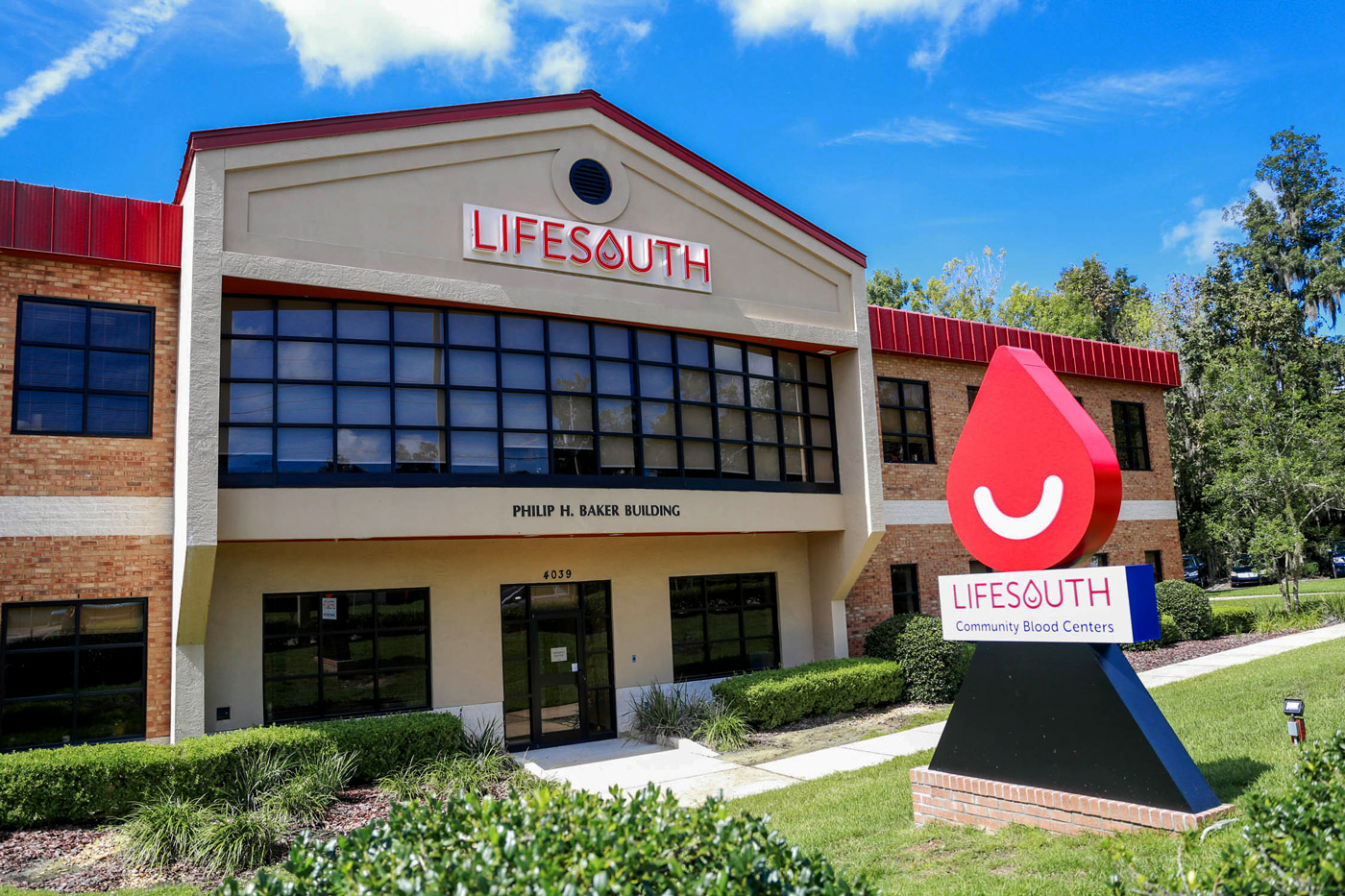
Case Study – LifeSouth Community Blood Centers
LifeSouth Community Blood Centers operates mobile blood drives across Florida, Georgia, and Alabama. LifeSouth has standardized on RCN’s PNK platform for mobile connectivity across its fleet, with deployments including R980 configurations for standard drives and dual-modem R1900 configurations for higher-volume operations.
The LifeSouth IT team has described the operational shift in their own words:
“Thanks to RCN’s PNK solution, our mobile blood drive units now have the same connectivity and functionality as our physical locations. The wireless connection has been incredibly reliable, and once configured, it’s easy for our staff to operate. Management now has real-time visibility into all blood drive operations, which was never possible before.”
The key phrase is once configured, it’s easy for our staff to operate. That is the outcome the R980 is designed to produce: a connectivity platform a non-technical team can run in the field indefinitely, with IT only involved during the initial configuration and periodic refresh.
Adjacent blood center customers running on the same R980 platform include Community Blood Center of the Ozarks and additional regional centers served through RCN’s healthcare practice.
Frequently Asked Questions
What is a deployable 5G network for a mobile blood drive?
How does a non-technical team set up the R980 PNK?
Is the R980 HIPAA compliant?
The R980 supports all technical safeguards required under the HIPAA Security Rule, including encryption in transit, VLAN segmentation, and access controls. RCN can configure the unit for HIPAA-aligned operation before shipping and provides a configuration summary for the blood center’s audit file.
What if a drive is in a location with weak cellular coverage?
The R980 PNK sports a hi-gain cellular antenna from Panorama Antennas, which can achieve solid cellular connection in locations where coverage is traditionally poor. For drives in locations without any reliable cellular coverage, RCN also offers a Starlink-ready R980 PNK configuration that adds satellite connectivity.
How is the R980 PNK managed remotely?
Every unit is enrolled in Ericsson Cradlepoint NetCloud Manager. Blood center IT staff can monitor all deployed PNKs from a single dashboard. RCN’s 24/7 NOC provides remote support if the drive team encounters a problem in the field.
What is the R980 PNK battery life?
10+ hours on internal battery. A DC conversion kit is included for integration with bloodmobile aux-power systems, extending runtime indefinitely.
You May Also Be Interested In…
Starlink for NPS Search and Rescue: A Command Network for the Trailhead
Mark Indelicato | Manager, Growth & Analytics at RCN TechnologiesMark leads digital growth strategy and marketing analytics, helping organizations navigate the transition from legacy connectivity to modern wireless and 5G solutions.The call comes in mid-afternoon....
Cradlepoint R980 for Mobile Libraries: Bookmobile and Outreach Wi-Fi
Mark Indelicato | Manager, Growth & Analytics at RCN TechnologiesMark leads digital growth strategy and marketing analytics, helping organizations navigate the transition from legacy connectivity to modern wireless and 5G solutions.The bookmobile pulls into a...

Starlink-Ready PNK for Wildfire Response: Connectivity When Cell Towers Burn and the Fire Keeps Moving
Mark Indelicato | Manager, Growth & Analytics at RCN TechnologiesMark leads digital growth strategy and marketing analytics, helping organizations navigate the transition from legacy connectivity to modern wireless and 5G solutions.It is the third operational...
Speak with a Connectivity Expert
Ready to deploy one-button connectivity for your mobile blood drives?

Want to Learn More?
Request a custom quote.