
T-Mobile POTS Replacement: Understanding Your Options
T-Mobile distributes Ooma AirDial and MarketSpark to business buyers. Here’s what each one covers, where they have limits, and how POTS Link by RCN, a T-Mobile partner, offers a third path on the same network.
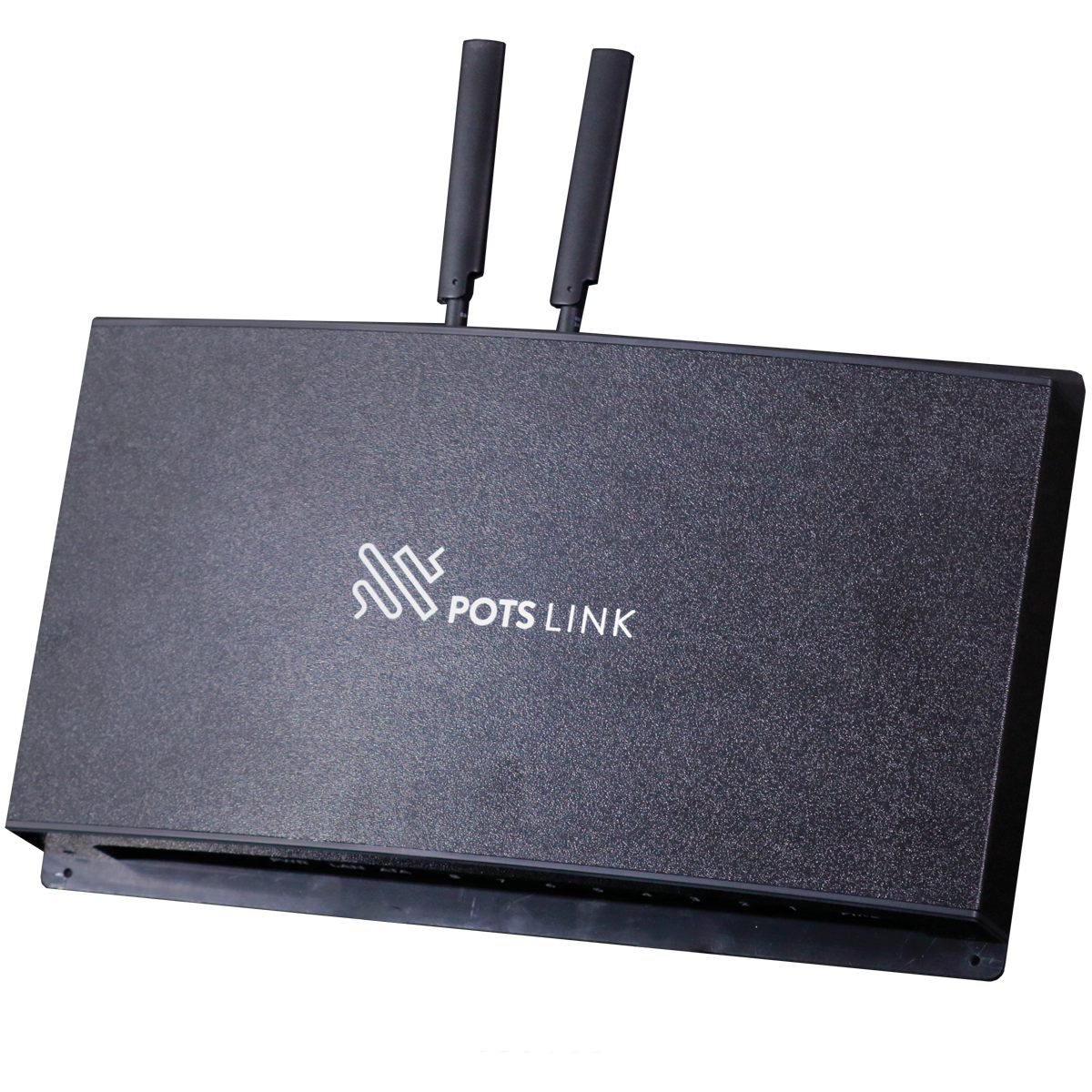
T-Mobile has moved decisively into the POTS replacement market, offering two branded solutions directly to business customers through T-Mobile for Business: Ooma AirDial for small and mid-size organizations, and MarketSpark for large enterprise deployments. Both are real solutions built on T-Mobile’s network. For many buyers, seeing them available from a carrier they already do business with creates a natural gravitational pull.
This page is written for buyers who want to understand what those solutions actually cover — and what they don’t — before committing. It’s also written to introduce a third path that most T-Mobile customers don’t know exists: POTS Link by RCN Technologies, a fully managed POTS replacement service that runs on T-Mobile’s network, available to customers who want to keep their T-Mobile billing relationship while accessing a different service architecture.
What T-Mobile Offers: Two Solutions for Two Buyer Profiles
T-Mobile doesn’t manufacture its own POTS replacement hardware. Instead, it distributes two partner solutions as part of its IoT portfolio, each targeting a different segment.
Ooma AirDial
T-Mobile's small-to-midsize business offering. It combines a hardware base station, LTE connectivity via Ooma's MultiPath technology, and a web-based remote device management portal — all sourced from a single vendor. Customers purchase the device and self-manage it through Ooma's RDM portal. When sourced through T-Mobile for Business, the solution is presented as a T-Mobile-connected product, and most buyers reasonably assume the carrier relationship is fixed. T-Mobile's and Ooma's published documentation does not explicitly address whether an alternate-carrier SIM can be substituted. It supports up to 4 analog lines per unit and provides 8 hours of native battery backup — which requires an optional hardware add-on to reach the 24-hour threshold that NFPA 72 requires for fire alarm communicators.
MarketSpark
T-Mobile's enterprise offering. A fully managed facilities-based voice network (MFVN) service built around a Class 5 Softswitch that emulates a Central Office — the same architecture required for life-safety compliance at scale. MarketSpark handles hardware provisioning, on-site installation, and ongoing management across multi-location enterprise deployments. Their M-Series hardware supports up to 16 lines per unit. MarketSpark is carrier-agnostic and multi-carrier capable, selecting the best carrier per site prior to deployment. Their published documentation does not reference government cooperative contract vehicles — GSA, OMNIA, Sourcewell, NASPO — for public sector buyers.
Both solutions are legitimate. Both are actively deployed. Both are available through T-Mobile for Business. The question worth asking is whether the T-Mobile billing relationship and the POTS replacement service have to come from the same vendor.
What T-Mobile’s Catalog Doesn’t Make Obvious
When a T-Mobile business customer is presented with AirDial or MarketSpark through T-Mobile for Business, the natural inference is that these are T-Mobile-network solutions — full stop. Neither T-Mobile’s marketing pages nor the vendors’ own published documentation explicitly addresses whether an alternate-carrier SIM can be used in place of or alongside the T-Mobile connection. That ambiguity creates a practical reality: most buyers sourcing through a carrier’s storefront don’t ask the question, and the architecture they end up with reflects the carrier’s network by default.
The downstream effect — whether by product design or by how the solutions are positioned and sold — is that buyers rarely evaluate multi-carrier redundancy as a procurement criterion when going through T-Mobile’s channel. For commercial facilities with straightforward requirements, a single-carrier deployment is often adequate. For government agencies, healthcare campuses, public safety facilities, and any site where a fire alarm or elevator phone has to work during a declared emergency — when commercial LTE capacity is most congested — not evaluating that question is a meaningful gap.
There’s also the procurement question. Both AirDial and MarketSpark are commercial products. Neither is available on the government cooperative contract vehicles that public sector buyers use to procure without a new competitive bid: GSA Schedule, Sourcewell, NASPO ValuePoint. For state and local government, school districts, municipalities, and nonprofits, that matters.
A Third Path: POTS Link on T-Mobile's Network
RCN Technologies is a T-Mobile partner. POTS Link, RCN's fully managed cellular POTS replacement service, supports T-Mobile SIMs — including SIMs billed directly to a customer's existing T-Mobile account.
That creates a service model that T-Mobile's own catalog doesn't offer: a customer can bring their T-Mobile SIM as the primary connection in POTS Link's SIM slot 1, maintaining their T-Mobile billing relationship and carrier preference, while RCN manages the backup layer independently. SIM slot 2 is always occupied by RCN's multi-carrier SIM — a single physical SIM with tri-carrier redundancy that dynamically routes to the strongest available carrier at the network core across AT&T, Verizon, and T-Mobile. SD-WAN technology manages path selection across both slots in real time, without manual intervention.
The result: a T-Mobile customer gets to keep T-Mobile as their primary carrier for POTS replacement — and gets a fully managed backup layer that doesn't depend on T-Mobile being available.
How POTS Link Differs from T-Mobile’s Partner Offerings
Network Architecture
When sourced through T-Mobile for Business, both Ooma AirDial and MarketSpark are presented as T-Mobile-network solutions. Published documentation from T-Mobile and both vendors does not explicitly address multi-carrier SIM flexibility — leaving most buyers with a T-Mobile-primary deployment by default. POTS Link takes a different architectural position from the start. POTS Link runs T-Mobile as a customer-elected primary carrier in SIM slot 1, with RCN’s tri-carrier multi-carrier SIM in SIM slot 2 providing real-time failover across AT&T, Verizon, and T-Mobile at the network core. A customer’s wired Ethernet connection can also be added to the SD-WAN path mix when available — it’s never required, but it’s an available layer.
POTS Link is also compatible with all three major public safety and priority networks: FirstNet-compatible via AT&T, Verizon Frontline-compatible, and T-Mobile’s public safety network-compatible. These networks provide priority access to spectrum and routing during declared emergencies. Neither AirDial nor MarketSpark references public safety network compatibility in their published documentation.
Battery Backup and NFPA 72
Ooma AirDial provides 8 hours of native battery backup. Reaching the 24-hour threshold required by NFPA 72 for fire alarm communicators requires an optional hardware add-on. MarketSpark provides 8+ hours natively, with the same compliance gap for fire alarm applications.
POTS Link delivers 24-hour native battery backup — no add-ons, no upgraded hardware tier. For any deployment serving fire alarm panels, the NFPA 72 threshold is a code requirement, not a preference. POTS Link meets it by default.
Line Density
Ooma AirDial supports up to 4 analog lines per unit. MarketSpark’s M-Series tops out at 16. POTS Link supports 8 lines per gateway natively, and up to 24–32 lines in its extended rack-mount configuration. For facilities with elevator phones, fire panels, access control, gate systems, and voice lines running simultaneously, line density has direct cost and logistics implications.
Compliance
POTS Link is certified against NFPA 72 (fire alarm communications), ASME A17.1 (elevator emergency communications), and applicable UL listing standards for life-safety signaling equipment. It is also compliant with Federal Enhanced E911 requirements, Kari’s Law, and the RAY BAUM’S Act. Kari’s Law requires that multi-line telephone systems permit direct 911 dialing without a prefix; the RAY BAUM’S Act requires that 911 calls include dispatchable location data. Neither Ooma AirDial nor MarketSpark’s published documentation addresses Kari’s Law or RAY BAUM’S Act compliance. Buyers deploying POTS replacement in any multi-line facility — which describes virtually every enterprise or government deployment — should request written compliance documentation from any vendor before committing.
Government and Cooperative Contract Access
POTS Link is available directly on GSA Schedule, OMNIA Partners, Sourcewell, NASPO ValuePoint, State of Georgia, State of New York, and State of Pennsylvania — without routing through a third-party distributor. Ooma AirDial is available to public sector buyers via Carahsoft as an intermediary on some cooperative vehicles. MarketSpark does not reference government cooperative contract vehicles in its published documentation. For state and local agencies, school districts, municipalities, and nonprofits, direct contract vehicle access is not an administrative convenience — it’s a procurement requirement.
Service Model
Ooma AirDial is a self-managed product. The customer monitors and manages it through Ooma’s RDM portal. MarketSpark and POTS Link are both fully managed services — the provider handles installation, monitoring, and ongoing support. The key difference between the two managed options is engineering pedigree. MarketSpark is a scaled POTS migration provider. RCN is an Ericsson Technical Excellence Partner and Cradlepoint-certified integrator with 13 years of wireless WAN deployment experience in enterprise, government, and public safety environments. That background shapes how POTS Link deployments are engineered at the site level — RF assessment, carrier selection by location, SD-WAN path configuration — not just how they are supported after installation.
Comparison at a Glance
| Ooma AirDial (T-Mobile) | MarketSpark (T-Mobile) | POTS Link (RCN) | |
|---|---|---|---|
| Available through T-Mobile | Yes | Yes | T-Mobile partner; T-Mobile SIM supported in SIM slot 1 |
| Carrier model | T-Mobile network as presented; alternate-carrier SIM support not addressed in published documentation | T-Mobile network as presented; alternate-carrier SIM support not addressed in published documentation | Customer T-Mobile SIM (SIM 1) + RCN multi-carrier SIM — AT&T / Verizon / T-Mobile (SIM 2) |
| Path intelligence | MultiPath (patented active-active): simultaneous LTE + wired broadband; continuous link monitoring; not carrier-agnostic at SIM level | Multi-WAN with dual-SIM; best carrier selected per site at deployment; diverse data paths for resilience | SD-WAN: real-time path selection across both SIM slots; multi-carrier SIM in SIM slot 2 selects strongest carrier dynamically at network core |
| Public safety networks | Not referenced | Not referenced | FirstNet-compatible, Verizon Frontline-compatible, T-Mobile public safety-compatible |
| Lines per device | 4 | Up to 16 | 8 native; 24–32 extended |
| Battery backup | 8HR native (add-on to reach 24HR) | 8HR+ native | 24HR native — NFPA 72 aligned |
| NFPA 72 / ASME A17.1 | Referenced; certification detail not publicly stated | Referenced | Certified |
| Kari's Law / RAY BAUM'S Act | Not addressed | Not addressed | Compliant |
| Service model | Self-managed (RDM portal) | Fully managed | RCN fully managed |
| Gov contract vehicles | OMNIA, NASPO, ITES, SEWP (via Carahsoft) | None referenced | GSA, OMNIA, Sourcewell, NASPO, State of GA, NY, PA (direct) |
| Provider background | Communications software / VoIP platform | Scaled POTS migration provider | Wireless WAN integrator; Ericsson Technical Excellence Partner; 13 years RF and cellular deployment |
Which Solution Fits Which Buyer?
Ooma AirDial is a reasonable fit if:
Your organization has internal telecom staff who want direct portal control, you have a small number of lines at locations with a reliable T-Mobile signal, and your procurement path runs through Carahsoft's existing vehicles.
MarketSpark is a reasonable fit if:
Your primary challenge is raw migration velocity across hundreds of commercial locations, your facilities are not life-safety-critical or your AHJ has accepted an 8-hour backup position, and you don't have government procurement requirements that demand contract vehicle access.
POTS Link is the stronger fit if:
- You want to keep a T-Mobile billing relationship for your primary POTS replacement SIM while having a managed backup layer that doesn't depend on a single carrier's availability
- You need 24-hour native battery backup for NFPA 72 compliance without hardware add-ons
- You need priority access to FirstNet-compatible, Verizon Frontline-compatible, or T-Mobile public safety networks
- You require documented Kari's Law and RAY BAUM'S Act compliance
- You're managing more than 16 lines per location
- You're a government agency, municipality, school district, or nonprofit that needs to procure through GSA, Sourcewell, OMNIA, NASPO, or a state contract in GA, NY, or PA
- You need a wireless WAN integrator — not a carrier storefront — engineering and managing your POTS replacement infrastructure
Frequently Asked Questions
Does POTS Link work on T-Mobile's network?
Yes. RCN is a T-Mobile partner, and POTS Link supports T-Mobile SIMs — including SIMs billed to a customer’s existing T-Mobile for Business account. Customers can bring a T-Mobile SIM as the primary carrier in POTS Link’s SIM slot 1 while RCN manages the backup path via a multi-carrier SIM in SIM slot 2. That multi-carrier SIM dynamically routes across AT&T, Verizon, and T-Mobile at the network core, providing tri-carrier redundancy without requiring a separate SIM card for each carrier.
What is the difference between Ooma AirDial and POTS Link?
Ooma AirDial is a T-Mobile-distributed, customer self-managed product that supports up to 4 lines per unit with 8 hours of native battery backup. POTS Link is a fully managed service supporting 8 lines natively and 24-hour battery backup — NFPA 72 compliant without add-ons. POTS Link’s dual-SIM architecture adds a persistently active multi-carrier SIM at the network core — dynamically routing across AT&T, Verizon, and T-Mobile in real time — which is architecturally distinct from AirDial’s MultiPath, which monitors LTE and wired broadband simultaneously but operates within a single LTE carrier. POTS Link is also compatible with FirstNet, Verizon Frontline, and T-Mobile public safety networks. A full technical comparison is available on the POTS Link vs. Ooma AirDial page.
What is the difference between MarketSpark and POTS Link?
Both are fully managed POTS replacement services. MarketSpark is built for large commercial enterprise line migration, is carrier-agnostic with multi-carrier dual-SIM support and carrier selection evaluated per site, supports up to 16 lines per unit with 8+ hours of battery backup, and does not reference government cooperative contract vehicles. POTS Link supports up to 32 lines per unit, delivers 24-hour native backup, and is available directly on GSA, Sourcewell, OMNIA, NASPO, and multiple state contracts. A full technical comparison is available on the POTS Link vs. MarketSpark page.
What is T-Mobile's role in POTS replacement?
Does POTS Link meet NFPA 72 battery backup requirements without hardware add-ons?
Yes. POTS Link provides 24-hour native battery backup as a standard feature — the NFPA 72 threshold for fire alarm communicators. Ooma AirDial’s base unit provides 8 hours natively; meeting NFPA 72 requires an optional add-on. MarketSpark provides 8+ hours natively. Buyers deploying POTS replacement on fire alarm panels should confirm that their chosen solution meets the 24-hour requirement in its standard configuration before deployment.
What government procurement vehicles does POTS Link support?
POTS Link is available directly on GSA Schedule, OMNIA Partners, Sourcewell, NASPO ValuePoint, State of Georgia, State of New York, and State of Pennsylvania — without routing through a third-party distributor. Neither MarketSpark nor Ooma AirDial references direct access to these cooperative vehicles in their published documentation. For government agencies and public institutions with existing cooperative contract relationships, POTS Link can be placed under those vehicles without a new competitive procurement event.
Is POTS Link compliant with Kari's Law and the RAY BAUM'S Act?
Yes. POTS Link is compliant with Federal Enhanced E911 requirements, Kari’s Law, and the RAY BAUM’S Act. Kari’s Law mandates direct 911 dialing without a prefix from multi-line systems; the RAY BAUM’S Act requires that emergency calls include dispatchable location data. Neither Ooma AirDial nor MarketSpark addresses these requirements in their published documentation. Any buyer deploying POTS replacement in a multi-line facility should request written compliance documentation from their vendor before executing a service agreement.
Why does wireless WAN experience matter for T-Mobile POTS replacement?
T-Mobile’s distribution partners for POTS replacement — Ooma and MarketSpark — both come from software or migration-logistics backgrounds. RCN is an Ericsson Technical Excellence Partner and Cradlepoint-certified integrator with 13 years of wireless WAN deployment experience in RF-severe environments. That engineering background shapes how every POTS Link deployment is commissioned: RCN evaluates carrier signal at each site during installation, provisions the strongest available carrier into SIM slot 1, and deploys RCN’s multi-carrier SIM into SIM slot 2 — so the backup path is tri-carrier redundant from day one, not an afterthought. For fire alarm panels in basement mechanical rooms, elevator phones in concrete shafts, or remote government facilities with marginal signal, the difference between a product distribution channel and a wireless WAN integrator is not abstract.
Get a no-cost POTS Link assessment for your facility.
RCN Technologies provides no-cost POTS line assessments for government agencies, enterprise facilities, and nonprofits evaluating POTS replacement options. A wireless WAN specialist will scope your site and walk you through what a managed cutover looks like on T-Mobile’s network.
Call RCN directly: 865-315-7373
Speak with a Connectivity Expert
Fill out the interest form to request that one of our 5G & LTE experts contact you to discuss how we can best support your organization’s connectivity needs.